
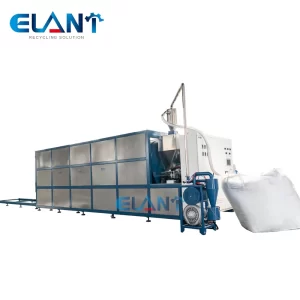
Investing in pelletizing equipment is a major decision for plastic recycling plants, compounders, and manufacturers that need stable pellet quality, reliable output, and long-term operating efficiency. A lower purchase price may look attractive at first, but the real value of a plastic pelletizing machine depends on material compatibility, throughput, energy use, pellet uniformity, maintenance cost, automation level, and supplier support.
What Is Pelletizing Equipment?
Pelletizing equipment is used to convert plastic materials into uniform pellets or granules that are easier to handle, store, transport, and reuse in manufacturing. In plastic recycling, pelletizing machines process waste plastic flakes, films, rigid materials, fibers, or compounds into reusable plastic pellets.
A typical plastic pelletizing line may include a feeding system, cutter compactor or force feeder, extruder, degassing system, melt filter, die head, pellet cutting system, cooling system, dewatering and drying system, pellet collection system, and electrical control system.
For a process overview, see Elant Machinery’s guides on what the process of plastic pelletization is and how a pelletizing machine works.
Why Pelletizing Equipment Matters in Plastic Recycling
Plastic pelletizing equipment directly affects the quality and commercial value of recycled plastic. If the system is not properly matched to the material, buyers may face unstable output, inconsistent pellet size, high energy consumption, clogged filters, excessive downtime, and poor final pellet quality.
| Buyer Concern | Why It Matters |
|---|---|
| Pellet quality | Affects resale value and downstream processing |
| Material compatibility | Prevents feeding, melting, and cutting problems |
| Output capacity | Determines production efficiency and payback period |
| Energy consumption | Impacts operating cost over the equipment lifetime |
| Melt filtration | Removes contaminants and improves pellet consistency |
| Degassing | Reduces moisture, volatiles, and odor problems |
| Maintenance access | Reduces downtime and labor cost |
| Automation level | Improves process stability and operator efficiency |
| Supplier support | Helps with installation, training, spare parts, and troubleshooting |
External references such as the U.S. EPA guide to reduce, reuse, and recycle and ISO guidance for plastics recovery and recycling provide useful background on the broader recycling context.
Main Types of Plastic Pelletizing Machines
| Pelletizing Type | Best For | Advantages | Common Considerations |
|---|---|---|---|
| Strand pelletizing | PET, engineering plastics, cleaner materials | Simple structure, stable pellet shape | Requires strand cooling and cutting stability |
| Water-ring pelletizing | PP, PE, film, rigid flakes | Compact layout, efficient cooling | Needs stable melt pressure and blade control |
| Underwater pelletizing | Thermoplastics, elastomers, high-output lines | Good pellet shape and cooling | Higher investment and technical requirements |
| Twin screw pelletizing | Compounding, additives, fillers, modified plastics | Strong mixing and dispersion | Requires precise feeding and process control |
| Cutter compactor pelletizing | Films, woven bags, soft plastics | Improves feeding of light materials | Must control moisture and material bulk density |
| Single screw recycling pelletizing | PE, PP, HDPE, LDPE recycling | Practical for many recycling applications | Material preparation affects output stability |
Relevant Elant Machinery product examples include the Twin Screw Extruder Pelletizer Machine, HDPE Plastic Pelletizing Machine, ECS130 PE LDPE HDPE LLDPE Film Pelletizing Machine, Auto Strand PET Pelletizing Machine, and Underwater Pelletizer Machine.
Material Compatibility: The First Buying Decision
| Material Type | Common Form | Recommended Focus |
|---|---|---|
| PET | Bottle flakes, fibers, film | Moisture control, drying, strand stability |
| PP/PE film | Washed film, bags, woven sacks | Feeding, compaction, moisture removal |
| LDPE/LLDPE | Film and soft packaging | Cutter compactor, stable feeding, degassing |
| HDPE | Bottles, drums, rigid flakes | Crushing, washing, melt filtration |
| PVC compounds | Powder or compound blends | Temperature control and screw design |
| Filled compounds | Additives, fillers, masterbatch | Twin screw mixing and feeding accuracy |
| Thermoplastic elastomers | Soft pellets or scraps | Underwater pelletizing and cooling control |
For film recycling projects, Elant’s Plastic Film Pelletizing Machine category is especially relevant. For rigid materials, the HDPE rigid plastic flakes pelletizing machine category is a better starting point.
Key Performance Metrics Buyers Should Compare
| Metric | What to Ask the Supplier |
|---|---|
| Output capacity | What kg/h can the line achieve with my actual material? |
| Energy consumption | What is the expected kWh per ton? |
| Pellet uniformity | How stable is pellet size and shape during continuous operation? |
| Moisture tolerance | How much moisture can the line handle after washing or squeezing? |
| Degassing performance | Can the system remove moisture, odor, and volatiles effectively? |
| Melt filtration | What screen changer or filter system is included? |
| Screw design | Is the screw designed for film, flakes, rigid plastic, or compounds? |
| Blade life | How often do cutting blades need adjustment or replacement? |
| Automation | What parameters can be monitored and controlled automatically? |
| Downtime risk | How easy is it to clean, maintain, and restart the line? |
For quality troubleshooting, read Elant’s guide on common causes of inconsistent pellet quality.
Feeding Method and Screw Design
Feeding is one of the most important areas buyers should compare. Lightweight plastic film, rigid flakes, PET flakes, and compounds do not feed the same way.
| Feeding Method | Best For | Benefit |
|---|---|---|
| Force feeder | Washed flakes and irregular materials | Improves feeding consistency |
| Cutter compactor feeder | Film, bags, woven sacks | Densifies light materials before extrusion |
| Hopper feeding | Rigid flakes and stable bulk materials | Simple and cost-effective |
| Side feeder | Compounding and additives | Supports controlled addition of fillers or modifiers |
| Twin screw feeding | Powders, fillers, compounds | Better mixing and dispersion control |
Screw design should match the material and production goal. Buyers should compare screw diameter, L/D ratio, compression section, degassing section, material of construction, wear resistance, and whether the screw is designed for recycling or compounding.
Melt Filtration and Degassing
Melt filtration and degassing are critical for recycled plastic pellet quality. Contaminants, moisture, ink, volatiles, and unstable melt flow can create defects in the final pellets.
| System Area | Function | Buyer Checkpoint |
|---|---|---|
| Melt filter | Removes contaminants from molten plastic | Screen size, filter area, screen changer type |
| Degassing port | Removes moisture and volatiles | Single or double venting, vacuum capability |
| Vacuum system | Improves removal of gases and moisture | Pump capacity and sealing reliability |
| Pressure sensor | Monitors melt pressure | Helps prevent filter blockage and process instability |
| Die head | Shapes melt before cutting | Must match material viscosity and cutting system |
For more detail, see Elant’s articles on melt filtration problems in plastic pelletizing lines and plastic pelletizing process degassing techniques.
Cost vs. Quality: What Buyers Should Really Compare

| Cost Area | Low-Price Risk | Better Buying Standard |
|---|---|---|
| Machine structure | Weak frame or poor alignment | Heavy-duty structure and stable operation |
| Screw and barrel | Faster wear | Proper material and wear-resistant treatment |
| Electrical components | Higher failure rate | Reliable control system and safety protection |
| Cutting system | Unstable pellets | Adjustable, durable, easy-to-maintain cutter |
| Energy use | Higher long-term operating cost | Efficient motor and process design |
| Spare parts | Long waiting time | Available spare parts and clear part list |
| Technical support | Slow troubleshooting | Supplier with installation and service experience |
Supplier Reputation and After-Sales Support
| Supplier Factor | What Buyers Should Confirm |
|---|---|
| Industry experience | Has the supplier handled similar materials and capacity? |
| Engineering capability | Can the supplier customize the line layout? |
| Test material support | Can the supplier test or evaluate sample material? |
| Installation support | Is on-site or remote commissioning available? |
| Spare parts | Are blades, screens, heaters, sensors, and wear parts available? |
| Documentation | Are manuals, wiring diagrams, and maintenance instructions provided? |
| Training | Can operators learn feeding, startup, shutdown, and troubleshooting? |
| Service response | How quickly can technical support respond? |
Elant Machinery’s Service page and FAQ page provide more information about support and common buyer questions.
Safety and Compliance Considerations
Plastic recycling and pelletizing lines include rotating parts, hot surfaces, electrical systems, cutters, and moving material. Buyers should consider guarding, emergency stops, safe access, and operator training.
The OSHA overview on machine guarding is a useful external reference for understanding general machine safety principles. Local safety standards, electrical requirements, and workplace regulations should also be reviewed before installation.
Buying Checklist Before Ordering Pelletizing Equipment
| Checklist Item | Confirmed? |
|---|---|
| Material type and form are clearly defined | |
| Contamination level is understood | |
| Moisture level after washing or squeezing is known | |
| Required output capacity is realistic | |
| Feeding method matches material behavior | |
| Screw design is suitable for the plastic type | |
| Degassing system is included if needed | |
| Melt filtration is suitable for contamination level | |
| Pellet cutting method is appropriate | |
| Cooling and drying system is properly sized | |
| Energy consumption is estimated | |
| Spare parts list is available | |
| Installation and commissioning support are confirmed | |
| Safety protection and electrical standards are reviewed | |
| Total cost of ownership is calculated |
Common Mistakes Buyers Should Avoid
| Mistake | Result |
|---|---|
| Choosing by price only | Higher downtime and unstable pellet quality |
| Ignoring feedstock variability | Feeding blockages and output fluctuation |
| Underestimating moisture | Bubbles, odor, poor pellets, and production loss |
| Skipping melt filtration review | Contamination defects and frequent screen changes |
| Choosing the wrong cutting system | Irregular pellet shape or excessive fines |
| Overstating capacity expectations | Line overload and unstable operation |
| Not planning spare parts | Longer downtime during maintenance |
| Ignoring operator training | Startup errors and avoidable machine damage |
FAQ
What is pelletizing equipment used for?
Pelletizing equipment is used to convert plastic waste, flakes, films, fibers, or compounds into uniform plastic pellets that can be reused in manufacturing.
What is the best pelletizing machine for plastic film?
For PP, PE, LDPE, and LLDPE film, a cutter compactor pelletizing line is often suitable because it improves feeding of lightweight film and helps stabilize extrusion.
What is the difference between strand pelletizing and water-ring pelletizing?
Strand pelletizing extrudes molten plastic into strands, cools them, and cuts them into pellets. Water-ring pelletizing cuts the melt at the die face and cools pellets in a water ring.
When should buyers choose a twin screw pelletizing line?
A twin screw pelletizing line is suitable for compounding, additives, fillers, masterbatch, modified plastics, and applications requiring stronger mixing and dispersion.
Why does pellet quality become inconsistent?
Common causes include unstable feeding, moisture, poor melt filtration, worn blades, incorrect temperature settings, pressure fluctuation, and unsuitable screw design.
Why is degassing important in plastic pelletizing?
Degassing removes moisture, air, odor, and volatile substances from the melt. Good degassing helps reduce bubbles, improve pellet appearance, and stabilize downstream processing.
How should buyers compare pelletizer capacity?
Capacity should be compared using the actual material the buyer plans to process. Film, rigid flakes, PET, HDPE, and compounds may achieve different outputs on the same machine.
Is cheaper pelletizing equipment a good investment?
Not always. Lower upfront cost may lead to higher energy use, more downtime, faster wear, and poor pellet quality. Buyers should compare total cost of ownership instead of purchase price alone.
What spare parts are important for pelletizing equipment?
Important spare parts include cutting blades, screens, heaters, thermocouples, sensors, belts, seals, bearings, and electrical components.
Can one pelletizing machine process all plastics?
No. Different plastics have different melting behavior, viscosity, moisture sensitivity, and feeding characteristics. The pelletizing system should be selected according to the material type and production goal.
Conclusion
Before investing in pelletizing equipment, buyers should compare more than price and rated capacity. The most important factors include material compatibility, feeding method, screw design, melt filtration, degassing, cutting system, energy use, maintenance access, safety, and supplier support.
A well-matched plastic pelletizing machine can improve pellet quality, reduce downtime, lower long-term operating costs, and support stable recycling production. For buyers processing PET, PP, PE, LDPE, HDPE, film, rigid flakes, or compounds, choosing the right pelletizing system is a direct investment in product quality and plant profitability.
For more pelletizing solutions, explore Elant Machinery’s Plastic Pelletizing Machine, PET Pelletizing Machine, PP PE LDPE Plastic Film Pelletizing Machine, Twin Screw Extrusion Pelletizing Line, and Contact Us pages.