
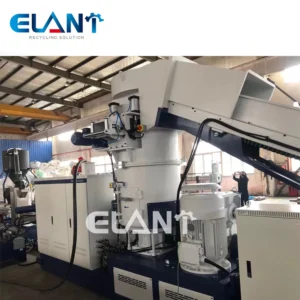
A plastic film recycling machine is a purpose-built line that converts LDPE, LLDPE, and agricultural PE film into clean recycled pellets through shredding, washing, drying, and extrusion. A complete system typically includes six core stations — shredder, friction washer, float-sink tank, squeeze dryer, hot-air dryer, and pelletizer — and costs USD 30,000–200,000 depending on throughput.
Most buyers wire a deposit before confirming three things: the moisture tolerance of their input material, whether the pelletizer drive matches their power supply, and what the actual throughput is at wet — not dry — film density. Those three oversights account for the majority of underperforming lines that come back for costly retrofits.
This guide walks through material assessment, machine selection, capacity planning, maintenance, and the break-even case for owning equipment outright so your line pays from month one.

Quick takeaways
- Plastic film (LDPE, LLDPE, stretch film, agricultural film) clogs curbside systems because it wraps sorting belts — a dedicated film recycling machine bypasses that problem entirely, keeping plastic waste out of landfill.
- A complete line needs, at minimum: a shredder or compactor, a washing section (friction washer + float-sink tank), a drying section, and a pelletizer or plastic granulator.
- Capacity is rated in kg/hr of dry pellet output — always ask for wet-input throughput figures; they run 20–40% lower.
- Entry-level PE film recycling machine systems start around USD 30,000–50,000; mid-range HDPE LDPE washing lines run USD 80,000–200,000.
- Plastic recycling unit economics hinge on three numbers: input cost, pellet sale price, and electricity cost per kWh. Model all three conservatively before committing capital.
Before You Start
What you need to confirm before talking to any supplier:
| Pre-check | Specific question to answer |
|---|---|
| Input material type | LDPE agricultural film? LLDPE stretch wrap? Multi-layer? |
| Contamination level | Dirt load: <5%, 5–15%, or >15% by weight? |
| Daily input volume | Tonnes per day — this sizes every downstream machine |
| Power supply | 380V/50Hz, 460V/60Hz, or other? |
| Water availability | Closed-loop or fresh water? Discharge permit? |
| Output pellet spec | MFI range, color tolerance, max moisture content |
Confirm the contamination profile before requesting a quote. The dirt load alone shifts the washing line configuration — and the price — by up to 30%.
Step 1: Understand Why Plastic Film Fails at Curbside — and What That Means for Your Machine
Plastic film is not recyclable in standard MRF sorting systems[1] because it has a low bulk density (roughly 30–50 kg/m³ loose) and wraps optical sorters, screen decks, and conveyor belts within seconds. A dedicated plastic film recycling machine bypasses all of that by feeding directly from bale or loose collection.
The real upstream challenge is moisture and contamination. Agricultural PE film can arrive at 15% moisture carrying sand, stones, and crop residue — three contaminants that each demand a different washing stage. Stretch film from logistics warehouses arrives cleaner but may contain multi-layer structures (PE + EVA tie layers) that lower pellet value. Plastic bags from post-consumer collection tend to carry food residue and require a higher-temperature wash cycle than agricultural film. Know your input before sizing any machine in the chain.
⚠️ Warning: Multi-layer films (e.g., five-layer barrier packaging) cannot be recycled into single-resin pellets on a standard PE film recycling machine. Confirm resin compatibility before purchase — misrepresented input material voids most supplier warranties.
Common mistake: Buyers quote their daily input weight from dry bale records. Wet field-collected film weighs 20–35% more. Size your shredder and compactor on wet weight or you will bottleneck in week one.
Step 2: Select the Right Machines Required for Plastic Recycling
A plastic film recycling line is four to six separate machines, each with its own failure mode. Buying them as a matched system from one supplier gives you unified responsibility; mixing brands creates warranty grey zones.

The standard sequence for a PE film washing line:
| Station | Machine | Key spec to verify |
|---|---|---|
| 1. Size reduction | Plastic shredder or wet granulator | Rotor diameter, kW, screen hole size |
| 2. Pre-wash | Friction washer | RPM, water flow rate (m³/hr) |
| 3. Float-sink separation | Sink-float tank | Tank volume, agitator design |
| 4. Fine washing | Second friction washer or centrifugal washer | Throughput at target moisture |
| 5. Drying | Squeeze dryer + hot-air dryer | Output moisture ≤1% |
| 6. Pelletizing | Plastic pelletizer (single- or twin-screw) | L/D ratio, screen changer type |
For LDPE film recycling machine configurations, a single-screw extruder with a hydraulic screen changer handles most clean-input applications. Twin-screw extrusion is justified only when you’re processing heavily printed or multi-component material that needs compounding.
💡 Pro tip: Ask for the washing line’s closed-loop water consumption figure in m³/day. Lines without a sludge press or water recycling tank add a hidden operating cost of USD 200–600/month in water and disposal fees — an amount that compounds fast on a 10-year asset.
Common mistake: Buying plastic shredders rated at dry throughput. Wet film at 15% contamination passes through a shredder at 60–70% of nameplate capacity. Request a wet-material test run or ask for references from customers running similar input.
How to choose the right capacity for a PE PP film washing line
Capacity choice is the decision buyers most frequently regret. The rule that holds across input types: size the pelletizer at 90% of your confirmed daily throughput — not your projected peak — then plan a second extruder module when volume grows rather than buying a larger single machine upfront.
For PP woven bags and sacks, bulk density is higher than LDPE agricultural film (80–120 kg/m³ vs. 30–50 kg/m³), so the same shredder rotor handles roughly 1.5× the weight per hour on PP input. If your feedstock mix includes both PE film and PP bags, spec the shredder on the lighter material (PE film) and add a pre-compactor to increase bulk density before the shredder throat. Skipping that step forces you to either underload the shredder or choke the downstream washer.
Water consumption scales non-linearly: a 300 kg/hr line typically uses 3–5 m³/hr of process water; a 500 kg/hr line uses 6–9 m³/hr. If your site has a restricted discharge permit, the closed-loop water system becomes mandatory equipment, not an optional upgrade — factor that into your budget from day one.
How to choose a plastic bottle crusher for your PET bottle washing plant
PET bottle crushing is a distinct operation from PE film shredding and the machine selection logic differs on three points. First, PET is rigid, so a single-shaft shredder works poorly — wet granulators (also called wet crushers) with a water-fed cutting chamber are the standard choice because they simultaneously size-reduce and begin the label-separation process. Second, label removal efficiency depends on screen hole diameter: 12–16 mm holes are the industry default for PET bottle crushing, producing flake small enough for friction washing but large enough to avoid fines that pass through the float-sink tank. Third, throughput on a PET bottle crusher is rated at input volume (m³/hr), not weight, because uncrushed bottles are mostly air — a 1,000 kg/hr flake output line typically processes 8–12 m³/hr of whole bottles.
When evaluating suppliers, ask for the knife-replacement interval at your expected hourly throughput. PET is harder than PE and wears cutting edges two to three times faster. A crusher whose knives last 800 hours at 500 kg/hr input carries a meaningfully lower total cost of ownership than one rated at 400 hours — even if the nameplate price is USD 3,000–5,000 higher.
Step 3: Size the Line to Your Actual Throughput — Not Your Ambition
Oversized pelletizing lines running at 40% capacity consume nearly the same electricity as a correctly sized line at 90% — electricity that goes straight to operating cost with no pellet output to show for it.

| Item | Value |
|---|---|
| 40% | 380.0 |
| 60% | 260.0 |
| 80% | 195.0 |
| 100% | 165.0 |
| Item | Value |
|---|---|
| 40% | 380.0 |
| 60% | 260.0 |
| 80% | 195.0 |
| 100% | 165.0 |
| Utilization rate | kWh per tonne output |
|---|---|
| 40% | 380 |
| 60% | 260 |
| 80% | 195 |
| 100% | 165 |
A 500 kg/hr line running at 80% utilization costs roughly 40% less per tonne of recycled pellets than the same line at 40%. That difference is the margin between plastic recycling machines that pay and ones that don’t.
Common mistake: Specifying future capacity “just in case.” A 1,000 kg/hr plastic granulator running on 500 kg/hr of actual daily input inflates capital cost by ~60% and wastes energy every shift.
Should you recycle plastic film in-house or send it to a toll processor?
For operations generating fewer than 80 tonnes of plastic waste per month, toll processing — paying a third-party recycler per tonne — typically beats owning a line on unit economics. Below that threshold, the fixed costs of equipment depreciation, operator wages, water treatment, and facility space are spread over too few tonnes to compete with a toll rate of USD 60–120/tonne.
Above 100 tonnes per month of consistent plastic waste input, in-house ownership typically wins. At 100 t/month, a USD 120,000 HDPE LDPE washing line operating at USD 80/tonne variable cost (electricity, water, labor) produces pellets worth USD 850/tonne, generating a contribution margin of ~USD 77,000/month against roughly USD 5,500/month in depreciation (120,000 ÷ 22 months). The unit economics only improve as throughput climbs.
The break-even between toll processing and ownership sits at roughly 80–100 tonnes per month for a mid-range PE film line under 2026 Southeast Asian operating conditions (USD 0.10–0.14/kWh electricity, USD 850/tonne LDPE pellet price). Below that band, get your own machines only if you have captive plastic waste supply locked in by contract — spot supply volatility makes the fixed-cost base too risky.
📝 Note: “Getting your own machines” also brings compliance control. In-house processing lets you certify output quality to ISO 15270 plastics recycling guidelines and negotiate directly with compounders paying a premium for certified recycled resin, rather than selling through a broker at commodity pricing.
Step 4: Maintain the Pelletizer or the Line Stops
Unplanned pelletizer downtime is the single most expensive event on a plastic film recycling line — not because the repair is always costly, but because the whole upstream wash-and-dry sequence stacks up with nowhere to go. A screw-and-barrel replacement takes 3–6 weeks from most suppliers. Experienced line operators say the checklist below catches around 80% of faults before they cause a shutdown — not because it is exhaustive, but because these four parameters move first when something is going wrong.
Minimum monthly checks for the pelletizer:
- Barrel and screw wear: Measure screw clearance every 500 operating hours; replace when clearance exceeds 0.5 mm beyond OEM spec. Worn screws raise melt temperature and degrade pellet MFI.
- Screen changer pressure: Log pressure drop across the screen pack at every shift start. A sudden 20% pressure rise signals a blocked screen — change before a head pressure fault shuts the line.
- Die face knife gap: Check every 200 hours on underwater pelletizing systems. A gap wider than 0.1 mm produces tails (fines) that fail pellet-size spec and reduce sale price.
- Drive coupling and gearbox oil: Change gearbox oil every 2,000 hours; check coupling alignment every 6 months. Misalignment is the leading cause of premature bearing failure on high-torque plastic pelletizer[2] drives.
The washing line[3] requires its own calendar: friction washer paddles wear fastest on abrasive agricultural film and typically need replacement every 1,800–2,400 hours. Before signing any contract, ask the supplier for their standard parts lead time — a machine with a 12-week lead time on wear parts is a different operational risk than one with warehouse stock in your region.
📝 Note: Bearing temperature on the extruder barrel is the single cheapest early-warning signal. A USD 80 infrared thermometer read every shift costs nothing compared to an unplanned extruder screw replacement at USD 8,000–15,000.
How to maintain a plastic pelletizer machine — the Sunday-night checklist
The question operators actually ask is: what do I check on a night shift when the engineer isn’t on site? Three readings take under 10 minutes and cover the most common failure precursors:
- Melt pressure: If head pressure climbs more than 15% above the shift’s baseline without a feed rate change, the screen pack is loading — swap it before the pressure trip shuts the line.
- Barrel zone temperatures: If Zone 3 or 4 runs more than 8°C above setpoint with no process change, screw wear or a partial blockage is generating excess shear heat. Log it and escalate before the next shift.
- Pellet water-bath temperature (underwater systems): Keep bath temperature at 30–40°C. A bath that has drifted above 45°C produces soft pellets that deform in the dryer centrifuge, increasing fines and blocking the classifier screen.
How Much Does a Plastic Recycling Machine Cost — and When Does It Pay Back?
Plastic recycling machine price ranges in 2026 vary by output capacity and material type. The payback estimates below assume USD 0.12/kWh electricity, USD 850/tonne LDPE pellet sale price, and zero tipping fee on input material — adjust the model for your local conditions before committing.
| System type | Typical FOB price (USD) | Payback estimate |
|---|---|---|
| Entry LDPE film granulator (100–200 kg/hr) | 30,000–55,000 | 18–30 months |
| PE film washing line (300–500 kg/hr) | 80,000–140,000 | 14–22 months |
| Full HDPE LDPE film washing + pelletizing (500–800 kg/hr) | 140,000–200,000 | 12–20 months |
| PET bottle washing line (1,000 kg/hr) | 180,000–280,000 | 10–18 months |
For a real-world benchmark: a 500 kg/hr PE film line running at 80% utilization (400 kg/hr effective output) for 20 shifts/month produces 64 tonnes of LDPE pellets. At USD 850/tonne that is USD 54,400 in gross revenue per month. Subtract USD 0.12/kWh × 195 kWh/tonne × 64 tonnes = USD 1,498 in electricity, plus labor and water, and the line covers a USD 120,000 capital cost in roughly 18 months — consistent with the table above, and traceable to LDPE pellet spot prices[4] tracked by commodity indices.
💡 Pro tip: Ask three competing suppliers for an energy-consumption audit at your target throughput — not a nameplate spec. Electricity is 25–40% of operating cost on a film recycling machine. A USD 10,000 price difference between two lines disappears in 18 months if one consumes 15 kWh/tonne more than the other.
Step 5: Produce High-Quality Recycled PET Flakes and LDPE Pellets That Command a Price Premium
The difference between pellets sold as “mixed contaminated LDPE” and pellets meeting a film-grade LDPE specification[5] (MFI 0.5–2.0 g/10min, ash <300 ppm, moisture <0.05%) is USD 150–250/tonne in 2026 markets. That gap funds your entire annual maintenance budget.
How to produce high-quality recycled PET flakes
PET bottle recycling follows a different quality logic than PE film. The output — clean PET flakes — is sold to fiber spinners and sheet extruders who hold incoming material to strict specifications: IV (intrinsic viscosity) ≥0.72 dl/g, moisture <0.5%, PVC contamination <50 ppm, and color b-value <5 on the CIELAB scale. Missing any one of these disqualifies the batch from fiber-grade pricing (USD 350–500/tonne above commodity grade in 2026 Southeast Asian markets).
Four process controls determine flake quality on a PET bottle washing line:
- Pre-sort for PVC and PLA bottles before crushing. PVC contamination at even 100 ppm causes yellowing at the downstream spinner’s dryer; hand-sorting or NIR sorting upstream is cheaper than losing a whole shipment.
- Hot wash at 80–85°C with NaOH solution (1–2%): This removes adhesive label glue, grease, and polyolefin contamination that cold washing cannot release. A hot-wash stage adds USD 15,000–25,000 to line cost but is non-negotiable for food-grade or fiber-grade flake.
- Label removal efficiency ≥95% via friction washer + label separator (air classifier). Residual labels raise ash content and add color variance — both disqualify the batch from premium buyers.
- Drying to ≤0.5% moisture before bagging. Moisture above 0.5% degrades IV during reprocessing at the customer’s plant, and buyers now routinely moisture-test incoming flake bales with inline NIR.
How to improve the profit from PET bottle recycling
The most direct lever on PET bottle recycling profit is not throughput — it is output grade. Moving from commodity-grade mixed PET flake (USD 200–280/tonne) to food-contact or fiber-grade specification (USD 500–700/tonne) on the same tonnage more than doubles revenue without adding a single kilogram of plastic waste input.
Three operational changes produce that upgrade: (1) add NIR sorting to separate clear, blue, and green bottles before crushing — clear-bottle flake commands USD 80–120/tonne more than mixed-color; (2) install a hot-wash caustic stage (see above) to meet adhesive and grease thresholds required by fiber buyers; (3) certify output against EFSA food-contact recycled PET guidelines or equivalent national standard if your target buyer is a food or beverage packager. Certification adds a one-time cost of USD 8,000–20,000 and 6–12 months of process qualification, but it opens a buyer pool paying 40–60% more per tonne than the commodity market.
Secondary levers: negotiate a tipping fee with municipalities or brands collecting plastic waste — even USD 20–30/tonne on input converts a break-even line to a profitable one. And sell pellet or flake seconds (off-spec material from line startup and shutdown) separately rather than blending them into your main batch, which drags the certified grade down.
How to recycle PET bottles — the process sequence
Readers new to PET bottle recycling often ask how the process differs from PE film recycling. The sequence is: collection and bale breaking → manual or NIR pre-sort (remove PVC, PLA, metals) → wet granulating/crushing → label separation (friction washer + air classifier) → hot caustic wash (80–85°C) → rinse → float-sink separation (PET sinks, PE/PP caps float) → centrifugal drying → hot-air drying → flake storage or optional pelletizing. A small-scale operator processing 500 kg/hr of whole bottles needs roughly 8 workers per shift for pre-sort and quality inspection; an NIR sorter reduces that to 3–4 but adds USD 40,000–80,000 to system cost.
Three process controls that also apply to LDPE pellet quality:
- Float-sink tank temperature: Keep wash water at 40–50°C to release adhesive labels and grease from PE surfaces. Cold-water washing leaves organic contamination that raises ash content above acceptable limits.
- Squeeze dryer pressure: Target output moisture ≤1% before the hot-air tunnel; moisture above 1.5% causes bubbling in the melt and produces pellets with visible voids — rejected by film-grade buyers.
- Melt filtration fineness: Use 80–120 mesh screens for film-grade pellet production. Coarser screens (40–60 mesh) pass contamination that discolors blow-moulded output at the customer’s plant.

Quick Reference: Key Facts at a Glance
| Item | Detail |
|---|---|
| Typical system stations | 6 (shredder → friction wash → float-sink → fine wash → dryer → pelletizer) |
| Entry system price range | USD 30,000–55,000 FOB |
| Mid-range washing line | USD 80,000–140,000 FOB |
| Payback assumption (electricity) | USD 0.12/kWh |
| Payback assumption (LDPE pellet price) | USD 850/tonne (mid-2026 Southeast Asia) |
| Film-grade LDPE spec | MFI 0.5–2.0 g/10min, ash <300 ppm, moisture <0.05% |
| Fiber-grade PET flake IV | ≥0.72 dl/g |
| In-house ownership break-even | ~80–100 tonnes/month plastic waste input |
| Pelletizer screw clearance limit | 0.5 mm beyond OEM spec |
| PET hot-wash temperature | 80–85°C with 1–2% NaOH |
Before issuing an RFQ to any supplier, send your contamination data and ask for a reference customer running the same input material. Visit that site or request a video call with the operator — not just the sales team.
For a matched line to your specific material profile, PE film washing line configurations covers the three most common setups. If your input includes PET bottles alongside film, PET bottle recycling line guide explains the separate sorting and flake-washing steps those systems require.
If you’re still at the business-case stage, plastic recycling machine ROI calculator walks through the per-tonne margin model before any capital commitment. For regional pricing with shipping included, plastic recycling machine landed cost by country covers the major import markets.
FAQ
How much does a plastic recycling machine cost?
A basic plastic film recycling machine starts around $15,000–$30,000 for a compact single-stage unit, while a full wash-dry-extrude line with output above 300 kg/h can run $80,000–$250,000 or more. Price depends on throughput capacity, automation level, washing stages, and whether a pelletizing extruder is included. Buying direct from a manufacturer and specifying only the stages your feedstock requires are the two fastest ways to keep capital outlay in check.
Why is pyrolysis not widely used?
Pyrolysis faces high capital costs, complex emissions permitting, and inconsistent fuel-oil quality that limits end markets. For plastic film specifically, the high contamination typical of agricultural and post-consumer film creates ash and chlorine byproducts that damage reactors. Mechanical recycling through a plastic film recycling machine is cheaper to permit, easier to scale, and produces a pellet product with established buyer demand, which is why pyrolysis remains a niche rather than mainstream solution.
Sources
[1] How Materials Recovery Facilities (MRFs) Work — sustainablepackaging.org
[2] How to Maintain A Plastic Pelletizer Machine? Expert Advice — pastillatorsystem.com
[3] Essential Maintenance Tips for PP/PE Film Washing Lines — energycle.com
[4] GST Rate & HSN Code for Plastic Waste, Parings, and Scrap — adityabirlacapital.com
[5] Recycled LDPE Pellets | Film Grade rLDPE for Packaging — uberplas.com