
Plastic recycling is often treated as a mature process, but that assumption can create costly mistakes for facilities investing in waste processing equipment. According to Greenpeace’s 2023 analysis, only about 5%–6% of plastic packaging waste in the U.S. was actually recycled into new products. Many recycling systems today were designed for specific material streams and may struggle with mixed plastics, contamination, and changing waste inputs.
The gap between what the equipment can do and what modern plastic waste demands is now wide enough to affect ROI directly.
The good news: manufacturers are responding with real engineering changes — not rebranding. If you’re sourcing or upgrading waste recycling machinery in 2026, this guide maps what’s changed, what drives price, and what to ask before committing.
At a glance
- Mechanical recycling remains the dominant process: Most plastic recycling today relies on mechanical methods, with ongoing improvements focused on throughput, sorting accuracy, energy efficiency, and contamination handling.
- NIR sorting systems improve polymer identification: Near-infrared (NIR) sorting can achieve high accuracy in well-controlled commercial applications, helping recycling lines separate different polymer types more efficiently than older sorting approaches.
- Typical production line capacity: Industrial plastic recycling lines commonly range from 500 kg/h to 5,000+ kg/h, depending on plastic type, system configuration, and automation level.
- Energy consumption benchmarks: Energy use varies by process and equipment design. Extrusion pelletizing systems may typically operate around 0.15–0.40 kWh/kg of output, depending on material properties and operating conditions.
- Price range for complete recycling lines: Complete plastic recycling systems can range from about $100,000 to over $1 million, depending on throughput, automation level, and plastic type.
- Lead time from order to commissioning: Standard recycling systems typically require around 3–6 months, while customized projects may take 6–12 months depending on engineering requirements.
- Key certifications to verify: Check CE marking, ISO 9001 certification for the manufacturer, and UL-listed electrical components where required for U.S. installations.
Why Traditional Plastic Recycling Machinery Is No Longer Enough
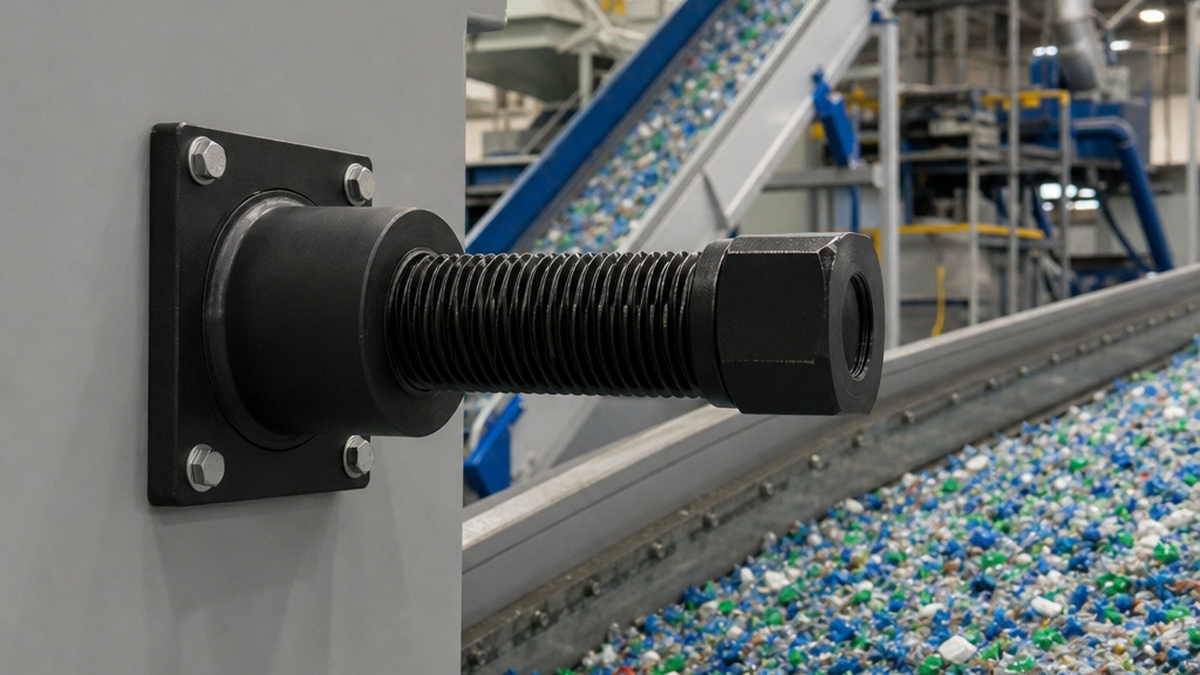
Much of the plastic recycling equipment installed during the 1990s and early 2000s was designed around relatively consistent feedstocks, such as PET bottles and HDPE containers, with cleaner and more predictable material streams than many facilities receive today.
Modern post-consumer plastic waste often contains multilayer films, food residues, mixed polymers, and adhesive contamination that challenge older sorting and processing systems. Significant contamination can prevent recycled materials from meeting higher-value specifications, forcing them into lower-value applications.
One major limitation of older sorting systems is their reliance on basic identification methods such as color sorting. These systems may struggle to separate visually similar plastics with different chemical properties, leading to incompatible materials entering the same recycling stream.
Throughput is another challenge. As recycling volumes and material complexity increase, facilities with outdated equipment may need longer operating hours or upgrades to maintain consistent output.
Energy efficiency is also a key factor. Older extruder-pelletizing systems can consume significantly more energy than modern high-efficiency designs, increasing operating costs over the lifetime of the equipme
Key Technologies Behind Modern Plastic Recycling Machinery
The upgrades happening across the waste recycling equipment market fall into four distinct technology layers. Each layer addresses a specific failure mode of the previous generation.
Near-Infrared (NIR) Polymer Identification
Modern NIR sorting systems identify polymer types — including PET, HDPE, LDPE, PP, PS, and PVC — by their spectral signatures rather than visual color. This allows recycling facilities to separate materials that may appear similar but have different chemical compositions.[5]
The main advantage of NIR sorting is improved polymer separation. Cleaner single-polymer streams generally achieve higher recycled material quality and better suitability for demanding applications compared with mixed or contaminated plastic streams. By improving sorting accuracy, NIR technology helps reduce material loss and improve the value of recovered plastics.
AI-Driven Process Optimization
Some advanced recycling systems now integrate AI-based monitoring, sensors, and adaptive control technologies into shredding, washing, and extrusion processes. These systems can monitor factors such as motor load, melt temperature, pressure, and material consistency to help operators maintain more stable production conditions.
The practical benefit is improved process control. Instead of manually adjusting equipment whenever feedstock conditions change, operators can use real-time data to optimize operating parameters, reduce quality fluctuations, and improve overall production stability. Actual performance improvements depend on feedstock characteristics, equipment design, and operating conditions.
Wet vs. Dry Washing Systems
Contamination removal is one of the most important factors affecting recycled plastic quality. Modern wet washing systems, including friction washing and hot washing processes, use water, detergents, or alkaline solutions to remove adhesives, inks, oils, and food residues from plastic flakes before extrusion.
Dry cleaning systems, including air classifiers and friction-based separation technologies, are increasingly considered for applications where water consumption or wastewater treatment is a major concern.
The trade-off is clear: wet washing generally provides stronger contamination removal but requires water management and wastewater treatment. Dry systems can reduce water usage and operating complexity but may be less effective for heavily contaminated plastic waste.
Energy Recovery Extrusion
Modern extruder-pelletizing systems increasingly use technologies such as improved drive systems, optimized heating control, and advanced process monitoring to reduce energy consumption compared with older equipment designs.
Better energy efficiency not only lowers operating costs but also improves long-term equipment economics, especially for recycling facilities running continuously at industrial scale.
Which Plastic Recycling Machines Are Seeing the Most Innovation?
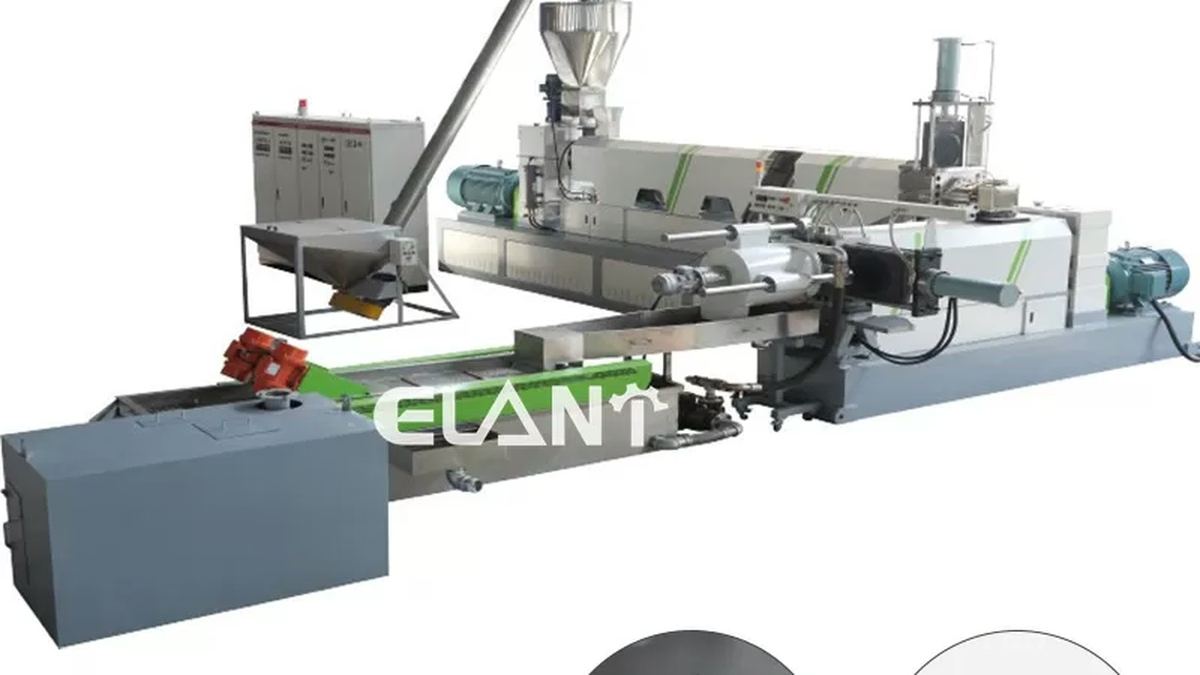
This question drives a lot of procurement conversations, and the answer has shifted in the past three years. Innovation is not evenly distributed across machine categories.
PET recycling lines — handling bottles, trays, and strapping — are attracting the most R&D investment. Demand for food-grade recycled PET (rPET) is up sharply, driven by brand commitments and EPA voluntary targets. Manufacturers are improving the melt filtration and SSP (solid-state polycondensation) stages to produce rPET that meets FDA food-contact guidelines.
Film and flexible plastic recycling machines represent the frontier problem. LDPE and LLDPE films — bags, wraps, agricultural films — are notoriously difficult to process because they tangle in shredders and retain moisture. New compaction-agglomeration units pre-process film into a dense, free-flowing form before extrusion, making film recycling commercially viable at industrial scale for the first time.
E-waste recycling equipment sits in a different category but is seeing parallel modernization. Shredder and eddy-current separation systems for separating plastics from metals in electronics are being refined for higher metal recovery rates. Buyers evaluating e-waste recycling equipment for sale should verify that the plastic output streams meet RoHS-adjacent purity standards for downstream use.
The machines least changed: basic single-shaft shredders for size reduction, and granulators for in-house regrind. These are commodity components — the innovation is happening upstream (sorting) and downstream (extrusion, filtration, pelletizing).
🔍 Worth checking: Before accepting a vendor’s throughput spec, ask for the test conditions — specifically, what plastic type was used, at what moisture content, and with what contamination level. PET bottle throughput numbers do not translate to film recycling applications.
Who Is Building the Biggest Recycling Infrastructure?
Plastic recycling infrastructure growth in the U.S. is currently being driven by three major forces: brand owner commitments, EPR programs and public investment in recycling infrastructure, and private investment in recycling companies and processing technologies. Companies such as Unilever, PepsiCo, and Procter & Gamble have announced recycled plastic commitments and packaging sustainability targets, increasing demand for recycled materials.
No single company dominates. The “biggest plastic recycling company” ranking shifts with each major capital deployment. Berry Global, Veolia’s U.S. operations, and Republic Services rank among the largest processors by volume, but regional independent recyclers often run more modern equipment because they’ve invested more recently.
How Modern Recycling Lines Improve Production Efficiency
Efficiency gains in modern plastic recycling machinery are typically measured in three areas: throughput per labor hour, energy consumption per kilogram of output, and recycled material yield from processed feedstock.
Throughput per labor hour has improved primarily through automation of sorting, monitoring, and quality control processes. Older recycling facilities often relied on larger manual sorting teams, while modern NIR-equipped systems can reduce manual labor requirements by automating polymer identification and allowing operators to focus on monitoring and exception handling.
Energy consumption is another major factor buyers evaluate when selecting recycling equipment. Energy use can vary significantly depending on plastic type, equipment configuration, throughput, and operating conditions. Modern high-efficiency extrusion and pelletizing systems are designed to reduce energy intensity compared with many older installations, especially at industrial production scales.
| System type | Typical energy use |
|---|---|
| Older extrusion systems | ~0.3–0.4 kWh/kg |
| Mid-generation systems | ~0.25–0.35 kWh/kg |
| Modern high-efficiency systems | ~0.15–0.25 kWh/kg |
Based on a reference U.S. industrial electricity rate of $0.078/kWh. Actual costs vary by utility tariff, location, and operating hours.
Recycled material yield — the percentage of incoming plastic waste that exits as saleable pellets — is the third lever. Modern filtration and degassing stages help remove volatiles and fine contaminants that can reduce product quality. Well-designed recycling lines can achieve higher yields when processing consistent feedstock, while older or less optimized systems may experience greater material losses.
Why Pyrolysis Remains Limited at Scale
Pyrolysis — converting plastic waste to fuel oil or chemical feedstock through thermal decomposition — gets significant press coverage but represents a small fraction of U.S. plastic processing capacity. The reasons are concrete, not ideological.
First, energy requirements can be significant. Pyrolysis of mixed plastics requires substantial heat input, with energy demand varying depending on reactor design, feedstock composition, and heat recovery methods. The overall energy balance depends on process efficiency and how the resulting products are used. Second, output quality can vary — pyrolysis oil from mixed plastic waste may contain chlorine, sulfur, and other contaminants that require downstream upgrading before use in certain chemical feedstock applications.
Third, EPA RCRA classification of pyrolysis residue as solid waste creates regulatory compliance costs that few small-scale operators can absorb.
Pyrolysis is viable for specific, clean plastic streams — particularly post-industrial polystyrene or polyolefin trim with controlled contamination. As a catch-all for mixed plastic waste, the economics remain unfavorable compared to mechanical recycling for the polymer types that mechanical recycling handles well.
✅ Do this: When evaluating any advanced recycling technology claim, ask the vendor for a net energy balance calculation, not just a gross output figure. The difference matters for both operational cost and sustainability reporting.
How to Choose the Right Modern Plastic Recycling Machinery
Choosing modern plastic recycling machinery requires more than comparing machine prices. The right system depends on four factors: feedstock compatibility, capacity, automation level, and total cost of ownership.
Match the Machine to Your Feedstock and Capacity
The most common purchasing mistake is selecting equipment based only on average capacity. Recycling lines should be designed around actual feedstock conditions, including:
- Plastic types and percentage mix
- Contamination level (labels, moisture, food residue)
- Peak processing volume
- Required output quality (regrind, flakes, or pellets)
A line designed for clean PET may not perform well with mixed films or contaminated post-consumer plastics. Buyers should request feedstock-specific performance data instead of relying only on nameplate capacity.
Choose the Right Automation Level
Automation can improve consistency and reduce labor requirements, but it also increases maintenance complexity.
Fully automated systems are suitable for facilities with high production volumes and limited labor availability. Semi-automated systems may be more practical for companies with experienced maintenance teams.
Before purchasing, ask suppliers about:
- Unplanned downtime frequency
- Common failure points
- Repair time
- Spare parts availability
Evaluate Recycling Machine Manufacturers
Before placing an order, verify:
- Reference installations using similar plastic materials
- Feedstock testing results
- Commissioning and training services
- Spare parts supply
- After-sales support
A reliable manufacturer should provide operating data and customer references rather than only product specifications.
Final Buying Considerations
Modern plastic recycling machinery can improve production efficiency, reduce operating costs, and increase recycled material quality. However, the best system is not always the most expensive one.
Focus on:
- Matching equipment to your material stream
- Calculating total ownership cost
- Checking real operating references
- Requesting performance guarantees
Choosing the right recycling line starts with understanding your waste stream, not comparing machine catalogs.
Have a project or a spec sheet in hand? Talk to elantmachine.com — real engineers answer.
FAQ
Who is the biggest plastic recycling company?
No single company dominates plastic recycling in the United States, as the ranking shifts with each major capital deployment. The largest plastic recycling deployments are currently being driven by brand owner commitments (Unilever, PepsiCo, and Procter & Gamble have all announced rPET sourcing targets for 2025–2030), municipal EPR-funded expansions, and private equity investment in independent recyclers like Plastic Ingenuity and Greenback Recycling Technologies. Berry Global, Veolia’s U.S. operations, and Republic Services rank among the largest processors by volume. On the advanced recycling side, companies like Eastman and Plastic Energy are scaling chemical recycling capacity. Rankings shift as new facilities come online, so procurement teams should verify current throughput figures before making sourcing decisions.
Why is pyrolysis not widely used?
Pyrolysis faces three core barriers in the United States: high capital costs for commercial-scale plants, inconsistent feedstock quality from contaminated municipal plastic streams, and regulatory uncertainty around whether pyrolysis oil qualifies as recycled content under EPA and state guidelines. Energy input requirements also cut into margins. Several facilities have launched and later shut down. Manufacturers are actively working to lower operating costs and improve sorting pre-treatment to make pyrolysis economically viable at scale.
Sources
[1] New Greenpeace Report: Plastic Recycling Is A Dead-End… — greenpeace.org
[2] National Recycling Strategy | US EPA — epa.gov
[3] Criteria for the Definition of Solid Waste and… — epa.gov
[4] Electric Power Monthly – U.S. Energy Information… — eia.gov
[5] Determining the composition of post-consumer flexible… — sciencedirect.com