
Polypropylene accounts for a significant share of plastic production in the United States — though readers should confirm the exact current figure with authoritative sources such as the American Chemistry Council or EPA, as published estimates vary — yet only a small fraction of PP waste is believed to be recovered and recycled back into the supply chain, and readers should verify the most current recovery rate with relevant U.S.
industry or regulatory sources. [2] That gap is exactly where PP Recycling Machine applications enter the picture, connecting post-industrial and post-consumer plastic waste to circular manufacturing goals through mechanical recycling, washing, and pelletizing equipment.
At a glance
• Target material: Polypropylene (PP) — including rigid plastics, films, fibers, and woven bags
• Core machine types: Granulators, washing lines, dewatering systems, single-screw and twin-screw extruders, and pelletizers
• Primary applications: Automotive components, industrial packaging, nonwoven textiles, and recycled plastic products
• Circularity link: Recycling PP helps reduce demand for virgin resin and can lower environmental impacts compared with primary production, depending on processing methods and energy sources
• Key considerations for U.S. buyers: Food-contact recycled PP applications must meet applicable FDA requirements; specifications should also consider material quality and end-use requirements
• Throughput range: Small recycling systems may process several hundred kilograms per hour, while industrial PP recycling lines can exceed 1,500 kg/hr depending on equipment configuration
How PP Recycling Machines Serve as the Engine of Circular Manufacturing
The circular economy depends on one principle: material that leaves a production line must be able to return to it. For PP, that return journey requires mechanical recycling machinery capable of converting contaminated, mixed, or degraded plastic waste into clean, uniform pellets that a compounder or molder can actually run.
A closed-loop production cycle for PP has three nodes: collection and sorting, cleaning and size reduction, and remelting into raw materials. PP recycling machines handle all three, usually as a linked line rather than isolated units. Without this equipment, circularity for polypropylene stays theoretical — the material either downcycles into low-value applications or goes to landfill.
For a manufacturing company with goals around sustainability and waste reduction, the strategic value is direct. Every kilogram of recycled PP that replaces virgin material cuts both resin cost and carbon load.
Studies and industry sources suggest that mechanical recycling of plastic can avoid meaningful quantities of CO₂-equivalent emissions compared to producing virgin polymer from fossil feedstocks, though the precise figures vary by methodology and source; readers should consult current EPA publications or peer-reviewed lifecycle assessments to confirm applicable estimates for their processes. [4]
✅ Do this: Before committing to a PP recycling line, audit your internal scrap volume by resin type and contamination level. Lines optimized for clean in-house sprues cost far less than those built for post-consumer mixed PP — and the gap in capital investment can be substantial, especially when comparing simple in-house scrap recycling systems with full post-consumer PP recycling lines that require washing, sorting, and advanced filtration.
Circular manufacturing goals also align with lean manufacturing goals: reducing raw material waste is simultaneously an environmental and an economic objective. That alignment is what makes PP recycling machinery a line-item that finance and sustainability teams can both support.
Core PP Recycling Machine Types and What Each One Does
Not all plastic recycling machinery is interchangeable. Each machine type addresses a specific stage of the reprocessing chain, and specifying the wrong equipment for a given feedstock is one of the most common and costly mistakes a procurement team can make.
Granulators and shredders handle the first physical reduction step. A granulator cuts bulky PP parts, rejected moldings, or film rolls into flake or regrind — typically 8–25 mm pieces — suitable for washing or direct extrusion. Single-shaft shredders suit rigid PP; double-shaft models handle bundled film or woven bags more cleanly.
Washing lines remove surface contamination: labels, adhesives, food residue, and dirt. A full washing line includes a pre-wash trough, friction washer, hot-wash tank (sometimes with caustic additives for adhesive removal), rinsing stage, and centrifugal dryer. For post-consumer PP in the U.S. market — think yogurt tubs, bottle caps, and bumper fascias — a washing line is non-negotiable if the recycled output needs to meet manufacturing quality goals downstream.
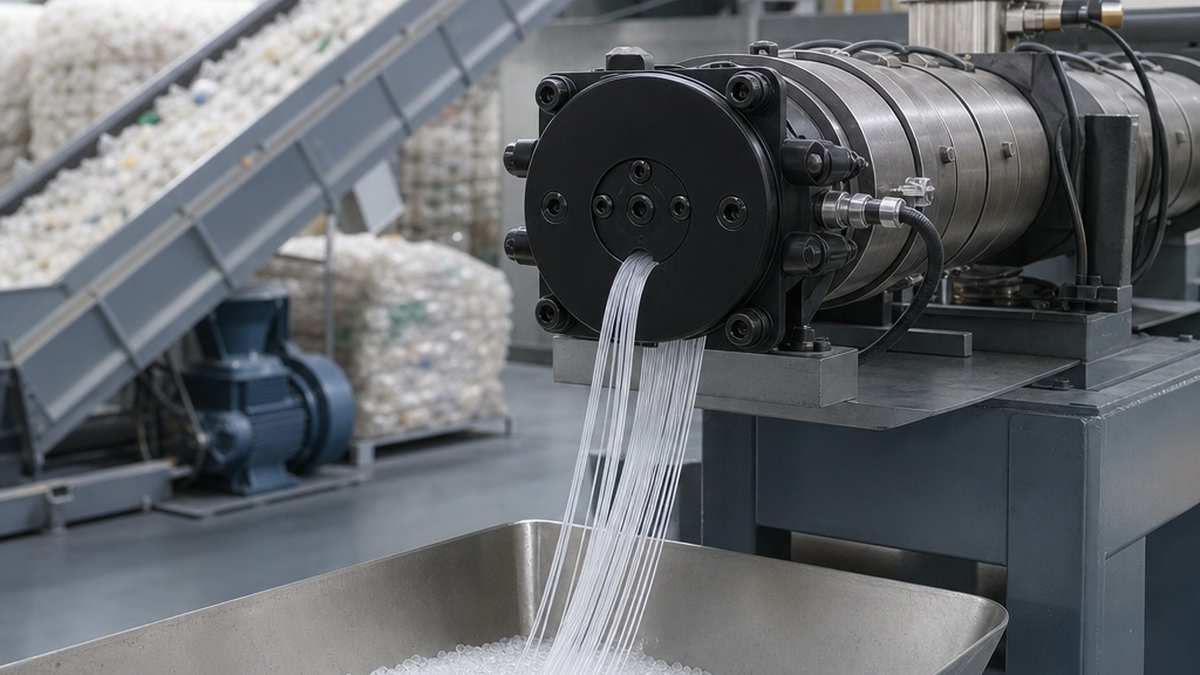
Extruders remelt clean, dry PP flakes and push the molten polymer through a die to form strands for pelletizing. Single-screw extruders are commonly used for clean, consistent PP streams with limited formulation changes. Twin-screw extruders provide stronger mixing and dispersion capabilities, making them suitable for PP streams requiring additives, colorants, fillers, or greater feedstock variability. However, twin-screw systems typically involve higher equipment costs due to their more complex design and processing capabilities.
Pelletizers cut extruded polymer melt into uniform pellets, typically around 2–5 mm in size, with cylindrical or lenticular shapes depending on the cutting system. Strand pelletizers are commonly used for clean and consistent PP recycling streams, while underwater pelletizers are suitable for applications requiring efficient cooling, such as filled compounds or materials with higher processing sensitivity.
| Machine Type | Primary Function | Best Feedstock Match |
|---|---|---|
| Single-shaft granulator | Size reduction — rigid parts | Sprues, runners, rigid scrap |
| Double-shaft shredder | Size reduction — flexible/film | PP woven bags, stretch film |
| Washing line | Contamination removal | Post-consumer, printed, food-contact PP |
| Single-screw extruder | Remelting — clean streams | In-house regrind, single-grade PP |
| Twin-screw extruder | Compounding + remelting | Mixed grades, filled compounds |
| Strand pelletizer | Pellet forming | General PP; lower throughput |
| Underwater pelletizer | Pellet forming — high output | Filled, modified, or high-throughput PP |
🔍 Worth checking: Ask any equipment supplier for references from U.S. processors running your specific PP grade and contamination profile. A machine optimized for clear film will underperform on black automotive PP without hardware changes — screw geometry and screen pack specs should match your feedstock before you issue a purchase order.
Real-World Manufacturing Applications Where PP Recycling Machines Deliver Results
Understanding where recycled PP actually goes helps a manufacturing manager set realistic quality targets for the recycling line.
Automotive components are the largest domestic end-market for recycled PP by volume. [5] Bumper fascias, battery cases, underbody panels, and interior trim components increasingly specify post-industrial or post-consumer recycled PP at 20–40% blend ratios.
OEM-tier suppliers use in-house PP recycling machines to close the loop on stamping scrap and rejected moldings before the material leaves the facility — a direct expression of circular and lean manufacturing goals.
Packaging is the second major application. Non-food rigid containers, strapping, and pallet wraps accept high percentages of recycled PP without sacrificing performance. For food-contact packaging, the regulatory pathway requires careful attention: regulatory requirements for post-consumer recycled plastics used in food-contact applications can vary and are subject to change. Manufacturers should consult current FDA guidance and confirm applicable requirements with the relevant regulatory authority to determine the appropriate pathway for their specific recycled PP application.
Nonwoven textiles and fibers represent a fast-growing channel. Recycled PP pellets feed into meltblown and spunbond lines producing agricultural fabric, filtration media, geotextiles, and industrial wipes.
The PP grade specification here is tight — melt flow index requirements vary depending on the fiber process, and processors should confirm the precise range with their equipment supplier and end-use specification — which is why mechanical recycling lines for this application need close process-temperature control.
Consumer goods and industrial containers — laundry detergent bottles, paint buckets, storage bins — round out the application set. These products carry lighter color and surface requirements than automotive or fiber applications, making them practical targets for recycled PP streams that couldn’t be upgraded to automotive spec.
How PP Recycling Machines Support Different Production Requirements
A single recycling line configuration rarely serves every manufacturer equally. Production scale, feedstock consistency, and output quality targets each pull the equipment specification in a different direction.
For a large injection molder running 50+ metric tons of PP per month, an integrated in-line recycling system — granulator directly coupled to a side-feeder on the main extruder — keeps regrind ratios controlled and avoids material handling losses. That setup suits a goals-for-manufacturing-supervisor mindset: it’s measurable, auditable, and reduces hourly scrap cost against a visible baseline.
Smaller processors, or those handling variable PP feedstock from multiple sources, are better served by a batch-mode line: shred, wash, dry, and pelletize in campaign runs, then blend recycled pellets back into primary material at a fixed ratio. This approach gives more flexibility to accommodate the variability that comes with post-consumer plastic waste.
Mixed-resin contamination is the single biggest technical variable. PP often arrives co-mingled with polyethylene (PE), which degrades mechanical properties at even 2–3% contamination levels. Optical sorting technologies, including those using near-infrared (NIR) spectroscopy, are used in some materials recovery facilities to separate PP from PE, though sorting accuracy, availability, and performance vary considerably by installation and feedstock; buyers should verify current performance benchmarks with equipment suppliers and confirm with the relevant local authority that upstream sorting quality meets their contamination tolerance before specifying a recycling line.
[6] Note that even well-performing sorting systems may not fully eliminate PE contamination to below the threshold at which mechanical properties are affected, so additional quality controls downstream may be warranted. Specifying a recycling line without knowing the upstream sorting quality is one of the more avoidable procurement errors.
| Application | Typical recycled PP content |
|---|---|
| Automotive components | 20–40% |
| Industrial packaging | 30–50% |
| Nonwoven textiles | 15–30% |
| Consumer goods containers | 25–40% |
| Agricultural film and geotextiles | 15–25% |
Measurable Benefits PP Recycling Equipment Brings to a Circular Production Line
PP recycling equipment creates measurable value when material quality, operating costs, and output requirements are properly matched.
The most direct benefit is reducing dependence on virgin PP resin. In-house recycling can lower material costs depending on feedstock quality, labor, energy consumption, and line efficiency. Manufacturers should evaluate their own cost structure rather than rely on fixed savings estimates. 7
PP recycling machines also reduce waste disposal costs by converting production scrap or recovered plastic into reusable pellets instead of sending material to landfill or external reclaimers.
For manufacturers facing recycled content requirements, in-house recycling improves material traceability and helps document recycled PP percentages for customers and regulatory programs. 8
A properly configured recycling line can also improve supply stability by creating a consistent internal source of recycled material. However, results depend on feedstock quality, contamination levels, and equipment selection.
🚫 Avoid: Choosing a PP recycling line based only on nameplate throughput. Actual output depends on material conditions, system configuration, and operating practices. Evaluate your scrap volume, contamination profile, and target recycled content before selecting equipment.
For detailed equipment selection factors, see the PP recycling machine selection guide.
Manufacturers can also review approaches for how to evaluate PP recycling line ROI and compare options such as dry cleaning for PP recycling.
Have a project or a spec sheet in hand? Talk to elantmachine.com — real engineers answer.
FAQ
How does recycling support a circular economy?
Recycling keeps materials in active use rather than sending them to landfills, which is the foundation of circular manufacturing. For PP specifically, recycling machines sort, shred, wash, and pelletize post-consumer or post-industrial polypropylene so manufacturers can buy recycled resin instead of virgin plastic. This closes the material loop, reduces dependence on petroleum-based feedstocks, and helps U.S. manufacturers meet sustainability targets set by retailers, brand owners, and emerging state-level extended producer responsibility programs.
What is the circular economy approach to plastic waste?
The circular economy approach treats plastic waste as a recoverable resource rather than a disposal problem. For PP, this means collecting, sorting, washing, and reprocessing polypropylene waste through recycling machines to produce reusable pellets. These recycled pellets can return to manufacturing supply chains for packaging, automotive parts, and consumer products, reducing reliance on virgin resin.
Sources
[1] Guidance for Regulatory Compliance of Recycled Plastics… — en.reach24h.com
[2] Plastics: Material-Specific Data — epa.gov
[3] Virgin vs. Recycled Plastic Life Cycle Assessment Energy… — plasticsrecycling.org
[4] Greenhouse Gas Equivalencies Calculator — epa.gov
[5] Market Sector Approach: Automotive — americanchemistry.com
[6] A discrimination model in waste plastics sorting using NIR… — sciencedirect.com
[7] Polypropylene (PP) Prices, Analytics and Forecasts — icis.com
[8] SB 54: Plastic Pollution Prevention and Packaging Producer… — calrecycle.ca.gov