
Quick takeaways
- Plastic pellets originate from hydrocarbons — crude oil or natural gas — cracked into monomers, then polymerized into resin.
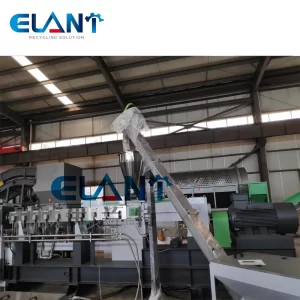
- The core shaping step is a pelletizing extruder: the machine melts, pressurizes, filters, and cuts the polymer melt into uniform granules.
- Recycled plastic pellets follow the same extrusion path but start with sorted, washed, shredded post-consumer or post-industrial waste instead of virgin resin.
- Pellet geometry (cylinder vs. sphere vs. micro-bead) is set by the die-face cutter design, not by the polymer itself.
- A well-calibrated pelletizing machine holds melt temperature within ±2 °C — outside that window, pellet density shifts and downstream processors reject the batch.
Before you start: what this guide covers (and what you’ll need)
This is a process walkthrough, not an operating manual. It covers the full chain from hydrocarbon feedstock to bagged pellets — virgin and recycled routes both. If you are evaluating a pelletizing machine purchase, our customers tell us this end-to-end picture is what’s missing from most supplier datasheets.
You do not need a chemistry background. You do need to care about three numbers before any serious sourcing decision: melt temperature range, throughput (kg/hr), and pellet cut tolerance (±mm).
Step 1: Understand what plastic actually is — polymer vs. plastic
Why this matters: Buyers who conflate “plastic” with “polymer” get burned on spec sheets. A polymer is any long-chain molecule built from repeating monomer units. Plastic is a polymer that has been formulated — additives, fillers, colorants included — into a processable material. Virgin HDPE resin leaving a chemical plant is a polymer. The black irrigation pipe it becomes is a plastic product.
This distinction matters because the pelletizing process handles the polymer, while the formulation (additives) is introduced either at compounding or just before pelletization. Asking a pellet supplier for “plastic specs” without specifying the polymer type is like asking a steel trader for “metal” — you’ll get whatever clears the warehouse.
The building blocks:
Plastics are built from hydrocarbons — molecules made exclusively of hydrogen and carbon atoms. Crude oil and natural gas are the primary hydrocarbon sources. Refining crude oil produces naphtha, a light fraction that sits between gasoline and kerosene in the distillation tower. Naphtha is the feedstock for roughly 90% of the world’s petrochemical-derived plastics.
At a steam cracker facility[1], naphtha is heated above 750 °C in the presence of steam. The hydrocarbon chains break apart — “crack” — into smaller molecules: primarily ethylene and propylene, with some butadiene and benzene as co-products. Ethylene becomes polyethylene (PE). Propylene becomes polypropylene (PP). These two polymers account for more than 50% of all plastic produced globally, according to Plastics Europe’s 2024 data[2].
Common mistake: Assuming all plastics share the same raw material. PET (bottles, fibers) starts from ethylene glycol and terephthalic acid derived from xylene — a different refinery cut altogether. PVC uses ethylene plus chlorine. Matching the right feedstock to the right plastic type is step zero in any procurement conversation.
Step 2: Polymerization — turning monomers into resin
Why this matters: The polymerization step determines the molecular weight and chain architecture that will control how the pellets behave at every downstream processing temperature.
After cracking, the ethylene or propylene monomers are fed into a reactor vessel under controlled pressure (typically 10–80 bar for gas-phase polymerization of PP) and temperature (60–100 °C). A catalyst — most commonly a Ziegler-Natta catalyst or a metallocene catalyst for tighter molecular weight distribution — triggers chain growth. Thousands of monomer units link together into a polymer chain. The reactor output is a powder or fluff: white, dry polymer in particles roughly 0.5–2 mm across.

| Item | Value |
|---|---|
| PE-HD | 52.0 |
| PE-LD | 42.0 |
| PP | 74.0 |
| PET | 30.0 |
| PVC | 43.0 |
| PS | 17.0 |
| Polymer | Reactor type | Typical pressure | Typical temp |
|---|---|---|---|
| HDPE | Gas-phase or slurry | 20–50 bar | 70–90 °C |
| LDPE | High-pressure tubular | 1 000–3 000 bar | 140–300 °C |
| PP | Gas-phase (Spheripol/Unipol) | 30–40 bar | 70–80 °C |
| PET | Melt-phase condensation | 1–5 mbar (vacuum) | 270–290 °C |
This powder cannot be used directly in injection-molding or blown-film lines — the particle size is inconsistent, flow is poor, and there are no stabilizer additives yet. Pelletization is what converts this powder into the consistent, flowable raw material that processors actually buy.
Common mistake: Treating all HDPE grades as interchangeable. Bimodal HDPE (produced in two reactors in series) has a different molecular weight distribution than unimodal grades — it processes at higher pressure and lower melt temperature, and a pelletizing machine not calibrated for that will produce fines.
Step 3: Compounding and additives — formulating the pellet recipe
Why this matters: A polymer without additives degrades under UV, oxidizes during processing, and fails at impact. Compounding is where the powder becomes a production-ready material.
The polymer powder is blended with a precisely weighed package of additives in a high-speed mixer before entering the extruder. Typical additive loadings for commodity plastics:
- Thermal stabilizers (0.05–0.3% by weight): protect the polymer chain during the high-temperature pelletizing step itself
- Antioxidants (0.1–0.5%): prevent oxidative degradation in storage and reprocessing
- UV stabilizers (0.1–1.0% for outdoor applications)
- Slip and antiblock agents (0.05–0.2%): critical for film packaging pellets — too little and the film blocks; too much and print adhesion suffers
- Colorants or carbon black (0–2%): for pipe and cable grades
- Fillers (10–40%): calcium carbonate, talc, glass fiber — these raise stiffness and lower raw material cost per kg
📝 Note: Additive suppliers publish “let-down ratios” — the concentration of masterbatch needed to hit a target property. When we review supplier specs for our customers, we ask for the actual let-down ratio and the base carrier polymer, because a mismatch between carrier and matrix polymer creates processing defects the pellet spec sheet will never flag.
Step 4: Extrusion — melting and homogenizing the polymer
Why this matters: The extruder is where all the components become one uniform melt. Inconsistency here propagates to every pellet in the batch.
The blended powder feeds into the barrel of a single-screw or twin-screw extruder. Twin-screw designs (co-rotating, intermeshing) are standard for compounding because they distribute additives faster and can handle high-filler loading. The screw geometry — compression ratio, L/D ratio (typically 36:1 to 52:1 for compounding), and mixing elements — is matched to the polymer type.
As the screw rotates, the material is conveyed forward, compressed, and sheared. Barrel heaters divided into 4–8 independent zones bring the material from ambient to melt temperature. For PP, that means ramping through roughly 170 °C (melting point) up to a processing temperature of 200–230 °C depending on MFI grade. For HDPE, the processing window is typically 200–240 °C. The melt exits the barrel at controlled pressure — usually 80–200 bar — into a screen changer or melt filter.
Common mistake: Setting barrel temperatures too high to “speed up” the process. For PP, sustained temperatures above 260 °C initiate chain scission — the pellets look fine but molecular weight has dropped, and the end-customer’s tensile strength test will fail. A good machine controller logs temperature deviation events; ask the factory to show you that log before accepting a trial batch.

Step 5: Filtering and die-face cutting — shaping the pellet
Why this matters: Pellet geometry directly controls how smoothly the material feeds into the downstream processor’s hoppers. Non-uniform pellets cause bridging, weight variation, and rejects.
After the screen changer removes contaminants above 80–150 µm (mesh size is specified per application), the filtered melt enters the die plate — a steel disk with precisely bored holes, typically 2.0–4.0 mm diameter for standard commodity pellets. The melt strands emerge from the die face and are cut by a rotating blade assembly spinning at 500–3000 RPM.
Two dominant cutting methods:
| Method | How it works | Best for | Pellet shape |
|---|---|---|---|
| Strand pelletizing | Strands cool in water bath, then cut | Commodity thermoplastics, low output | Cylinder |
| Underwater pelletizing (UWP) | Blade cuts at the die face, pellets quench in flowing water | High-throughput lines, engineered resins, compounding | Sphere or near-sphere |
| Hot-face (air-cooled) cutting | Blade cuts at die face, pellets cool in air stream | Masterbatch, brittle materials | Cylinder or lens |
Underwater pelletizing is the current industry standard for outputs above 1 t/hr. The water temperature — typically 30–50 °C — controls crystallization rate and surface finish. A water temperature that’s too cold causes surface stress cracking (“potato chip” pellets); too warm produces soft pellets that stick in the dryer.
⚠️ Warning: Die plate wear is the single most common cause of pellet diameter drift. On high-abrasive grades (glass-filled, carbon-black loaded), we recommend tungsten carbide die inserts and a physical pellet gauge check every 200 operating hours, not just relying on the screen readout.

Step 6: Drying, classifying, and bagging
Why this matters: Moisture content above 0.02% in hygroscopic pellets (PA, PET, PC) causes hydrolytic degradation during the customer’s processing step — a defect that traces back to inadequate post-pelletizing drying, not to the customer.
Pellets leaving the water-cooled cutting chamber contain surface moisture of 0.5–2% by weight. A centrifugal dryer removes bulk water mechanically, then a hot-air desiccant dryer brings residual moisture below specification — 300 ppm for PET, 800 ppm for PA6. Drying temperature must stay below the pellet’s softening point to avoid agglomeration.
After drying, vibrating sieves classify pellets by size — typically rejecting particles below 1.5 mm (fines) and above 5 mm (agglomerates). Fines are recycled back to the extruder feed; agglomerates are either reground or scrapped. The on-spec fraction is conveyed pneumatically to bagging or bulk silo storage.
Standard packaging for commodity plastics is a 25 kg woven PP bag with a PE liner, or 1000 kg octabin. For food-contact grades, the liner material must be certified food-safe — a detail that catches buyers off-guard when they switch suppliers mid-project.
How recycled plastic pellets are made
The recycled route shares Steps 4–6 with the virgin route but replaces polymerization and compounding with collection, sorting, washing, and size reduction. Here is where sourcing risk concentrates.
Collection and sorting: Post-consumer plastic waste — bottles, film, rigid packaging — arrives at a materials recovery facility (MRF). Automated near-infrared (NIR) sorting separates PE, PP, PET, and PVC streams. Contamination rates at this stage are the primary quality variable; mixed plastics streams that get through to the pelletizing extruder degrade the final pellet’s properties unpredictably.
💡 Pro tip: Before buying recycled pellets, ask the supplier for the NIR sorting purity certificate — not just a visual inspection report. A purity of ≥98% same-polymer is the threshold we require for customers using recycled content in structural applications. For packaging, ≥95% is workable if the downstream process has a melt filter.
Washing: Ground plastic flake is washed in a hot caustic bath (1–2% NaOH, 60–80 °C) to remove adhesives, labels, food residue, and surface contamination. A friction washer follows for films. Residual wash chemicals must be neutralized before extrusion — sodium traces in the melt catalyze polymer degradation.
Shredding and grinding: Washed material passes through a single-shaft shredder followed by a granulator to reach a consistent flake size of 8–15 mm. Consistent flake size is what prevents bridging in the extruder feed throat — uneven flake causes surging, which directly causes pellet weight variation.
Extrusion: The washed, dried flake enters a single- or twin-screw extruder. Recycled streams almost always require a higher-specification melt filter than virgin grades — typically 80–120 µm screens versus 150–200 µm for virgin — because of residual contaminants. The extrusion, cutting, and drying steps then mirror the virgin process exactly.
According to the Ellen MacArthur Foundation’s…[3], less than 9% of all plastic waste has been recycled globally since large-scale plastic production began. The gap between plastic waste generated and recycled pellets produced is where we see the most procurement interest from manufacturers under sustainability mandates.
Where plastic pellets come from — and why geography matters
Plastic pellets originate from two production nodes: integrated petrochemical complexes (where cracking, polymerization, and pelletizing happen on one site) and independent compounders (who buy base resin and pelletize with additives). The major integrated producers are concentrated in the US Gulf Coast, the Middle East, and East Asia — particularly Guangdong and Zhejiang provinces in China.
From those production sites, pellets move by container or bulk tanker. A 20-ft container holds approximately 14–16 tonnes of pellets in 25 kg bags. Bulk tanker containers (flexi-tanks) carry 20–22 tonnes but require the receiving facility to have pneumatic transfer equipment.
The UN Comtrade database[4] shows China, the United States, Saudi Arabia, and Germany as the four largest exporters of plastic pellets by volume. For buyers in Southeast Asia, Middle Eastern sourcing offers a landed cost advantage over Chinese domestic producers on PE and PP grades — but lead times run 6–8 weeks versus 2–3 weeks from a domestic Chinese compounder.
Why pyrolysis has not replaced conventional pellet production
Pyrolysis — heating plastic waste in the absence of oxygen to break polymer chains back into hydrocarbon oils — is technically capable of closing the plastic-to-plastic loop without the sorting limitations of mechanical recycling. A pyrolysis unit can process mixed, contaminated plastics that mechanical lines cannot.
Yet as of 2025, pyrolysis output represents under 1% of global plastic pellet production capacity. The barriers are structural, not technical:
- Yield economics: A typical pyrolysis reactor converts approximately 60–70% of input plastic to usable oil; the remainder is char (15–20%) and gas (10–20%). The oil must then be refined and re-cracked before polymerization — adding two processing steps and their associated capital costs versus the virgin petrochemical route.
- Contamination sensitivity: Chlorine-containing plastics (PVC, some food packaging) produce hydrochloric acid in the pyrolysis reactor, corroding equipment and contaminating the output oil. Pre-sorting requirements partially negate the “handles mixed plastics” advantage.
- Regulatory uncertainty: Chemical recycling outputs face inconsistent classification across jurisdictions. In the EU, Article 61 of the Waste Framework Directive…[5] has been debated since 2022 without resolution — investors cannot finalize project financing without knowing whether pyrolysis oil qualifies as “recycled content” under packaging regulations.
- Scale: A large mechanical recycling line processes 5–15 t/hr. Commercial pyrolysis plants currently operate at 1–3 t/hr with higher energy inputs per tonne of output pellet.
This does not mean pyrolysis is stalled permanently. Eastman’s molecular recycling facility in…[6] brought 110,000 tonnes/year of methanolysis capacity online in 2024 for PET — a model that may repeat for polyolefins as carbon pricing increases the cost gap between virgin and chemically recycled feedstock.
What plastic pellets are made of — material by material
Plastic pellets and plastic beads are made of the same base polymers; “bead” typically denotes a spherical pellet below 3 mm used in cosmetics, industrial abrasives, or as precursor material. “Granule” is the European terminology for the same object North Americans call a pellet.
The main ingredient in any plastic is the polymer backbone — carbon-carbon or carbon-oxygen chains derived from petrochemical monomers. Secondary ingredients are the additive package: stabilizers, plasticizers, fillers, colorants. The additive weight fraction varies from under 1% (natural-color commodity PE) to 60% (highly filled PP compounds for automotive).
The first fully synthetic plastic, Bakelite — developed by Leo Baekeland in 1907[7], was a thermoset phenol-formaldehyde resin. It could not be remelted, which meant no pelletizing in the modern sense. The shift to thermoplastics — polyethylene discovered in 1933 at ICI, polypropylene in 1954 by Giulio Natta — created the melt-process-pelletize-remelt cycle that defines modern plastic processing.
Before plastics, manufacturers used shellac (insect-derived resin), hard rubber (vulcanized natural latex), cellulose nitrate (flammable, eventually replaced by cellulose acetate), and animal horn for rigid molded products. None scaled to the volumes or geometries that injection-molded thermoplastic pellets made possible after World War II.
Key facts at a glance
| Parameter | Typical value |
|---|---|
| Naphtha cracking temperature | 750–850 °C |
| Polymerization reactor pressure (PP gas-phase) | 30–40 bar |
| Standard pellet diameter | 2.5–4.0 mm |
| Standard pellet length (cylinder) | 3.0–5.0 mm |
| Weight variation tolerance (UWP line) | ±3–5% per pellet |
| Melt temperature — PP processing | 200–230 °C |
| Melt temperature — HDPE processing | 200–240 °C |
| Post-drying moisture — PET pellets | < 300 ppm |
| First synthetic plastic | Bakelite, 1907 |
| Global recycling rate (all plastics) | < 9% as of 2023 |
How long does PP actually take to decompose?
Polypropylene pellets and products made from them are estimated to persist in the environment for 20–30 years under UV-exposed outdoor conditions, and potentially 400–500 years in marine sediment where UV and oxygen are limited, according to degradation modeling studies[8]. This decomposition timeline is why the sourcing of recycled PP granules is a growing specification requirement — OEMs facing extended producer responsibility (EPR) legislation in the EU and UK have been asking our team for traceability documentation on recycled content fractions since 2023.
Troubleshooting common pelletizing defects
| Problem | Probable cause | Fix |
|---|---|---|
| Tails / angel hair on pellets | Blade too slow or blade gap too wide | Increase blade RPM; reduce blade-to-die gap to 0.1–0.3 mm |
| Pellet agglomeration in dryer | Melt temperature too high or dryer inlet temperature too high | Reduce last barrel zone by 10 °C; check dryer inlet temp < (Tg − 20 °C) |
| Fines > 2% of output | Die holes partially blocked or blade wear | Clean die plate; replace blade; check pressure drop across die |
| Weight variation > 8% | Extruder surging from uneven feed | Check feed throat cooling; verify flake/powder bulk density consistency |
| Discoloration (yellowing) | Thermal degradation — residence time too long | Reduce screw speed; increase throughput to reduce residence time |
What to do next
If you are evaluating a plastic pellets making machine for a new line or expansion, the next step is a throughput and polymer compatibility audit — matching the screw design, L/D ratio, and die configuration to your specific resin grades before quoting. Our team regularly walks customers through this spec matching process; start with our plastic pelletizing machine buyer’s guide for a checklist of the 12 questions to ask any equipment supplier before requesting a formal quotation.
For buyers focused on the recycled route, the washing system design upstream of the extruder is the most under-specified component in most project plans. Our plastic washing and recycling line overview covers the NIR sorting, friction washing, and dewatering stages in the same depth this article applied to the extrusion and cutting steps.
If you need to compare specific machine configurations — single-screw vs. twin-screw for your application, or strand vs. underwater pelletizing for your output rate — our pelletizer machine comparison guide has worked through those trade-offs with production numbers from lines we’ve supplied.
FAQ
Where do plastic pellets come from?
Plastic pellets come from refined petroleum or natural gas liquids processed at petrochemical plants. Crude oil is distilled into naphtha or ethane, which is then cracked into monomers like ethylene or propylene. Those monomers are polymerized into resin, compounded with additives, and finally extruded and cut into the uniform granules that resin traders and manufacturers buy by the metric ton.
Why is pyrolysis not widely used?
Pyrolysis remains niche because the economics are difficult at scale. Energy input is high, output quality is inconsistent, and the resulting pyrolysis oil requires significant upgrading before it can re-enter a cracker as feedstock. Regulatory uncertainty around recycled-content claims adds another barrier. Virgin feedstock from conventional refining is still cheaper and more consistent for most producers, which limits commercial adoption of pyrolysis despite growing interest.
Sources
[1] Intensification of Ethylene Production from Naphtha via a … — sciencedirect.com
[2] Plastics the Fast Facts 2025 — plasticseurope.org
[3] How to Prevent Plastic Pollution and Eliminate Waste — ellenmacarthurfoundation.org
[4] UN Comtrade — comtrade.un.org
[5] Waste Framework Directive – EU Environment – European Union — environment.ec.europa.eu
[6] Molecular Recycling Facility Generating Revenue — eastman.com
[7] Leo Hendrik Baekeland — sciencehistory.org
[8] Simulated degradation of low-density polyethylene and … — sciencedirect.com