
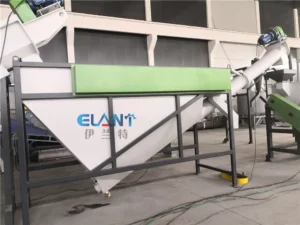
In a pet bottle recycling machine, label removal often gives early warning signs before the whole line loses efficiency. Operators may first notice more label pieces in the washer, more floating impurities in the separation tank, film wrapping around shafts, higher crusher load, cloudy hot-wash water, or a sudden drop in PET flake cleanliness. These problems may look small at the beginning, but they can quickly turn into downtime, higher labor cost, unstable washing performance, and lower final flake value.
This article is built from common SERP themes found in top-ranking PET bottle recycling and label remover content: machine working principles, label remover troubleshooting, dry and wet label removal differences, blade inspection, foreign-object control, washing line flow, contamination prevention, and maintenance checklists. It also uses Elant Machinery’s actual PET recycling pages as internal references, including the PET bottle recycling machine solution, the PET bottle washing line, the PET Bottle Recycling Machine 3ton/hr, and the Pet Recycling machine 500kg/hr for PET bottles.
1. Where Label Removal Fits in a PET Bottle Recycling Machine
A PET bottle recycling machine is not one single machine. It is normally a complete line that may include bale opening, label removal, manual or automatic sorting, metal detection, crushing, washing, density separation, hot washing, friction washing, moisture removal, drying and product collection. Elant’s 500kg/hr PET bottle recycling machine page describes a flow that starts with label separation and manual sorting, then moves into size reduction, washing and density separation, friction washing, hot washing, second washing, moisture removal and product collection.
The PET Bottle Recycling Machine 3ton/hr page also describes a complete process that includes label-removing, crushing, washing, drying and packing. That is important because label removal is not a separate cosmetic step. It protects the crusher, reduces the washing load, improves separation performance and helps the plant produce cleaner PET flakes. When label removal begins to fail, the problem does not stay in one machine. It travels downstream.
External recycling guidance also supports this system view. The U.S. EPA recycling basics page explains recycling as collecting and processing materials that would otherwise become trash and turning them into new products.
Source: https://www.epa.gov/recycle/recycling-basics-and-benefits For PET bottles, this processing stage depends heavily on sorting, cleaning and contamination control.
2. Why Label Removal Failure Is Expensive
Label removal failure usually increases cost in several places at once. If labels remain on bottles before crushing, they enter the granulator and washing system. Paper labels can create fibers and sediment. PP and PE labels may float but still increase the burden on separation. PVC shrink sleeves are more dangerous because they can affect material quality if they are not removed early enough. Glue and ink can create surface contamination and may require stronger hot washing.
When the label removal section becomes unstable, operators may try to slow down the line. This improves temporary control, but it reduces daily production. If they continue at the same speed, contamination increases. If they stop the line frequently, uptime falls. This is why label removal must be checked before it fails completely.
The Association of Plastic Recyclers Design Guide overview is a useful external reference because packaging design, labels, adhesives and closures all influence recyclability and processing difficulty.
Source: https://plasticsrecycling.org/apr-design-hub/apr-design-guide-overview/ A recycling plant cannot control every bottle design that enters the facility, but it can adjust inspection and process settings according to the material stream.
3. Early Warning Signs Before Label Removal Fails
Most label removal failures are not sudden. They build up through repeated small changes. A shift supervisor may notice that label residue increases from 3% to 6%, but production continues. A maintenance technician may hear a new vibration near the label remover but delay inspection. A washing operator may see more floating label pieces in the tank but assume the separator can handle it. These early signals should not be ignored.
Label Removal Warning Signs and First Checks
| Warning sign | Likely cause | First check | Risk if ignored |
|---|---|---|---|
| More labels remain on bottles after the label remover | Blade wear, wrong clearance, overloaded feed, unsuitable label type | Inspect blade edge, shaft condition, feed rate and label material | More contamination in crusher and washing tanks |
| Film wraps around shafts or rotating parts | Long shrink sleeves, poor discharge, low cleaning frequency | Stop safely, remove wrapped film, inspect shaft and discharge area | Motor overload, bearing stress and sudden shutdown |
| Higher noise or vibration | Foreign objects, loose parts, bearing wear, unbalanced rotor | Check for metal, stones, loose bolts, bearing temperature and alignment | Mechanical damage and safety risk |
| Label pieces increase in float tank | Removal rate has dropped or feedstock label load increased | Compare incoming bottle samples with post-label-remover samples | Poor separation, higher water treatment load, dirty flakes |
| Crusher current rises after label section | Too many labels, caps, foreign objects or unstable feeding | Check material stream before crusher and remove hard contaminants | Crusher blockage, blade wear and reduced uptime |
4. Check Incoming Bottles Before Blaming the Machine
Before adjusting the pet bottle recycling machine, check whether the incoming feedstock has changed. A label remover that performed well yesterday may struggle today if the bale contains more full-body shrink sleeves, thicker adhesives, wet paper labels, crushed bottles or non-PET containers. In many plants, label removal performance changes because the material stream changes, not because the machine suddenly becomes defective.
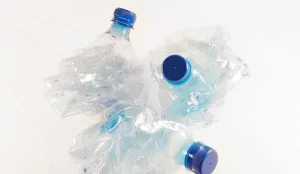
Operators should take small samples from incoming bales at the start of each shift. The sample should record bottle type, moisture level, label type, cap percentage, crushed bottle percentage, visible foreign objects and heavy contamination. If a bale contains a high share of shrink sleeves or adhesive labels, the operator can adjust feed rate or schedule closer inspection of the label remover. This simple habit prevents many downstream problems.
Incoming Material Check Before Label Removal
| Material item | What to observe | Why it matters | Action |
|---|---|---|---|
| Label type | Paper, PP, PE, PVC shrink sleeve, full-body sleeve | Different labels require different removal force and separation strategy | Record dominant type and adjust feed speed if needed |
| Bottle condition | Whole, crushed, flattened, wet, dirty | Deformed bottles may expose labels unevenly and affect machine contact | Use pre-sorting or bale opening control |
| Foreign objects | Metal, stones, glass, wood, wire, large caps | Hard objects can damage blades and shafts | Remove before entering label remover |
| Moisture and mud | Wet labels, soil, sand, sticky residue | Can increase buildup and reduce removal consistency | Strengthen pre-cleaning and maintenance inspection |
5. Inspect Blades, Shafts and Wear Parts
Blade condition is one of the most important checks when label removal efficiency drops. Worn blades may still rotate normally, but they no longer scrape, cut or separate labels effectively. A dull blade can also increase load because the machine spends more energy moving material without removing labels efficiently.
Operators should inspect blades for wear, bending, missing edges, uneven clearance and buildup. The shaft should be checked for wrapping, vibration and abnormal heating. Bearings and drive components should be inspected for noise and temperature. If the equipment has inspection doors, they should be used regularly, but only after the machine is safely stopped and locked out according to the plant’s safety procedure.
For customers comparing new equipment, it is useful to review Elant’s article on choosing the right control point for PET recycling machinery. It emphasizes monitoring points such as washing effectiveness, impurities, moisture content and material purity, which connect directly with label removal performance.
6. Keep Feeding Stable to Protect Label Removal Rate
Unstable feeding is a common hidden reason for label removal failure. When bottles enter too quickly, the machine may not have enough contact time to remove labels. When the feed is too light, the machine may operate below its best efficiency range. Surges can also increase motor load, cause wrapping and create uneven downstream washing conditions.
The solution is not always to buy a larger machine. Often, the better solution is to stabilize feeding with proper conveyor speed, bale opening, buffer storage and operator control. The PET bottle washing line should be considered as a complete process: if the label remover feeds too much material into the crusher at once, the crusher, washer and dryer all become unstable.
7. Connect Label Removal Checks with Washing Quality
Label removal performance should be evaluated by looking at downstream washing results. If label pieces, paper fibers, glue, ink or floating impurities increase in washing tanks, the label remover may need adjustment. If flakes look clean but water becomes dirty too quickly, labels may be breaking into small pieces and entering the wash water. If flakes have more black spots or colored residue, sorting and label removal should both be reviewed.
The 3ton/hr PET bottle recycling machine page lists process steps such as bale breaker, mechanical label remover, metal detector, manual sorting table, crusher, float washing tank, hot washer, friction washer, dewatering machine and drying system. This is useful because it shows that label removal is linked to every later stage. Operators should not inspect label removal in isolation.
Downstream Quality Symptoms Linked to Label Removal
| Downstream symptom | Possible label-removal issue | Check point | Recommended response |
|---|---|---|---|
| Too many floating impurities | Large amount of label material entering wash tank | Post-label-remover bottle sample and float tank surface | Adjust removal section and inspect discharge |
| Glue residue on flakes | Adhesive labels not loosened or separated well | Hot wash temperature, detergent use, label material | Improve pre-removal and washing settings |
| More colored specks | Printed sleeves breaking into fragments | Label type and screen/filter condition | Improve label removal and separation before final rinsing |
| Crusher overload | Labels, caps or foreign objects reaching crusher | Material stream between label remover and crusher | Improve sorting and metal/foreign-object control |
8. Dry vs Wet Label Removal: What Operators Should Watch
SERP results often discuss dry and wet label removal because both appear in PET recycling equipment discussions. Dry label removal usually works before washing and can reduce label material before bottles enter crushing. Wet label removal may help loosen paper labels and adhesive while also providing a pre-washing effect. The correct choice depends on label type, bottle condition, water system design and target flake quality.
If bottles have many paper labels, moisture can help loosen fibers and adhesive. If bottles have full-body plastic shrink sleeves, mechanical scraping, cutting or separation may be more important. If the plant already has strong pre-washing and hot washing, the label remover may be configured differently than a plant trying to remove as much label material as possible before the crusher.
Packaging and label design remain a major industry issue. Petcore Europe provides PET circularity information that is helpful for understanding broader PET recycling goals and material quality expectations.
Source: https://www.petcore-europe.org/
9. Maintenance Schedule Before Failure Happens
A good maintenance schedule separates quick shift checks from deeper weekly or monthly checks. Shift checks should be simple enough for operators to perform without delaying production. Weekly checks should focus on wear parts, drive components and buildup points. Monthly checks should review trend data: removal rate, downtime events, blade replacement frequency, water contamination, final flake impurity level and maintenance cost.
| Check frequency | Inspection item | What to record | Who should check |
|---|---|---|---|
| Every shift | Incoming label type, post-removal bottle sample, abnormal noise | Label residue level, feed changes, sound or vibration notes | Operator or shift supervisor |
| Daily | Discharge area, wrapping, screen condition, motor load | Any blockage, wrapping, cleaning time and motor current trend | Operator and maintenance technician |
| Weekly | Blade wear, shaft condition, bearing temperature, fasteners | Wear level, replacement needs, alignment issues | Maintenance team |
| Monthly | Removal rate trend, downtime reasons, flake impurity trend | Root cause summary and improvement actions | Plant manager and maintenance lead |
10. Protect Final PET Flakes and Downstream Pelletizing
Some PET recycling plants sell washed flakes. Others continue to pelletizing, sheet production, fiber production or bottle-grade preparation. In each case, label removal problems create downstream risk. More labels and glue can reduce flake quality. More contamination can make pelletizing less stable. More moisture and fine particles can increase extrusion variation.
Readers planning downstream processing can also review Elant’s PET pelletizing machine, plastic crystallizer and dehumidification dryer, and solid state polymerization system pages. These internal links help connect the article topic with downstream PET material preparation.
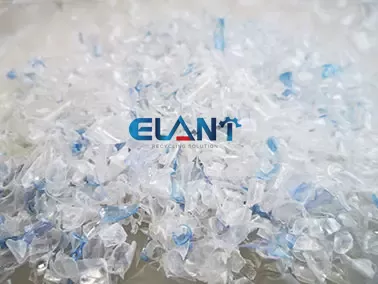
The scientific review Polyethylene Terephthalate (PET) Bottle-to-Bottle Recycling for the Beverage Industry gives broader context on PET bottle-to-bottle recycling and why process quality matters for higher-value applications.
Source: https://pmc.ncbi.nlm.nih.gov/articles/PMC9231234/
11. PET Bottle Recycling Machine Failure Flow Diagram
12. Practical Troubleshooting Sequence
When label removal performance drops, do not adjust every part of the line at once. Use a structured troubleshooting sequence. First, take an incoming bottle sample. Second, take a sample immediately after label removal. Third, compare the two samples. Fourth, check blade wear and wrapping. Fifth, inspect feed speed and motor current. Sixth, inspect downstream tanks for label fragments and glue residue. Seventh, record the corrective action and review the result after one shift.
This sequence prevents guessing. It also creates a maintenance history that helps the plant understand whether the problem is caused by material changes, operator settings, wear parts or machine configuration. Over time, the plant can define normal operating ranges for each bottle source.
Industry news sources such as Recycling Magazine can be used to follow broader recycling technology updates and operating challenges across the industry.
Source: https://www.recycling-magazine.com/ For sustainability context, the UNEP plastic pollution page explains the global challenge of plastic pollution and why better recycling systems matter.
Source: https://www.unep.org/topics/chemicals-and-pollution-action/plastic-pollution
13. Buyer Checklist Before Choosing a PET Bottle Recycling Machine
For buyers, label removal should be part of the equipment evaluation. Do not only ask for capacity. Ask what label types the machine can handle, how blades are maintained, how easy inspection is, how the system prevents wrapping, whether water is used, how the machine connects with sorting and crushing, and what bottle conditions have been tested.
| Buyer question | Why it matters | What to ask supplier |
|---|---|---|
| What label types are common in our feedstock? | Label material affects removal method and removal rate. | Can the line handle paper, PP, PE and shrink-sleeve labels? |
| What is our target flake quality? | Higher quality requires stronger control over labels and glue. | What washing, separation and drying configuration is recommended? |
| How much capacity do we really need? | Oversized lines can create feeding and maintenance problems. | Can the line be designed around actual bottle quality and labor? |
| How easy is maintenance? | Difficult inspection reduces preventive maintenance. | Where are inspection doors, wear parts and critical service points? |
Elant’s About Elant page can support trust building for readers who want to understand the manufacturer, while the Contact Us page can be used as a conversion link for buyers who need a line configuration based on bottle condition, capacity and output requirements.
14. FAQ About Label Removal in PET Bottle Recycling Machines
What should be checked first when label removal efficiency drops?
Check the incoming bottle stream first, then inspect blade wear, shaft wrapping, feed rate, discharge condition, screen blockage, motor load and downstream label residue. Do not assume the machine is the only cause before checking material changes.
Why does label removal failure affect the whole PET bottle recycling machine?
Labels, glue and ink can move into crushing, washing, floating separation, drying and pelletizing. This raises contamination, increases water treatment load, reduces uptime and may lower PET flake value.
How often should operators inspect the label removal section?
A quick inspection should be done every shift. Wear parts and mechanical components should be checked weekly or according to line workload. Removal rate trends and downtime causes should be reviewed monthly.
Can one PET bottle recycling machine handle different bottle labels?
Yes, but removal performance depends on label material, adhesive, bottle shape, moisture, feed rate and line configuration. Mixed label streams usually require closer monitoring and parameter adjustment.
Conclusion: Check Label Removal Before It Becomes a Line-Wide Failure
Label removal is one of the most important early control points in a pet bottle recycling machine. When it works well, it protects the crusher, reduces washing burden, improves separation, supports stable drying and helps produce cleaner PET flakes. When it fails, the whole line suffers through higher contamination, more downtime, more cleaning and lower material value.
The best strategy is preventive checking. Inspect incoming bottles, monitor post-label-removal samples, maintain blades and shafts, stabilize feeding, connect label removal results with washing quality, and record trends over time. For buyers, choose a PET bottle recycling line based on real feedstock and target flake quality rather than capacity alone. For operators, treat every increase in label residue as an early warning signal, not a minor inconvenience.
External Sources Used in This Article
- U.S. EPA — Recycling Basics and Benefits
Visible URL: https://www.epa.gov/recycle/recycling-basics-and-benefits - Association of Plastic Recyclers — APR Design Guide Overview
Visible URL: https://plasticsrecycling.org/apr-design-hub/apr-design-guide-overview/ - Petcore Europe — PET Circularity and Recycling Information
Visible URL: https://www.petcore-europe.org/ - Recycling Magazine — Recycling Industry Updates
Visible URL: https://www.recycling-magazine.com/ - UNEP — Plastic Pollution
Visible URL: https://www.unep.org/topics/chemicals-and-pollution-action/plastic-pollution - PMC / MDPI Review — PET Bottle-to-Bottle Recycling
Visible URL: https://pmc.ncbi.nlm.nih.gov/articles/PMC9231234/