
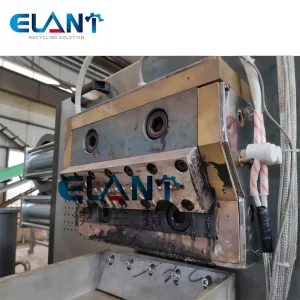
Plastic pellet recycling turns waste plastics into reusable pellets for molding, extrusion, compounding, and manufacturing. However, many recycling plants face a common production issue: extrusion stability drift. When melt flow, pressure, temperature, feeding, or cooling becomes unstable, recycled plastic pellets may show inconsistent size, bubbles, color variation, poor surface quality, or weak downstream performance.
Extrusion stability drift is rarely caused by one single problem. It often comes from material variation, moisture, contamination, worn screws, poor melt filtration, unstable feeding, or cooling imbalance. This guide explains why stability drift happens, how to identify the root cause, and what recycling plants can do next to improve pellet quality and production reliability.
For related equipment, Elant Machinery provides plastic pelletizing machines, twin screw extrusion pelletizing lines, PP PE LDPE plastic film pelletizing machines, and HDPE rigid plastic flakes pelletizing machines.
What Is Plastic Pellet Recycling?
Plastic pellet recycling is the process of converting waste plastic into small, uniform granules that can be reused as raw material. These recycled plastic pellets may come from PET, HDPE, LDPE, LLDPE, PP, or mixed plastic streams, depending on the recycling plant and application.
A typical pelletizing process includes sorting, crushing or shredding, washing, drying, feeding, extrusion, melt filtration, degassing, cutting, cooling, drying, and pellet collection. For a process overview, see Elant Machinery’s guides on the plastic pelletization process and how a pelletizing machine works.
| Process Stage | Main Purpose | Risk if Poorly Controlled |
|---|---|---|
| Sorting | Separate plastics by type and remove foreign materials | Mixed polymers and contamination enter extrusion |
| Washing | Remove dirt, labels, oil, and residue | Contaminants create poor pellet quality |
| Drying | Reduce moisture before extrusion | Bubbles, steam, odor, and unstable melt pressure |
| Extrusion | Melt and homogenize plastic material | Pressure and temperature drift |
| Melt filtration | Remove solid contaminants from molten plastic | Filter clogging and pellet defects |
| Degassing | Remove moisture, air, and volatiles | Porous pellets and odor issues |
| Pellet cutting and cooling | Create uniform pellets and stabilize shape | Irregular pellet size, sticking, or fines |
What Is Extrusion Stability Drift?
Extrusion stability drift means the extrusion process gradually moves away from stable operating conditions. Instead of holding steady melt pressure, temperature, screw load, and pellet shape, the line begins to fluctuate. This may happen over minutes, hours, or shifts.
In plastic pellet recycling, drift is especially common because recycled feedstock is less uniform than virgin resin. Moisture, contamination, melt index variation, polymer mixing, and material degradation can all affect melt behavior.
| Stability Signal | Possible Meaning | Common Root Cause |
|---|---|---|
| Melt pressure rises slowly | Filter blockage or contamination buildup | Dirty flakes, poor washing, undersized filtration |
| Melt pressure fluctuates | Unstable feeding or moisture vapor | Wet material, bridging, inconsistent feed rate |
| Screw load changes suddenly | Material viscosity variation | Mixed plastics or changing melt index |
| Pellets show bubbles | Moisture or volatiles remain in melt | Poor drying or insufficient degassing |
| Pellet size becomes uneven | Cutting or cooling instability | Blade wear, unstable strand, poor water control |
| Color changes during production | Thermal stress or contamination | Overheating, residence time, mixed materials |
Why Extrusion Stability Drift Happens in Recycled Plastic Pelletizing
Unlike virgin plastic, recycled plastic often contains variation from previous use, collection, sorting, washing, and storage. Even when the same resin type is processed, feedstock can differ in moisture level, contamination, melt index, bulk density, and degradation history.
Elant Machinery’s article on common causes of inconsistent pellet quality explains several quality issues that often appear when extrusion stability is not controlled.
| Cause | How It Affects Extrusion | Control Method |
|---|---|---|
| Moisture in flakes or film | Creates steam, bubbles, pressure fluctuation, and odor | Improve drying, squeezing, and degassing |
| Mixed plastic types | Different melting behavior causes unstable viscosity | Improve sorting and material stream control |
| Dirt and solid contamination | Clogs filters and damages screw or die | Strengthen washing and melt filtration |
| Feed rate fluctuation | Changes screw load and melt pressure | Use stable feeding and compaction control |
| Material degradation | Changes viscosity, color, odor, and mechanical properties | Control temperature and residence time |
| Worn screw or barrel | Reduces melting and conveying consistency | Inspect wear and replace parts when needed |
| Poor cooling control | Causes sticking, deformation, or unstable pellet size | Optimize pellet cooling and cutting system |
Material Type and Extrusion Stability
Different plastics behave differently in the extruder. HDPE, LDPE, LLDPE, PP, PET, and elastomers each require different temperature settings, screw design, filtration, degassing, and cutting methods.
| Plastic Type | Common Recycled Feedstock | Stability Concern | Recommended Focus |
|---|---|---|---|
| HDPE | Bottles, drums, rigid flakes | Contamination, melt filtration, color variation | Washing, filtration, stable temperature control |
| LDPE/LLDPE | Film, bags, stretch wrap | Moisture, feeding instability, low bulk density | Compaction, squeezing, degassing |
| PP | Woven bags, caps, rigid plastics | Melt flow variation and contamination | Sorting, filtration, screw design |
| PET | Bottle flakes, fibers, film | Moisture sensitivity and degradation | Drying, crystallization, temperature control |
| TPE/Elastomer | Soft scraps or compounds | Cutting and cooling instability | Underwater pelletizing and temperature control |
Relevant equipment examples include the HDPE plastic pelletizing machine, ECS130 PE LDPE HDPE LLDPE film pelletizing machine, twin screw extruder pelletizer machine, and underwater pelletizer machine.
Melt Filtration: A Key Control Point
Melt filtration is one of the most important tools for stabilizing recycled plastic extrusion. When contaminants accumulate at the filter, melt pressure rises. If operators wait too long to change screens or if the filter area is undersized, pressure drift can reduce pellet quality and production stability.
For more detail, see Elant Machinery’s article on how melt filtration problems affect pellet quality and production stability.
| Melt Filtration Issue | Production Symptom | Next Step |
|---|---|---|
| Filter area too small | Rapid pressure rise | Use larger filter area or more suitable screen changer |
| High contamination load | Frequent screen changes | Improve upstream washing and sorting |
| Wrong mesh size | Either poor filtration or fast blockage | Match mesh size to material and quality target |
| Delayed screen change | Melt pressure spike and unstable strand | Set pressure-based screen change limits |
| Contaminants pass through | Black spots or pellet defects | Review filtration grade and upstream cleaning |
Moisture and Degassing Control
Moisture is one of the fastest ways to destabilize extrusion. Wet flakes or film can create vapor inside the extruder, causing pressure fluctuation, bubbles, odor, and poor pellet appearance. Degassing helps remove moisture and volatiles, but it cannot fully compensate for poor drying.
Elant Machinery’s step-by-step guide to pelletizing degassing techniques explains how venting and vacuum systems support pelletizing stability.
| Moisture Control Point | What to Check | Why It Matters |
|---|---|---|
| Washed material dryness | Moisture level before feeding | Reduces bubbles and vapor pressure |
| Film squeezing | Mechanical dewatering efficiency | Improves feeding and lowers energy use |
| Vacuum degassing | Vacuum level and vent cleanliness | Removes volatiles and residual moisture |
| Vent blockage | Material buildup around degassing port | Blocked vent reduces degassing performance |
| Material storage | Rain, humidity, and reabsorption | Prevents dry material from becoming wet again |
Cooling and Pellet Cutting Stability
Even if extrusion is stable, poor pellet cooling can create defects. Pellet sticking, irregular shape, excessive fines, and poor surface appearance may come from cooling water temperature, cutter blade wear, die pressure changes, or strand instability.
For related troubleshooting, see Elant Machinery’s article on why pellet cooling fails and how to prevent it.
| Cooling/Cutting Issue | Visible Problem | Corrective Action |
|---|---|---|
| Cooling water too warm | Pellets stick together | Stabilize cooling water temperature |
| Blade wear | Irregular pellet length or fines | Adjust or replace cutting blades |
| Unstable strand | Broken strands or uneven pellets | Check melt pressure, die temperature, and cooling path |
| Poor dewatering after cutting | Wet pellets and storage problems | Improve centrifugal drying or air drying |
| Wrong cutting method | Pellet shape does not match material behavior | Review strand, water-ring, or underwater pelletizing options |
Operator Checklist for Stability Drift
When extrusion stability begins to drift, operators should avoid guessing. A structured checklist can quickly narrow the cause.
| Check Area | Question to Ask | Likely Action |
|---|---|---|
| Feedstock | Did the material batch change? | Check resin type, contamination, and moisture |
| Feeding | Is the feeder delivering material consistently? | Adjust feeding rate or compactor settings |
| Temperature | Are barrel and die zones stable? | Check heaters, sensors, and PID settings |
| Melt pressure | Is pressure rising or fluctuating? | Inspect filter and screen changer |
| Degassing | Is the vacuum system working correctly? | Clean vent and check vacuum pump |
| Screw and barrel | Is wear affecting conveying or melting? | Schedule inspection and wear measurement |
| Pellet cutting | Are pellets uniform after cutting? | Check cutter blades, die face, and cooling |
Preventive Maintenance for Stable Pellet Recycling
Stability drift often comes from gradual wear and process drift. Preventive maintenance helps recycling plants keep output stable and avoid emergency downtime.
| Maintenance Item | Recommended Focus | Benefit |
|---|---|---|
| Screw and barrel | Inspect wear, scratches, and conveying efficiency | Maintains consistent melting and pressure |
| Screen changer | Clean sealing surfaces and monitor pressure | Reduces leakage and sudden pressure spikes |
| Degassing port | Remove buildup and check vacuum system | Improves moisture and volatile removal |
| Temperature sensors | Calibrate and replace faulty sensors | Prevents hidden thermal instability |
| Cutter blades | Adjust clearance and replace worn blades | Improves pellet uniformity |
| Cooling system | Control water temperature and flow | Prevents sticking and deformation |
External Recycling and Design References
Plastic pellet recycling supports material recovery and circular manufacturing. For broader recycling context, the U.S. EPA provides information on reduce, reuse, and recycle. ISO 15270 provides guidance related to plastics recovery and recycling. The Association of Plastic Recyclers also offers the APR Design Guide, which is useful for understanding packaging design and recyclability considerations.
FAQ
What is extrusion stability drift in plastic pellet recycling?
Extrusion stability drift is the gradual loss of stable melt pressure, temperature, feeding, or pellet cutting performance during recycled plastic pelletizing. It can lead to inconsistent pellets, bubbles, pressure fluctuation, and production downtime.
Why is recycled plastic more likely to cause extrusion drift than virgin resin?
Recycled plastic often has more variation in moisture, contamination, melt flow, polymer type, and degradation history. These differences make extrusion harder to keep stable.
How does moisture affect recycled pellet quality?
Moisture can turn into steam inside the extruder, causing bubbles, odor, pressure instability, and porous pellets. Good drying and degassing are essential for stable pelletizing.
Why does melt pressure rise during pelletizing?
Melt pressure may rise because of filter blockage, contamination buildup, incorrect mesh size, material viscosity changes, or die restriction.
How can melt filtration improve extrusion stability?
Melt filtration removes solid contaminants from molten plastic. Proper filtration helps reduce black spots, die blockage, and pressure instability.
What causes bubbles in recycled plastic pellets?
Bubbles are often caused by moisture, trapped air, volatile contaminants, insufficient degassing, or unstable melt temperature.
When should a recycling plant use twin screw pelletizing?
Twin screw pelletizing is useful for compounding, additives, fillers, mixed formulations, and applications that require stronger mixing and dispersion.
How can operators reduce pellet size variation?
Operators should check cutter blade wear, die pressure stability, cooling conditions, strand stability, and feeding consistency.
Is extrusion stability only a machine problem?
No. Stability depends on both machine condition and material quality. Sorting, washing, drying, feeding, filtration, degassing, and cooling all affect the final result.
What is the first step when extrusion stability starts drifting?
The first step is to check whether the feedstock changed. Then review moisture, feeding rate, melt pressure, filter condition, temperature settings, and degassing performance.
Conclusion
Extrusion stability drift is one of the most important challenges in plastic pellet recycling. It affects pellet quality, production output, energy use, downtime, and downstream usability. The root causes often include moisture, contamination, mixed plastic streams, unstable feeding, poor melt filtration, insufficient degassing, screw wear, and cooling imbalance.
Recycling plants can improve stability by controlling feedstock quality, strengthening washing and drying, using suitable melt filtration, maintaining degassing performance, monitoring pressure and temperature, and choosing pelletizing equipment that matches the material.
For related solutions, explore Elant Machinery’s Plastic Pelletizing Machine, Twin Screw Extrusion Pelletizing Line, Plastic Film Pelletizing Machine, Plastic Pelletizing Machine Guide, and Contact Us pages.