
Horsepower is what most buyers anchor on when comparing industrial plastic shredders — but torque is the number that actually predicts whether the machine stalls on your material. Choosing the right industrial plastic shredder means first understanding the difference between a plastic shredder and a plastic crusher, then matching shaft configuration, screen size, and drive torque to your exact feed stock, throughput target, and output size requirement.
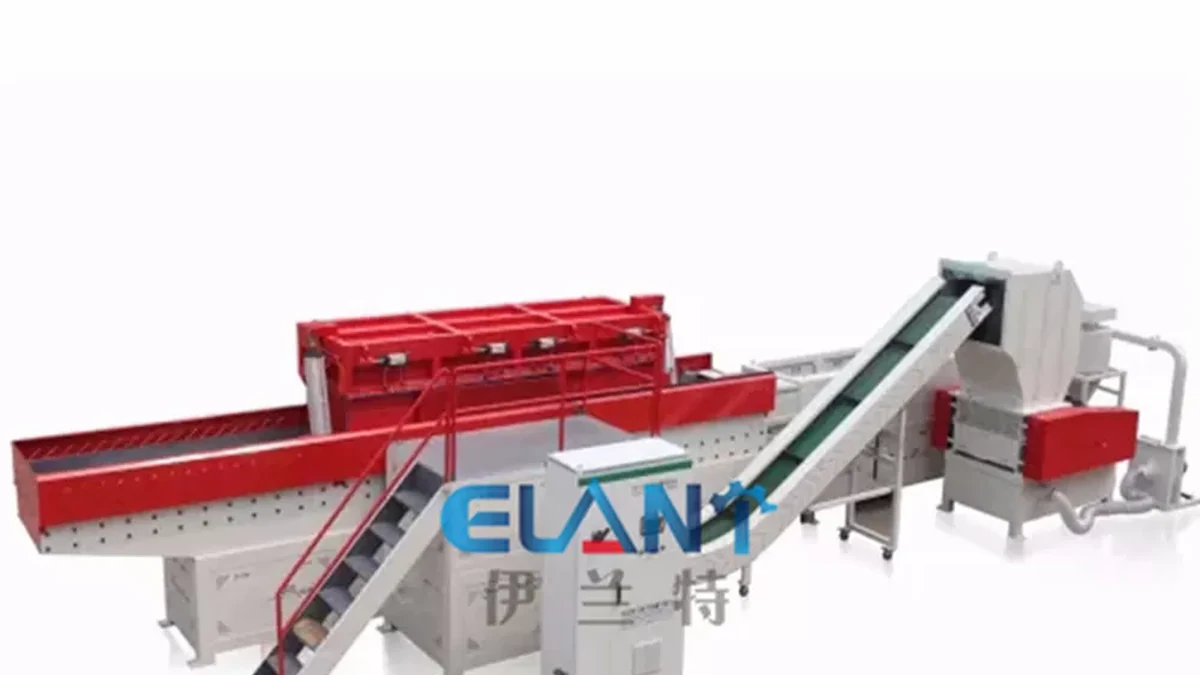
Get that match wrong and you’re looking at motor trips, premature blade wear, or a machine that simply cannot reduce your material. How the shredder fits with conveyors, crushers, washing equipment, and downstream processing also affects the overall plastic shredder recycling workflow.
At a glance
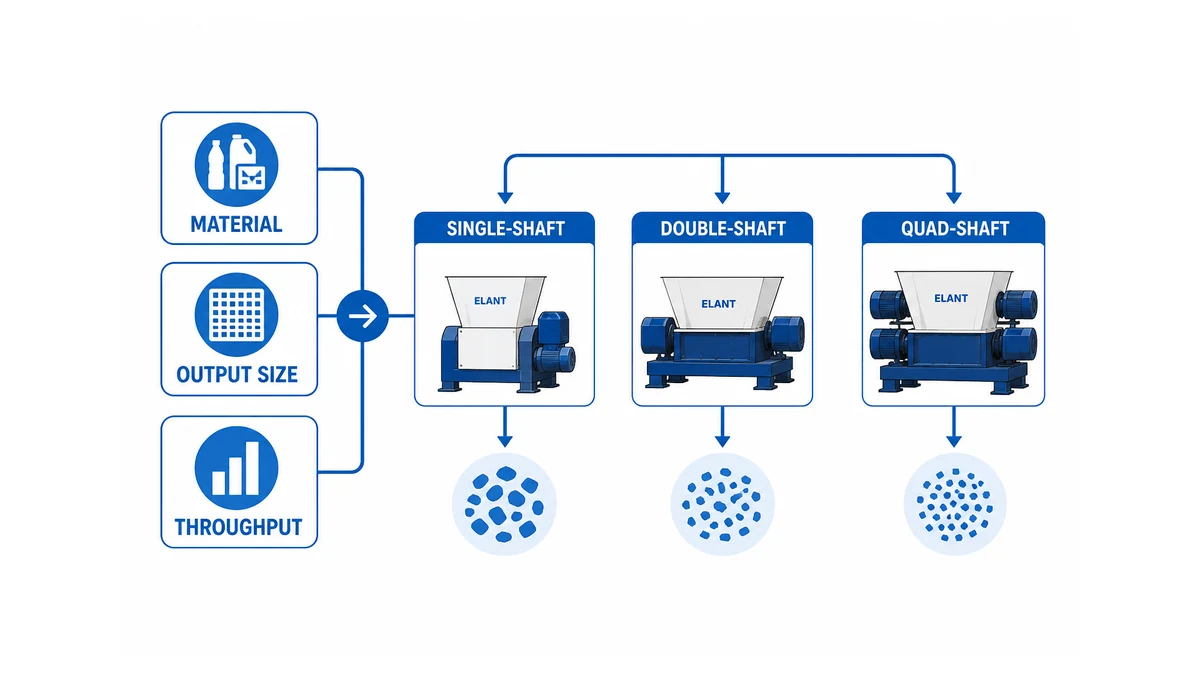
- Three main configurations handle most plastic applications: single-shaft, double-shaft, and quad-shaft
- Throughput is quoted in lbs/hr or tons/hr — always verify against your specific plastic type, not a generic “plastic” figure
- Output particle size is controlled by screen apertures (single-shaft) or blade gap/spacing (double-shaft)
- Industrial plastic shredders vary widely in power requirements depending on material hardness and volume
- A garden shredder cannot shred plastic — it lacks the torque, blade geometry, and feed control for rigid plastics
- Commercial plastic shredder machines differ from industrial units primarily in frame weight, throughput capacity, and duty cycle
Which Industrial Shredder Type Fits Your Material?
The shredder type is the first decision — and the one that locks in everything downstream. Different plastic waste streams demand fundamentally different cutting mechanisms. In complete recycling systems, that choice also determines when to use a shredder before a crusher and how the downstream size-reduction stage should be configured.
Single-shaft shredders
A single-shaft shredder uses one rotating shaft fitted with hardened blades that push material against a fixed bed knife. A perforated screen beneath the rotor controls output size — particles that haven’t reached the target size keep cycling until they pass through. This gives you precise, consistent output, which matters when downstream equipment (granulators, extruders, or wash lines) requires a specific feed size.
Single-shaft machines handle a wide range of rigid plastics well: HDPE bottles, PET containers, PVC pipe, injection-molded parts, and film when layered correctly. They are the default choice for recycling operations where output quality determines material value.
Where they struggle: bulky, thick-walled parts like automotive bumpers or large hollow blow-molded containers can stall the rotor if the infeed rate isn’t controlled. Pair the machine with a belt infeed or hydraulic ram for those applications.
Double-shaft shredders
Double-shaft shredders run two counter-rotating shafts fitted with interlocking cutting discs. The tearing and shearing action between the two shafts reduces material without a screen, so output size is controlled by blade spacing rather than aperture — which means it’s less uniform but handles far more difficult materials.
This is the configuration for mixed plastic waste, large-volume size reduction, and materials a single-shaft rotor cannot grip. Thick-walled drums, pallets, baled film, and multi-layer laminates all feed through double-shaft machines that would jam or overload a single-shaft unit. Throughput per kilowatt is typically higher because both shafts contribute cutting force, and these machines run at lower RPM with high torque — reducing heat generation on temperature-sensitive plastics.
Commercial plastic shredder machines at the lighter end of this category are often double-shaft designs scaled for 500–2,000 lbs/hr; true industrial double-shaft shredders can process 5 tons/hr or more.
Quad-shaft shredders
Quad-shaft shredders add a second pair of shafts — essentially a double-shaft pre-shredder feeding a second double-shaft fine-shredder in a single frame. The result is tighter output size control than a standard double-shaft unit, without the throughput penalty of running oversized material back through a second pass.
These machines are specified for high-volume plastic recycling operations where consistent output size is mandatory but feed material arrives oversized or irregular. They cost significantly more and require more maintenance access, so they’re rarely the right choice unless the application genuinely can’t be solved with a single-shaft or double-shaft configuration. For most U.S. facilities processing plastic waste, single-shaft or double-shaft covers the requirement.
Shredder Configuration Comparison
The table below summarizes the three main industrial plastic shredder configurations across the factors that matter most to selection decisions.
| Configuration | Output Size Control | Typical Throughput | Best Feed Materials | Relative Capital Cost |
|---|---|---|---|---|
| Single-shaft | High (screen-controlled) | 500–3,000 lbs/hr | Rigid plastics: HDPE, PET, PVC, injection-molded parts | Low–Mid |
| Double-shaft | Moderate (blade-gap-controlled) | 1,000–10,000+ lbs/hr | Mixed plastic waste, pallets, baled film, thick-walled parts | Mid–High |
| Quad-shaft | High (dual-stage blade gap) | 2,000–8,000 lbs/hr | High-volume irregular or oversized feed requiring tight output | High |
Key Factors When Choosing an Industrial Plastic Shredder
Material type and throughput are the starting point, but four other factors will determine whether the machine works in your specific operation.
Drive system — hydraulic drives absorb shock loads better on irregular feed material; electric gear-drive systems are lower maintenance and more energy-efficient for continuous duty. For most U.S. plastic recycling operations running 8–16 hours per day, electric direct-drive is the standard.
Blade/knife material and replaceability — hardened tool steel (D2 or equivalent) is the baseline for plastic shredders is the baseline for plastic shredders). Confirm whether blades are reversible (two usable edges before replacement) and what the OEM’s lead time is for replacement knives. A shredder that’s down for three weeks waiting on proprietary blades is an expensive mistake.
Screen aperture range — if your output size requirement might change (e.g., you bring on a new downstream granulator), verify that the machine accepts interchangeable screens and what aperture options the manufacturer actually stocks.
Control integration — does the machine’s PLC communicate with your existing line controls? For a standalone size-reduction station this rarely matters; for an integrated recycling line it matters immediately.
🔍 Worth checking: Ask the supplier for a material test using your specific plastic — not a generic torque curve. Feed rate, blade wear rate, and output particle distribution all shift depending on whether you’re running post-consumer PET versus thick-wall HDPE.
How to Size an Industrial Plastic Shredder
Sizing comes down to one calculation: required throughput ÷ machine-rated throughput at your target output size = your utilization ratio. Run that ratio above 85% continuously and you have undersized headroom; below 50% and you’ve overbought on capital cost.
Start with your feed stock’s bulk density and hourly volume. Shredder manufacturers rate throughput in lbs/hr or tons/hr against a reference material (often LDPE film or HDPE bottles). If your plastic is denser or harder — PVC, ABS, filled compounds — discount the rated throughput by 20–35% before comparing specs.
Output size also directly affects throughput. Switching to a finer screen on a single-shaft shredder can significantly reduce rated throughput because material cycles longer before passing through; the actual drop varies by machine and material, so treat any generic estimate as a rough guide only. Manufacturers publish these curves — request the data before selecting a model.
Industrial plastic shredder cost scales nonlinearly with throughput. Light-duty commercial plastic shredder machines at lower throughput capacities vary widely in price depending on configuration and supplier — contact vendors for current pricing. Mid-range industrial plastic shredder machines at higher throughput capacities similarly vary in cost depending on configuration and market conditions.
High-throughput quad-shaft or heavy-duty double-shaft industrial shredders for plastic represent a substantially larger capital investment — request current quotes from multiple suppliers for accurate figures.

Common Shredder Selection Mistakes
The biggest mistake is specifying for average feed, not peak feed. Shredders at plastic recycling facilities rarely receive a uniform stream — surge loads from tipping floors or bale dumps hit the machine at 2–3× average throughput for 5–10 minutes at a time. A machine that handles your average throughput but stalls on surges will trip its overload protection multiple times per shift.
The second mistake: ignoring blade access and maintenance clearance. Some industrial plastic shredder machine configurations require partial disassembly to access the cutting chamber for blade reversal or jam clearing. In a real production environment that adds 30–90 minutes of downtime per event. Inspect the maintenance access design in the supplier’s drawings before you buy.
Third: treating all “plastic” as one category. HDPE and PET behave very differently under shear load. Mixed plastic waste with unknown composition adds further variability. A shredder well-matched to clean PET bottles may consistently overload on a mixed plastic bale with PVC content. If your feed varies, specify for the hardest and densest material in the mix, not the average.
How to Compare Suppliers Before Buying
The difference between a commercial shredder and a full industrial shredder is frame weight, duty cycle rating, and after-sale support infrastructure — not just nameplate power. Verify three things before shortlisting any supplier.
First, ask for reference sites running your specific material type. Not case studies — actual facility contacts you can call. A supplier who cannot provide this is selling you a specification sheet, not a proven application.
Second, review the warranty terms against actual failure modes. Warranty coverage for industrial plastic shredders varies by manufacturer — review parts and labor terms carefully. What’s the labor coverage? What’s the response time commitment? For a facility running two shifts, a 5-day response SLA is operationally different from a 24-hour emergency line.
Third, confirm U.S.-based spare parts inventory. Blade lead time from offshore manufacturing can vary significantly and may extend long enough to cause serious production disruption. That’s unacceptable downtime for a production shredder. Ask for a written commitment on critical wear parts availability, not a verbal assurance.
At Elant, we work directly with buyers to match shredder configuration to feed material before quoting — including material testing when the application is outside standard parameters.
Prepare Your Shredder Requirements Before Requesting a Quote
A detailed requirements document cuts weeks off the procurement cycle and prevents the most common source of mis-matched equipment. Bring these specifics to every supplier conversation:
- Plastic type(s): resin codes, thickness range, and whether material is clean, contaminated, or mixed
- Feed form: loose parts, baled, loose bulk, or on a conveyor
- Target output size: maximum particle dimension in inches, or the downstream equipment’s intake spec
- Throughput target: lbs/hr at average and peak, with duty cycle (hours per shift, shifts per day)
- Space constraints: footprint, ceiling height, and infeed/discharge direction
- Power available: voltage, phase, and amperage at the installation point
- Budget range: industrial plastic shredder cost varies 10× across the market; giving suppliers a real budget range gets you a realistic proposal faster
✅ Do this: Send your requirements document to at least three suppliers and request a material test from each finalist. The test result — not the spec sheet — is what you’re buying.
Lead times for industrial plastic shredders for sale in the U.S. vary by manufacturer and configuration — standard units may be available more quickly than custom blade or screen packages, but confirm current lead times directly with each supplier before finalizing your line startup schedule. [5] Factor that lead time into your line startup schedule before you finalize the purchase order.
Once your requirements are documented, request a shredder quote from Elant — a complete spec sheet gets you an accurate quote, not a price range that doubles after the site survey.
Have a project or a spec sheet in hand? Talk to elantmachine.com — real engineers answer.
FAQ
What is the difference between a commercial shredder and an industrial shredder?
Industrial plastic shredders are built for continuous, high-volume processing of tough materials like thick plastic pipe, bumpers, and purge pucks, with drive motors often exceeding 50 horsepower. Commercial shredders handle lighter, intermittent workloads — typically office materials or thin film — at much lower throughput rates. For a plastics recycling or manufacturing operation running multiple shifts, an industrial unit is the correct choice. A commercial machine will overheat, stall, or fail prematurely under those conditions.
What shredder can shred plastic?
Single-shaft, dual-shaft, and quad-shaft industrial shredders all process plastic, but the right configuration depends on your material. Single-shaft shredders with a screen produce a controlled particle size ideal for regrind. Dual-shaft shredders handle bulky or mixed plastic with high torque and low speed. Quad-shaft units combine coarse and fine cutting in one pass. Match the shaft configuration to your feed stock — rigid packaging, film, pipe, or automotive parts — before comparing brands or horsepower ratings.
What are the biggest shredding mistakes?
The most common mistake is choosing a machine based on horsepower alone while ignoring torque, screen size, and shaft speed. Other frequent errors include oversizing the infeed without a conveyor system to control feed rate, selecting a screen aperture too small for the required throughput, and failing to account for contaminants like metal inserts that demand a detector or bypass. Neglecting maintenance intervals — particularly blade wear and bearing lubrication — also shortens machine life and drives up operating costs significantly.
Sources
[1] D2 tool steel information – over 100 years at the cutting edge — estyorkssteel.com
[2] Industrial Shredding Machines: A Complete Guide — gradeall.com
[3] Industrial Shredders — shred-tech.com
[4] ♻️ In plastics manufacturing, small contamination issues… — facebook.com
[5] 2026 Manufacturing Industry Outlook | Deloitte Insights — deloitte.com