
China’s plastic recycling machinery sector runs across more than 3,000 registered equipment manufacturers — a number that makes supplier selection genuinely difficult for U.S. buyers sourcing a complete plastic recycling line for the first time. This guide cuts that field to five manufacturers we’d seriously consider, plus a bench of others worth a second look, based on product range, verifiable export records, and after-sales depth.
At a glance
- PPrimary machine types covered: PET washing lines, plastic film recycling machines for PP/PE/HDPE/LDPE, shredders, compactors, and pelletizing systems.
- Typical plastic recycling machine capacity for export lines: 200 kg/h to 3,000+ kg/h
- Dominant production region: Zhejiang province and surrounding Jiangsu/Guangdong clusters
- U.S. import considerations: Confirm applicable electrical code requirements with your local authority having jurisdiction, NEMA enclosure ratings, HTS code 8477.80 (most plastic recycling machines)
- Lead time (production + shipping): typically 45–90 days production; 25–35 days ocean freight to U.S. West Coast ports
- Minimum viable factory audit: request ISO 9001 certificate, CE/UL component documentation, and at least two overseas reference contacts before wiring any deposit
How We Selected the Manufacturers
The list below is not alphabetical, and it’s not based on who has the most polished English brochure. We applied four concrete filters.
Product Range and Complete-Line Capability
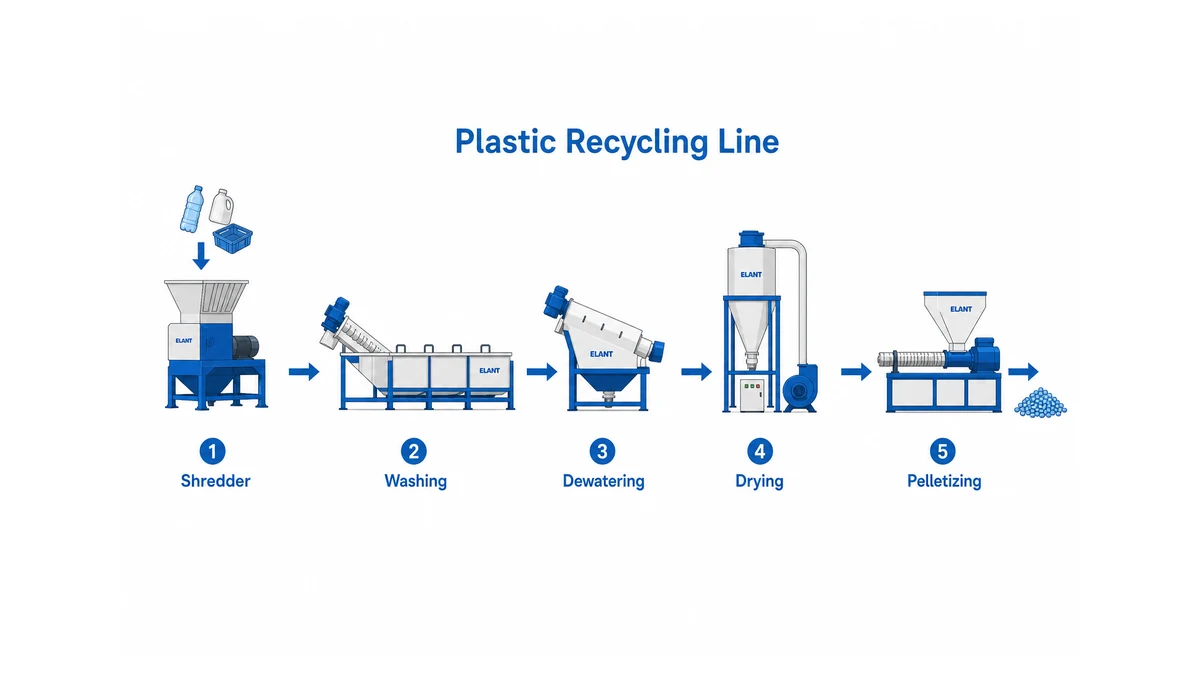
A manufacturer that sells only shredders is a parts supplier, not a recycling machine partner. We looked for companies that can deliver a complete plastic recycling line — from infeed conveyor and shredder through washing tanks, drying, and pelletizing — under one contract. For low-bulk-density film feedstock, a plastic film densifier can also be integrated before extrusion to improve feeding consistency. Single-source supply reduces finger-pointing when a downstream bottleneck traces back to an upstream machine.
Manufacturing and Engineering Capability
We checked whether companies hold in-house fabrication (cutting, welding, machining), or are primarily assemblers buying sub-frames from third-party factories. Assemblers can work fine for standard lines; for custom recycling equipment with unusual feedstock or tight footprint constraints, in-house fabrication gives the manufacturer real engineering flexibility. These are also important plastic recycling equipment quality factors to compare before approving a supplier.
Export Experience and Project References
Export experience is not a website claim — it’s verifiable. We looked for CE-certified recycling machinery with documented U.S. or EU installations, English-language technical documentation, and named overseas references the buyer can actually call.
After-Sales Service and Spare-Parts Support
The biggest hidden cost in an imported plastic recycling machine is downtime waiting for wear parts. We favored manufacturers who warehouse critical spares (screens, knives, bearings, screw segments) and can expedite air freight of critical parts, and who provide English-language remote commissioning support.
Top Plastic Recycling Machine Manufacturers in China
Elant Machine
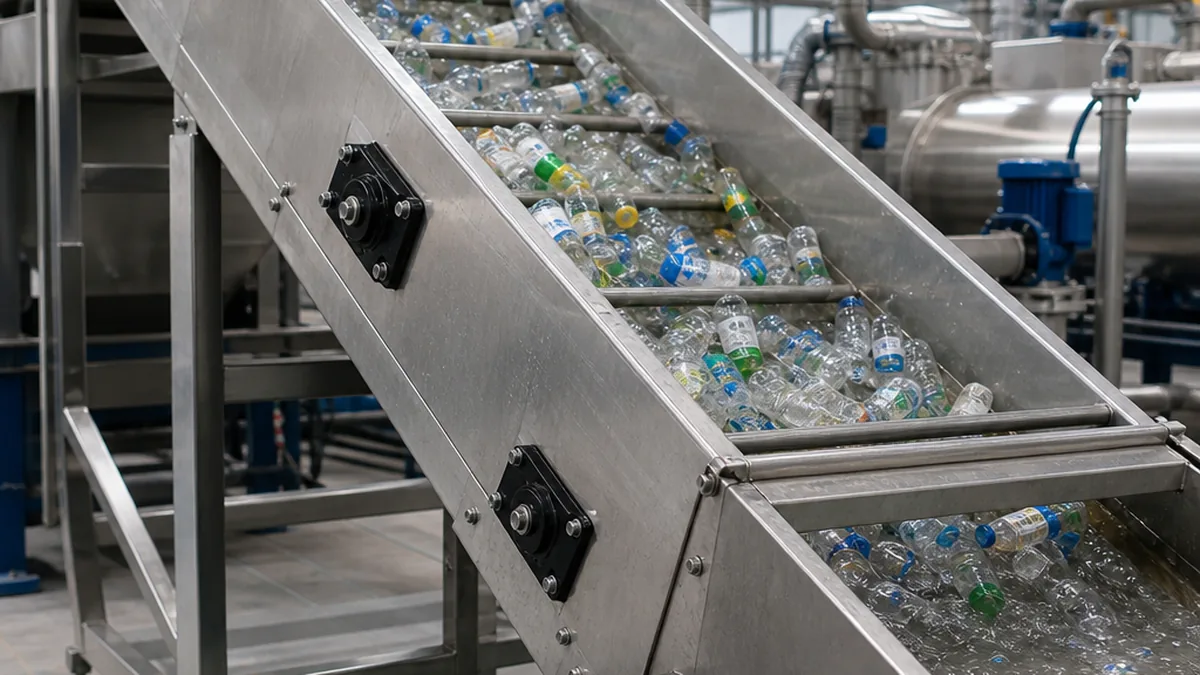
Elant Machine (Zhejiang) designs and manufactures complete plastic recycling lines covering PET bottle washing, PP/PE film recycling, HDPE/LDPE pelletizing, and PVC pipe recycling. What separates Elant from typical China manufacturers is their emphasis on application engineering before quoting — they ask about feedstock contamination levels, moisture content, and desired pellet MFI before specifying machine configuration.
That process-first approach avoids the common scenario where a buyer receives a line sized for clean film but their actual feedstock is dirty agricultural film with soil loading above 15%.
Elant’s pelletizing systems use double-stage extrusion with a non-stop hydraulic screen changer, which keeps output continuous even during screen swaps — a meaningful operational advantage in high-throughput recycling plants running three shifts. Their control panels default to Siemens PLC with English HMI, which U.S. operators and maintenance technicians can work with without translation.
Purui Machinery
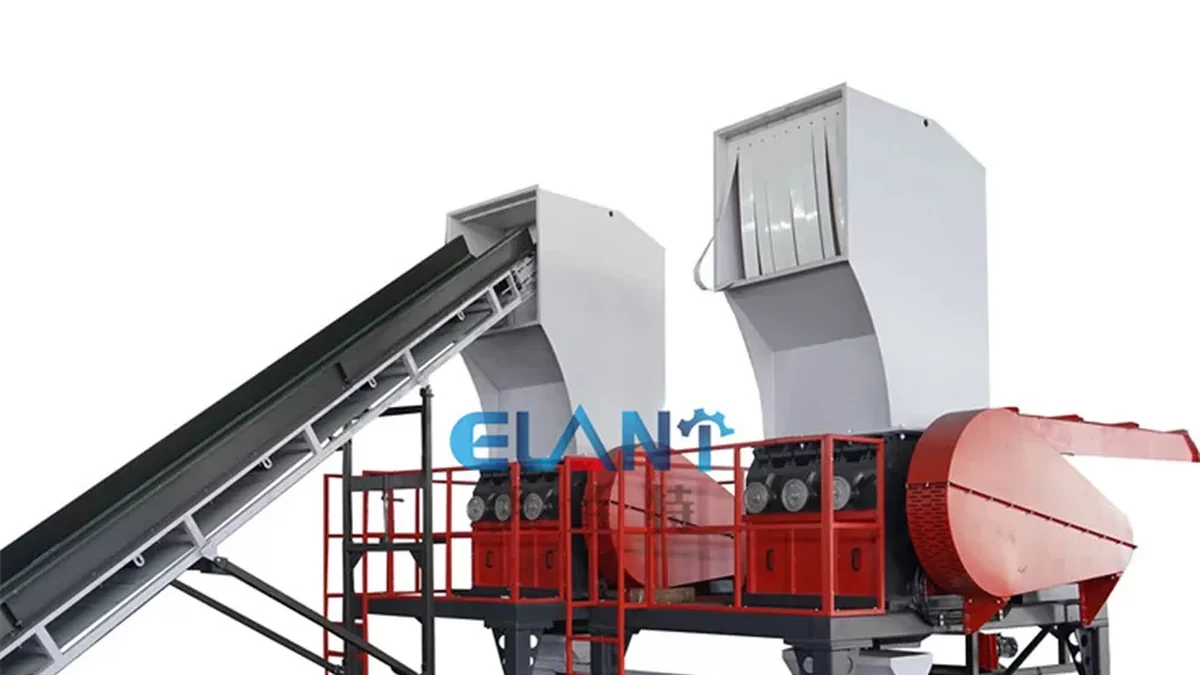
Purui (Zhejiang) has a strong reputation for PET flakes washing lines, particularly lines targeting food-grade rPET output. Their hot-wash systems operate at elevated temperatures with caustic dosing control, which is the process condition required when output is destined for fiber or sheet applications.
Capacity options run from 500 kg/h to 3,000 kg/h for PET bottle recycling. Purui also builds PP/PE film washing lines and is one of the few Zhejiang manufacturers offering integrated label separation — a step many buyers add as an afterthought and then regret skipping.
Rumtoo Recycling Machinery
Rumtoo focuses on the film and flexible packaging segment — LDPE, HDPE, agricultural film, and multi-layer packing film. Their plastic recycling machines include a compactor-feeder stage that pre-densifies low-bulk-density film before extrusion, solving the feed-rate inconsistency that undermines pellet quality on standard single-screw lines.
For buyers processing PP/PE/ABS or mixed post-consumer plastic at 500 kg/h and above, Rumtoo’s pellet granulator lines are competitively specified. Their quoted throughputs are more conservative than some competitors — which, in our reading, means the numbers are more likely to be real.
Aceretech
Aceretech (Zhejiang) positions itself at the automation end of the market. Their recycling lines feature servo-driven cutting systems and online viscosity monitoring for PET pelletizing, which matters when output is sold to fiber spinners who spec melt viscosity tightly. They have documented installations in Europe and have published CE declarations for most standard line configurations.
Aceretech’s pricing sits above the mid-market, but their automation and control system differences are substantive, not cosmetic. Buyers targeting high-value recycled pellets for engineering resin applications should shortlist them.
GENIUS Machinery
GENIUS (Zhejiang) covers a broad range including PET, HDPE, LDPE, PVC, and PP recycling machines. Their differentiator is catalog depth — they can supply complete plastic recycling lines, standalone shredders and crushers, and individual washing or dewatering machines as replacement equipment for existing recycling plants.
For U.S. buyers expanding an existing facility rather than building from scratch, GENIUS’s ability to supply individual machines that integrate with installed equipment is practically useful.
Other Manufacturers Worth Evaluating
The Zhejiang and Jiangsu clusters contain dozens of Chinese manufacturing companies building credible recycling equipment. Names that appear consistently in buyer reference checks include Zhangjiagang Veichi, Suzhou Beiltec, and several smaller Guangdong factories specializing in PET hot-wash systems. For buyers sourcing in the 200–500 kg/h range, these suppliers can offer competitive pricing on standard configurations. The verification process — factory audit, component documentation, overseas references — applies equally.
Compare Chinese Plastic Recycling Machine Manufacturers at a Glance
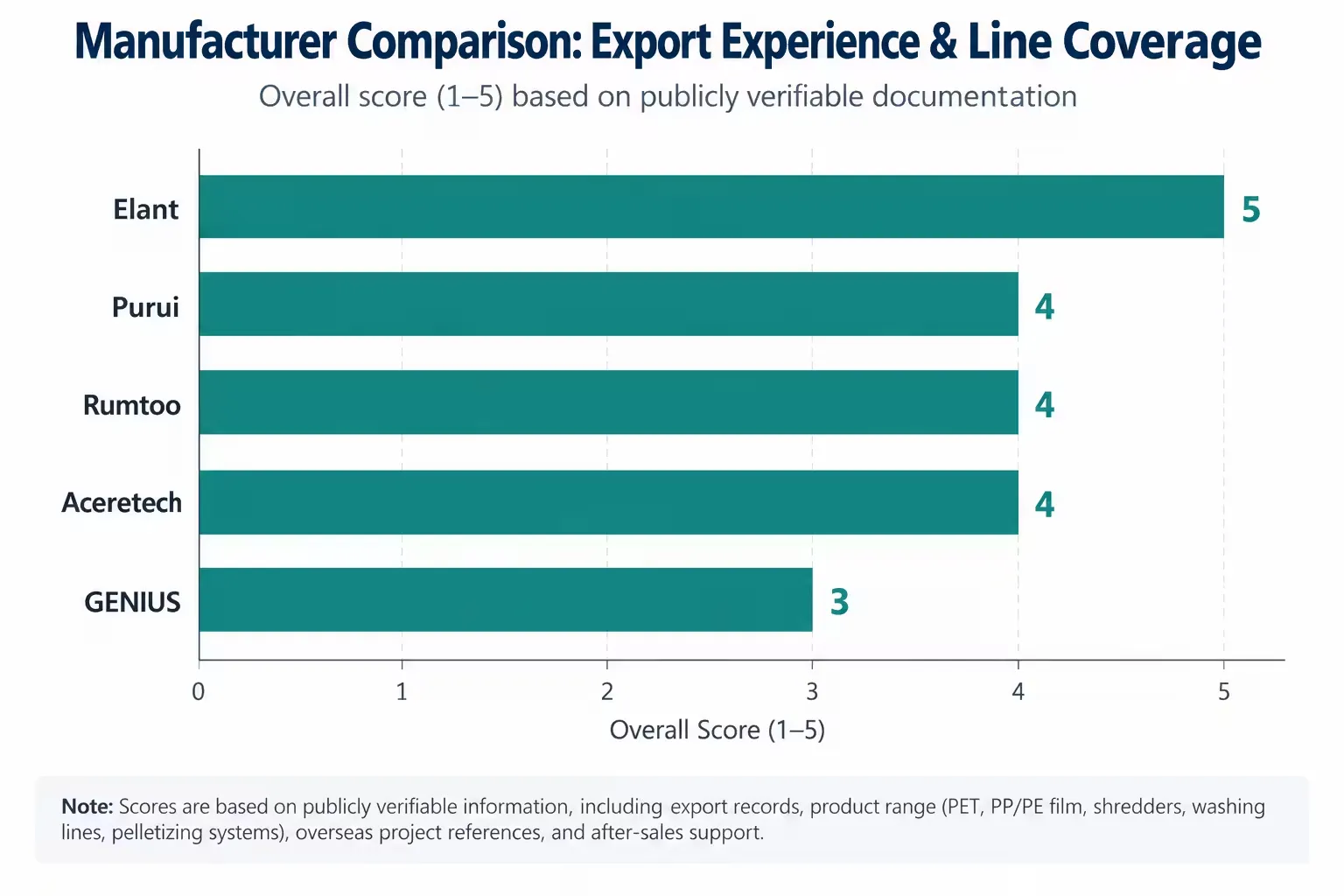
🔍 Worth checking: The chart scores are based on publicly verifiable documentation (CE declarations, overseas reference contacts, English technical manuals) — not on factory claims in sales brochures.
Main Machine Types and Material Applications
| Manufacturer | PET Bottle Lines | PP/PE Film Lines | HDPE/LDPE Pelletizing | PVC Recycling | Mixed Plastic |
|---|---|---|---|---|---|
| Elant Machine | ✓ | ✓ | ✓ | ✓ | ✓ |
| Purui | ✓ (food-grade) | ✓ | ✓ | — | — |
| Rumtoo | — | ✓ (film focus) | ✓ | — | ✓ |
| Aceretech | ✓ (high-auto) | ✓ | ✓ | — | ✓ |
| GENIUS | ✓ | ✓ | ✓ | ✓ | ✓ |
Washing, Shredding, and Pelletizing Capabilities
All five manufacturers offer plastic shredding, washing, and pelletizing as integrated systems. The differentiation is in washing intensity (cold wash vs. hot wash with caustic), dewatering method (centrifugal vs. horizontal squeeze dewatering), and pelletizing configuration (single-stage vs. double-stage extrusion).
Hot-wash capability — required for food-contact rPET and some fiber-grade pellets — is confirmed for Purui and Elant. For the others, ask for the specific wash-water temperature range and caustic handling specification before assuming equivalency.
Automation and Custom Engineering
Aceretech leads on automation depth. Elant and Purui offer mid-automation configurations (PLC-controlled, English HMI, recipe storage) as standard. Rumtoo and GENIUS offer similar PLC control but with less standard integration of online quality monitoring.
Custom engineering — non-standard footprint, unusual feedstock, integration with existing conveyors or balers — is a genuine differentiator. Ask each manufacturer for a recent custom project reference, not just their standard catalog models.
Export Markets and After-Sales Support
Purui and Aceretech have documented EU installations. Elant has export references across multiple regions. All five carry CE marking on major assemblies.
For U.S.-specific after-sales, ask explicitly: who is your North American contact, and what is the lead time for air freight of screen packs and screw segments? A manufacturer without a clear answer to that second question creates real operational risk.
Which Manufacturers Specialize in Which Recycling Machines?
PET Bottle Washing and Recycling Lines
Purui and Elant are the strongest choices for PET bottle recycling. A complete PET bottle recycling line typically runs: bale breaker → label remover → pre-wash → crusher → float-sink tank → hot-wash unit → friction washer → rinse → centrifugal dryer → PET flakes output or downstream pelletizing.
Food-grade output requires hot-wash at sufficiently elevated temperatures and a decontamination step. Only source this configuration from a manufacturer who can document the process temperature and residence time — not just claim “food-grade capable.”
PP, PE, HDPE, and LDPE Film Recycling Lines
Film recycling is technically harder than bottle recycling because of low bulk density, high contamination (soil, water, adhesives), and the tendency for thin film to wrap around rotors. Rumtoo and Elant both address this with compactor-feeders and friction washers designed for flexible materials.
LDPE and HDPE film lines serving agricultural film recycling need a dedicated mud-removal step — a settling tank or rotary friction washer — before the main wash sequence. Skipping it destroys pellet quality and clogs downstream screens.
Plastic Shredders and Crushers
Standalone shredders and crushers are available from all five manufacturers and from dozens of smaller Zhejiang suppliers. For U.S. buyers, confirm the rotor speed, knife material (D2 or equivalent tool steel), and screen hole size before comparing prices. A slower, heavier rotor with hardened knives costs more upfront and runs far longer before regrinding is needed.
✅ Do this: Request the knife material specification and the quoted regrind interval in hours before comparing shredder prices across suppliers.
Compactor and Pelletizing Systems
The double-stage plastic recycling machine with compactor and non-stop hydraulic filter is the configuration that makes sense for contaminated or wet feedstock. The compactor pre-densifies material; the hydraulic screen changer allows continuous output while screens are swapped. This configuration is available from Elant and Rumtoo; confirm with Aceretech for high-automation versions.
High-Capacity Recycling and Pelletizing Lines
For throughputs above 1,000 kg/h — PP, PE, ABS, PS, PC, PA mixed streams — the engineering requirements increase significantly: larger extruder screws (120mm+), higher-torque gearboxes, more robust hydraulic screen changers, and more precise temperature zone control. At this scale, accept only manufacturers who can provide a documented reference site running at that capacity, not a theoretical spec sheet.
How to Evaluate a Chinese Plastic Recycling Machine Manufacturer
Factory Audits and Manufacturing Capability
A factory visit — or a paid third-party audit — is the single most effective risk-reduction step for any significant capital equipment purchase. Look for in-house CNC machining, welding certification records, and a QC inspection area with dimensional measurement tools. Factories that cannot show you their own machining center are assemblers, not manufacturers.
🚫 Avoid: Signing a contract or wiring a deposit based solely on a video call and a brochure PDF. Factory audits are standard practice for capital equipment purchases.
Verify Output Capacity and Throughput Claims
Quoted capacity figures in Chinese recycling machine catalogs are typically stated for clean, dry, pre-sorted material. Your real feedstock — which probably has moisture content, soil load, and mixed colors — will run below catalog throughput in most practical configurations, with the actual shortfall depending heavily on your specific contamination level and feedstock type. Ask for a capacity guarantee written into the contract, specifying feedstock moisture content and contamination level.
Check Components, Motors, Drives, and Control Systems
Name-brand components (Siemens, ABB, Schneider, SEW) are verifiable and sourceable in the United States. Generic Chinese-branded motors, drives, and PLCs are not necessarily inferior, but replacement parts may require ordering from China, which can add significant lead time to any electrical fault resolution. For U.S. operations, specifying Siemens or ABB electrical components is worth the modest price premium.
Review Installation, Commissioning, and Operator Training
Ask specifically: does the price include an engineer on-site for commissioning, and how many days? One week is a minimum for a complete plastic recycling line. Get the engineer visit confirmed in writing in the contract — not as a verbal commitment.
Confirm Spare-Parts and After-Sales Support
Request a spare-parts list and pricing for the first two years of operation before signing the contract. Critical consumables — screen packs, cutting knives, bearing sets, belt drives — should be pre-ordered at time of purchase. Ask whether the manufacturer warehouses U.S.-stocked spares or ships from China on demand.
Why Plastic Recycling Machine Prices Vary Between Manufacturers
Component Brands and Equipment Build Quality
A PET washing line quoted at $180,000 and another at $280,000 for the “same” 1,000 kg/h capacity may use entirely different electrical and mechanical components. The lower-price line may use generic Chinese motors and a basic relay-logic control panel; the higher-price line uses Siemens drives and a PLC with remote diagnostics.
Automation and Control System Differences
Full automation — auto-start sequences, fault logging, recipe storage, remote access — adds cost but reduces labor requirements and improves uptime traceability. For recycling plants running multiple shifts with limited engineering staff on-site, automation pays back quickly.
Capacity and Feedstock Requirements
A 500 kg/h film line and a 500 kg/h bottle line are not the same price. Film recycling requires more washing stages, a compactor stage, and a higher-torque extrusion system to handle the density variation. Capacity claims are only comparable when feedstock type and moisture level are held constant.
Customization and Engineering Scope
Standard catalog configurations cost less and deliver faster. Non-standard footprints, unusual plastics (PVB film flakes, for example, require entirely different solvent-compatible materials and drying conditions), or integration into existing recycling plants all add engineering cost. Get this scope defined in writing before comparing quotes.
Installation and Commissioning Services
Some manufacturers quote FOB Ningbo or Shanghai — machine only, on a truck. Others include sea freight, inland delivery, foundation drawings, commissioning, and operator training as a turnkey package. These quotes are not directly comparable. Build a landed-cost comparison that includes all of these line items before deciding on a supplier.
What U.S. Buyers Should Check Before Importing from China
Electrical and Machine-Safety Requirements
Plastic recycling machines imported into the United States must comply with NFPA 79 (electrical standard for industrial machinery) ) and applicable electrical codes — confirm the exact requirements with your local authority having jurisdiction, as adopted code versions vary by location. Most Chinese manufacturers build to CE (European) standards by default.
CE and NEC overlap substantially but are not identical — confirm NEMA-rated enclosures, UL-listed components (note that component-level certification does not by itself constitute NEC compliance of the assembled panel — system-level code compliance must be separately verified), and 480V/60Hz three-phase wiring if ordering for a U.S. facility.
Shipping, Packaging, and Installation Planning
A complete plastic recycling line ships in multiple containers — confirm machine dimensions and weights for each module before finalizing container count, as the total will vary significantly depending on line configuration and capacity. Budget for a forklift or crane rated for the heaviest single lift, as base frames for large pelletizing lines can be very heavy; confirm the actual weight of each module with the manufacturer before planning rigging.
Import Classification and Duty Considerations
Most plastic recycling machines classify under HTS 8477.80, “machinery for working rubber or plastics.”) Current Section 301 tariffs on machinery from China apply — verify the applicable rate with a licensed customs broker before finalizing landed cost calculations.
Lead Time, Spare Parts, and Technical Support
Factor 45–90 days production time plus 25–35 days ocean freight for standard configurations. Custom or large-capacity lines may run 90–120 days production. Place initial spare-parts orders — screen packs, knives, wear rings — at contract signing, not at first breakdown.
How to Shortlist the Right Manufacturer for Your Recycling Project
Define Feedstock and Contamination Level
Before contacting any manufacturer, document your feedstock: material type, form (bottles, film, rigid scrap), moisture content, soil/sand contamination level, and color mix. Manufacturers who ask you these questions before quoting are doing their job. Manufacturers who send a price list without asking are not.
Confirm Required Output Capacity and Final Product
State your required output as a daily tonnage at your actual operating hours, not a theoretical peak. Specify whether your end product is pellets, flakes, or washed material — and for pellets, state the required MFI (melt flow index) range and color tolerance. These specs determine which configuration — and which manufacturer — is technically qualified.
Compare Technical Proposals Instead of Price Alone
Request a full technical proposal: process flow diagram, equipment list with component brands, installed power total, utilities requirements (water consumption, compressed air), and foundation drawing. A manufacturer who provides all of this is showing real engineering depth. A manufacturer who sends only a one-page price sheet with stock photos is not a complete-line supplier.
Run Material Trials Before Ordering
Most serious plastic recycling machine manufacturers in China will run trial processing on your feedstock sample — either in their factory or at a nearby test facility. Send a 50–100 kg sample before finalizing the contract. A trial run confirms throughput, pellet quality, and wash effectiveness on your actual material, not on clean lab samples.
✅ Do this: Send a feedstock sample and request a trial report with pellet MFI, moisture content, and throughput data before signing any contract.
Request References, Quotes, and Final Technical Documentation
Request at least two overseas reference contacts — ideally in the United States or a comparable market — for any manufacturer you are seriously considering. Verify installation date, line configuration, and whether the manufacturer’s after-sales team was responsive when problems arose. Then request a formal quotation that includes payment terms, delivery schedule, warranty period, and commissioning scope in writing.
That document — not the sales call — is what you’re evaluating.
Have a project or a spec sheet in hand? Talk to elantmachine.com — real engineers answer.
FAQ
How much does a plastic recycling machine cost in China?
The price of a plastic recycling machine in China varies widely by material type, capacity, automation level, and equipment configuration. A standalone shredder or crusher costs far less than a complete PET bottle washing or PP/PE film recycling line. When comparing quotations, check whether the price includes washing, drying, pelletizing, electrical controls, spare parts, shipping, installation, and commissioning rather than comparing machine prices alone.
How long does it take to manufacture and ship a plastic recycling line from China?
A standard plastic recycling line typically requires about 45–90 days for manufacturing, followed by roughly 25–35 days of ocean freight to the U.S. West Coast. Large-capacity or highly customized systems may require 90–120 days or longer to manufacture. Buyers should also allow additional time for factory testing, export documentation, customs clearance, inland transport, and installation.
Can a Chinese plastic recycling machine be built for 480V 60Hz power?
Yes. Chinese plastic recycling machine manufacturers can configure equipment for 480V, 60Hz, three-phase power for U.S. facilities. Buyers should specify the required voltage and frequency before production and confirm the electrical design, NEMA enclosure rating, component certifications, and applicable NFPA 79 and local electrical-code requirements with the manufacturer and local authority before shipment.
Sources
[1] NFPA 79, Electrical Standard for Industrial Machinery — nfpa.org
[2] NFPA 79 Standard Development — nfpa.org
[3] HTS Code 8477.80 Machinery For Working Rubber Or… — datamyne.com
[4] 8477.90.86.01 – Harmonized Tariff Schedule – USITC — hts.usitc.gov
[5] China Section 301-Tariff Actions and Exclusion Process — ustr.gov
[6] 2022 Top 10 List: Plastic Recycling Machine China … — nicetymachine.com