
Price is the first thing buyers check on plastic recycling equipment — and the last thing that predicts whether a machine holds up. A lower purchase price can easily translate into substantial unplanned downtime costs within the first two years if the underlying design and build quality don’t match the application. That said, overpaying for overbuilt specs you don’t need is equally wasteful.
The real question is knowing which technical factors actually separate reliable equipment from equipment that merely looks the part on a spec sheet.
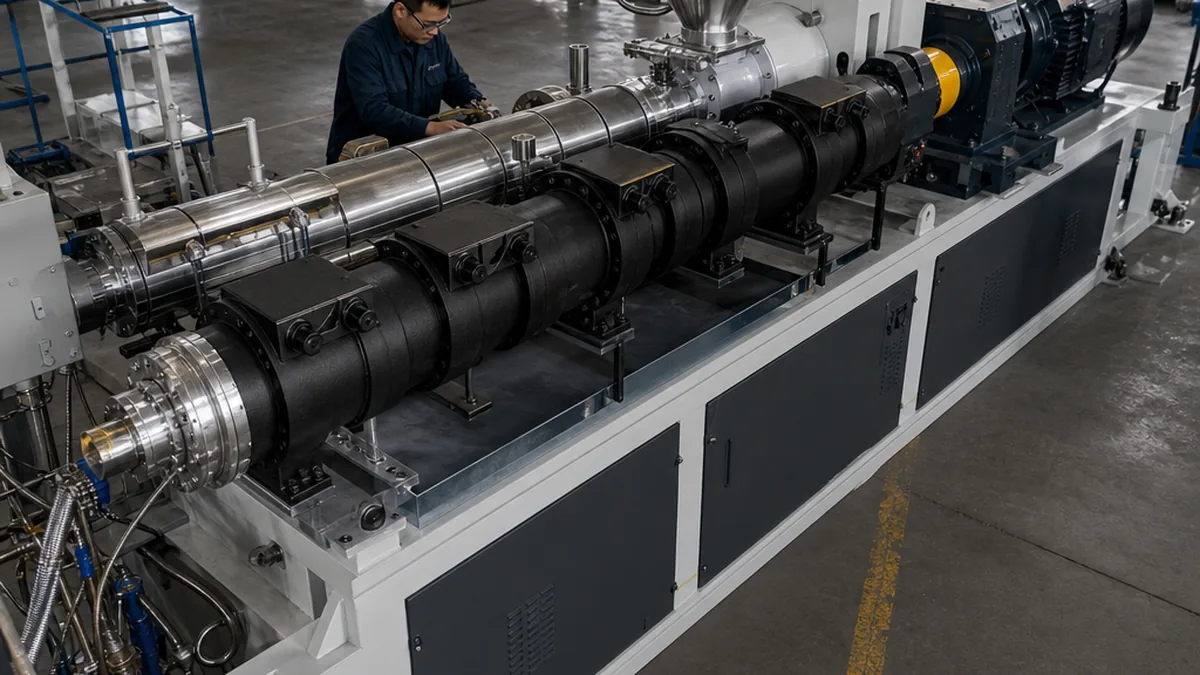
At a glance
- Design fit: equipment designed specifically for the target material type (HDPE, PET bottles, post-consumer film, etc.) outperforms general-purpose machines in throughput consistency and recycled plastic quality
- Core component grade: cutting blades, bearings, and screens sourced to industrial-grade standards determine wear intervals — often 3× longer on properly spec’d machines
- Fabrication precision: frame weld tolerances and shaft alignment directly affect vibration levels and long-term structural stability
- Control system: PLC-based automation with real-time load monitoring is the baseline for consistent quality control in production environments
- Factory testing: ask for pre-shipment run reports — reputable manufacturers test assembled machines under load before crating
- Serviceability: blade clearance adjustment, screen swap time, and lubrication access points are measurable proxies for maintenance cost over the machine’s life
Equipment Design Factors That Determine Quality
Designing Equipment for Different Recycling Applications
A plastic recycling machine built for clean HDPE regrind operates under fundamentally different mechanical loads than one processing mixed post-consumer rigid plastics contaminated with labels and residual liquids. The single most important design question is whether the equipment was engineered for your specific material stream — not for “plastics” as a broad category.
Different types of plastics behave differently under shear. PET bottles fracture brittlely and generate fine dust that accelerates bearing wear. Soft PE film wraps rotors if knife geometry isn’t optimized for film. HDPE pipe scrap creates high intermittent torque spikes. Equipment designed around one material type will have rotor speed, knife angle, screen hole geometry, and chamber clearances tuned to that behavior.
A machine sized generically for “mixed plastics” typically compromises on all of them.
The practical implication: before evaluating any specification, confirm which plastic types the machine was validated on. Ask the manufacturer for throughput data and recycled plastic output quality results — not on virgin test material, but on post-consumer feedstock comparable to yours. Sorting quality upstream directly affects what your equipment handles, so the design envelope should reflect realistic, sorted-but-imperfect input, not idealized lab samples.
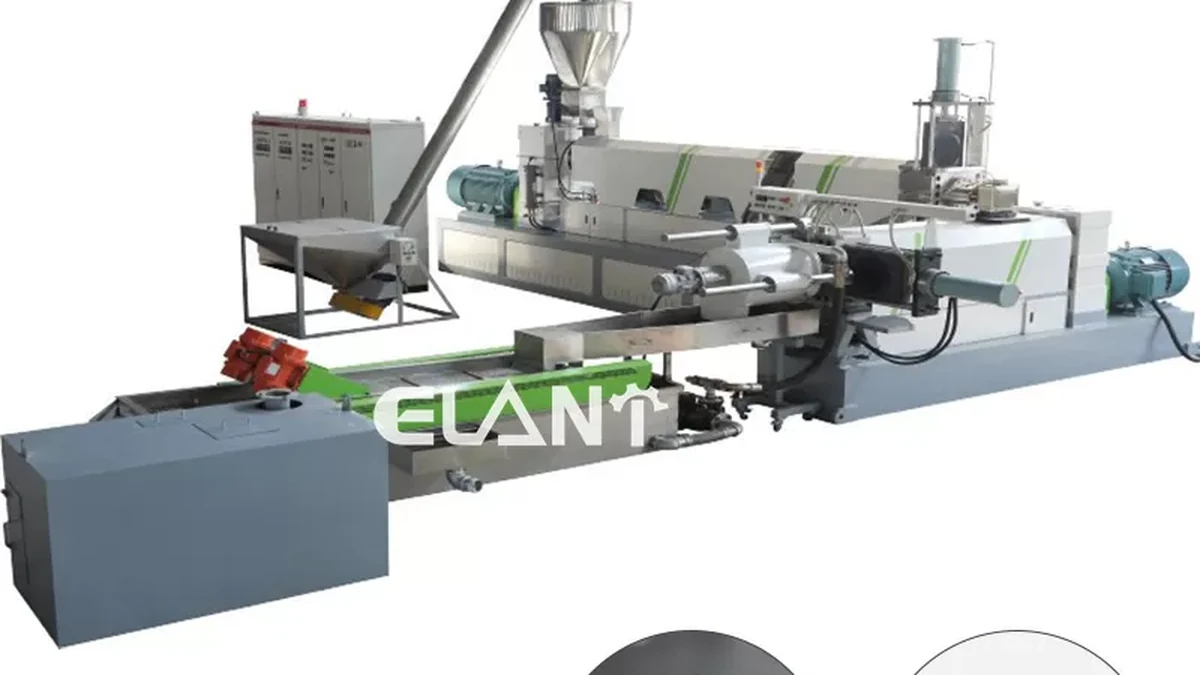
Designing for Stable and Efficient Operation
Operational stability in plastic recycling equipment comes down to how well the design manages energy variation — specifically, the difference between idle running load and peak load when dense material enters the cutting chamber.
Flywheels, variable-frequency drives, and rotor mass distribution are the three design tools manufacturers use to absorb torque spikes without stalling or damaging drivetrain components. A machine without adequate flywheel inertia will trip its motor overload protection during normal processing of thick-walled HDPE or bundled PET bottles. That’s not a maintenance issue — it’s a design gap.
🔍 Worth checking: Request the motor load curve data for the specific material type you process. A well-designed machine should run at 60–75% of rated motor load under normal throughput, with headroom for peak loads. Machines that spec close to 100% under average conditions will fault repeatedly in production.
Stable operation also requires thermal management. Friction from plastic cutting generates heat, and designs without adequate airflow or chamber venting accumulate heat that softens thermoplastic fines into buildup — reducing output quality and requiring frequent cleaning stops.
Component Selection Factors That Influence Equipment Quality
Choosing Durable Components for High-Wear Applications
Cutting blades and screens are the consumable backbone of any plastic recycling machine. Component material grade is the dominant variable in how long they last — and by extension, in the total cost of operating the equipment over its service life.
Blades manufactured from D2 tool steel or equivalent (HRC 58–62 hardness) can significantly outlast standard carbon steel blades in HDPE and PET bottle processing applications; the exact performance advantage varies by application and operating conditions, and buyers should request application-specific wear data from the manufacturer [2]. The difference doesn’t show up in the first week.
It shows up at month six when one machine is still running its original blade set and another has burned through three replacements.
Bearings deserve equal scrutiny. Shredders and granulators generate radial and axial loads that standard commercial bearings aren’t rated for.
Bearing specification for dusty plastic recycling environments — including bearing type, load rating, and sealing class — can vary depending on the application and operating conditions; buyers should consult the applicable industry standards and confirm the correct specification with the manufacturer or a qualified engineer rather than assuming a single specification is universally appropriate.
A quality control inspector evaluating a machine at the factory should pull the bearing spec sheet, not just accept the housing label.
Screen selection affects recycled plastic output quality directly. Hole diameter controls output particle size; screen plate thickness and support rib design determine how long screens hold tolerance before deforming under load. Manufacturers who stock only one or two screen options are signaling limited application depth — a well-engineered machine typically supports a range of screen configurations for different downstream material requirements.
Key Component Specifications by Machine Type
The table below summarises the primary quality indicators to verify when evaluating equipment for the three most common plastic recycling applications. Use it as a baseline checklist during supplier qualification, not as a substitute for application-specific engineering review.
| Component / Factor | HDPE Rigid (Pipe & Containers) | PET Bottles | PE Film |
|---|---|---|---|
| Blade material considerations | Wear-resistant tool steel or equivalent grades; selected for impact and abrasion resistance | Wear-resistant grades suitable for PET cutting loads | Wear-resistant blades with anti-wrap geometry considerations |
| Rotor speed considerations | Often optimized for high torque loads | Often adjusted for brittle bottle processing and dust control | Usually designed to reduce film wrapping risk |
| Screen selection | Selected according to required output size | Selected according to flake size requirements | Selected according to downstream processing needs |
| Inertia / torque management | Higher torque absorption may be required for dense rigid plastics | Balanced design for stable cutting performance | Anti-wrapping and stable feeding are key considerations |
| Bearing protection | Protection design should match dust, moisture, and load conditions | Protection against fine PET dust is important | Protection against dust and contamination is required |
| Thermal management | Important for continuous heavy-duty operation | Important due to dust accumulation and friction heat | Important because film processing can generate heat buildup |
| Chamber structure | Designed according to machine size, impact load, and operating conditions | Designed for continuous bottle processing loads | Designed to handle flexible materials and avoid deformation |
| Control system | Load monitoring and fault diagnostics improve operational stability | Load monitoring and process control improve consistency | Control systems help manage variable feedstock |
Electrical and Control System Quality
The control system is where quality control for manufacturing-grade equipment diverges sharply from entry-level machines. A programmable logic controller (PLC) with real-time motor load monitoring, temperature sensing, and fault logging is the functional baseline for any production environment.
Why this matters operationally: when a machine faults, a PLC with fault history tells a technician exactly what happened — overload, phase loss, over-temperature — in seconds. A machine with basic relay logic gives you a tripped breaker and no data. The difference in diagnostic time per incident can be 30 minutes versus 2 minutes, and those gaps compound across a shift.
Remote monitoring capability — where available — allows off-site support teams to view machine status without a site visit. For buyers in the U.S. running multi-shift operations, this reduces reliance on local technicians for first-line diagnosis.
Whether a given control system supports specific industrial communication protocols such as Modbus or Ethernet/IP varies by manufacturer and configuration; confirm compatibility requirements with your facility’s systems integrator and verify protocol support directly with the equipment supplier before assuming integration with your existing systems.
Manufacturing Processes That Determine Equipment Quality
Material Selection, Fabrication Accuracy, and Assembly Quality
Frame and chamber materials in plastic recycling equipment are typically carbon steel or stainless steel. The choice matters less than the fabrication accuracy — specifically, weld quality, flatness tolerance on mating surfaces, and shaft runout on rotor assemblies.
Excessive rotor shaft runout at rated speed generates vibration that propagates into bearings, seals, and frame joints; acceptable runout tolerances vary by machine size, rotor design, and operating speed, so buyers should confirm the manufacturer’s specified tolerance and verify it against the relevant industry or OEM standard rather than assuming a single figure applies universally. Over 12–18 months of continuous operation, that vibration compounds into premature bearing failure.
Separately, if the underlying dynamic stress design is poor, frame fatigue cracking can develop on a longer timeline — meaning bearing failure and frame fatigue are distinct failure modes that may share the same root cause but progress at different rates.
This is a quality control problem examples rarely surface on a factory tour — it requires actual measurement with a dial indicator or laser alignment tool, not a visual check.
Weld quality is equally consequential. Frames joining thick-plate sections under cyclical impact loads require full-penetration welds, not fillet welds. Ask the manufacturer whether welding procedures are documented and whether welders hold certifications — ISO 9606 or AWS D1.1 equivalent . A factory that can’t answer that question is telling you something.zhe
Component Inspection and Factory Testing Before Delivery
Quality assurance and quality control serve different functions in equipment manufacturing, even though they’re frequently conflated. Quality assurance is the process framework — documented welding procedures, material traceability records, approved supplier lists. Quality control is the verification step — measuring actual parts against actual tolerances before assembly, and testing the assembled machine before shipment.
A reputable manufacturer will provide a pre-delivery inspection (PDI) report covering: motor rotation direction verification, no-load run duration, loaded test run results (typically 30–60 minutes under simulated production conditions), blade clearance measurements, and control system function test. If a supplier cannot provide this documentation, you are accepting unknown risk.
✅ Do this: Before wiring any deposit, ask the manufacturer to send a sample PDI report from a recently shipped machine. The format and completeness of that document tells you more about their actual quality management system than any brochure claim.
Engineering Factors That Improve Equipment Reliability
Structural Strength and Long-Term Operating Stability
Plastic recycling equipment operates under repeated impact loading — a fundamentally different stress profile from equipment running at steady state. Structural strength in this context means fatigue resistance, not just static load capacity.
Frame sections subject to cyclical impact (the cutting chamber, main bearing housings, and rotor support structures) should be designed with stress concentration points removed — no sharp internal corners, no abrupt section changes, adequate gusset reinforcement at high-load joints. A machine that is adequately strong for static loads can still fail by metal fatigue within three years if the dynamic stress design is poor.
Cross-sectional wall thickness on the cutting chamber is a reliable proxy. Thin-wall chambers flex under impact and eventually crack at weld seams. Chamber walls under approximately 0.47 inches (12 mm) in medium-to-large granulators — a size category that, for context, generally corresponds to machines above 30 HP, though buyers should confirm how the manufacturer defines size tiers for their product line — are a flag worth questioning.
Maintenance Accessibility and Serviceability
A machine’s reliability in practice is inseparable from how easy it is to maintain. Blade changes, screen swaps, and bearing relubrication are recurring tasks — their cumulative labor cost over a five-year operating period can be substantial and, in some high-frequency maintenance scenarios, may approach or exceed the original equipment purchase price; buyers should calculate expected maintenance labor for their specific operating conditions rather than assuming a universal rule applies.
Serviceability is measurable: count the number of fasteners a technician must remove to access the cutting chamber. Measure the clearance available to extract a screen. Check whether grease fittings are accessible with the machine in place or require partial disassembly. These are concrete, answerable questions that reveal whether the engineering team designed for the person maintaining the machine or only for the person photographing it.
A machine that requires four hours to change blades versus one that requires forty-five minutes will generate meaningfully higher annual maintenance labor costs. The exact difference depends on your shop labor rate, blade-change frequency, and number of shifts — factors that vary by operation and should be calculated explicitly using your actual parameters before the purchase decision, not after.
Have a project or a spec sheet in hand? Talk to elantmachine.com — real engineers answer.
FAQ
How does a plastic recycling machine work?
A plastic recycling machine shreds, washes, melts, and reforms post-consumer plastic into reusable pellets or shapes. Feedstock enters a shredder or granulator that reduces size, then a washing system removes contaminants. An extruder heats the material past its melting point and forces it through a die. Quality control at each stage, including screen filtration and melt-temperature monitoring, directly determines output purity and pellet consistency. The precision of these components is what separates durable production equipment from machines that fail under continuous load.
What percent of plastic recycling actually gets recycled?
In the United States, roughly 5 to 9 percent of plastic waste generated annually is actually recycled, according to EPA and peer-reviewed estimates. The gap between collection and processing reflects contamination rates, limited end markets, and equipment capacity constraints at material recovery facilities. Higher-quality recycling equipment with better sorting and washing systems raises the percentage of collected material that can actually be processed into sellable output, making machine build quality a meaningful factor in the broader recycling rate problem.
Sources
[1] Why, Oh Why Must We Qualify ANOTHER WPS!!!!! — app.aws.org
[2] Tool Steel Grades: A Comprehensive Guide — ryerson.com
[3] The Plastic Recycling Process — plasticsrecycling.org
[4] A systematic review of plastic recycling: technology … – PMC — pmc.ncbi.nlm.nih.gov
[5] Plastic Recycling – Food Safety – European Commission — food.ec.europa.eu
[6] Bayesian optimized adaptive control of injection molding … — sciencedirect.com