
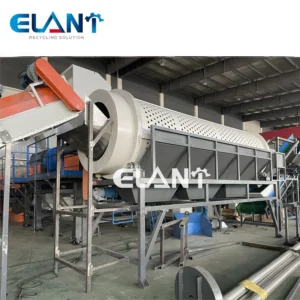
Controlling flake moisture remains essential for consistent product quality in any pet bottle washing line. Excess moisture leads to clumping, poor flow, and reduced efficiency during processing. Operators must ensure the right moisture level to minimize equipment downtime and maintain high throughput.
Plant managers and line operators who adopt strict moisture control protocols can expect fewer production issues and improved material performance.
Key Takeaways
- Maintain flake moisture below 1% to ensure high-quality PET flakes and prevent clumping during processing.
- Implement regular maintenance of dewatering systems to enhance moisture removal efficiency and reduce downtime.
- Use accurate moisture meters for real-time monitoring to ensure compliance with industry standards and improve process efficiency.
- Train staff on moisture control techniques to minimize errors and enhance product quality throughout the washing line.
- Establish clear moisture targets for different applications to prevent degradation and ensure optimal performance in downstream processing.
Why Moisture Control Is Critical
Quality Impact
Moisture control directly influences the quality of PET flakes produced in a pet bottle washing line. When moisture exceeds optimal levels, flakes tend to clump together, degrade, and become difficult to process. These issues can result in inconsistent melt viscosity, surface defects, and even voids in the final pellet. The drying system must remove excess moisture to ensure flakes are suitable for further processing and storage. The table below summarizes the relationship between moisture and flake quality:
| Aspect | Details |
|---|---|
| Optimal Moisture | 0.5% to 1% |
| Issues with Excess | Clumping, degradation, processing difficulties |
| Importance | Essential for producing high-quality PET flakes meeting industry standards |
Even minor fluctuations in flake moisture can cause foaming and other problems during extrusion. Maintaining precise moisture thresholds is necessary for different grades of PET flakes.
Efficiency Gains
Proper moisture management in a pet bottle washing line ensures that the final product meets specifications for storage and handling. Operators who control moisture effectively reduce the risk of reprocessing, which can lead to higher costs and wasted resources. Consistent moisture levels also help maintain steady throughput and minimize equipment downtime.
- Reduces the risk of reprocessing and associated costs
- Ensures product meets storage and handling requirements
- Supports stable and efficient production flow
Downstream Benefits
Achieving optimal moisture levels in PET flakes offers significant downstream advantages. Proper moisture control is crucial for effective drying and processing. It helps convert amorphous PET flakes into a crystalline form, which is essential for safe drying and further processing. Lower moisture loads on dehumidifying dryers enhance efficiency and extend equipment lifespan.
- Reduces the risk of hydrolysis during melt processing
- Improves pellet stability and mechanical properties
- Prevents surface defects such as splay marks and bubbles
Excess moisture can compromise the structural integrity of the final product, making parts brittle and reducing tensile strength. By maintaining moisture content below 1%, operators ensure high-quality output and reliable downstream performance.
Dewatering in PET Bottle Washing Line
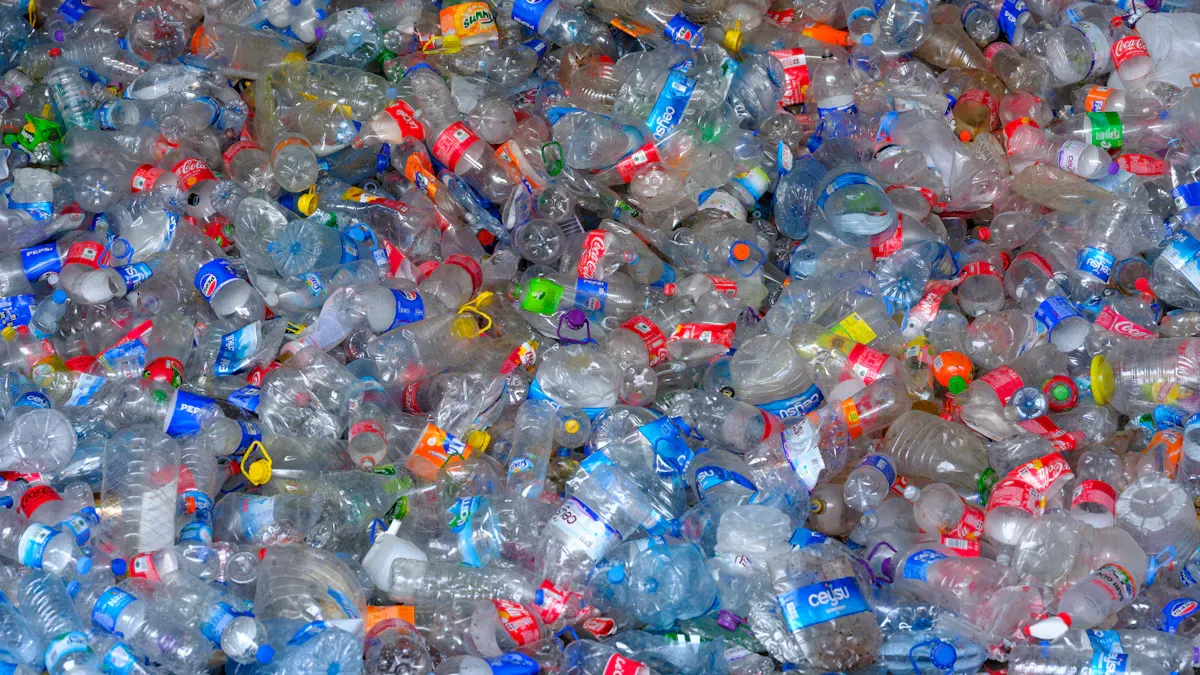
Centrifugal Dewatering
Centrifugal dewatering stands as a primary step in moisture removal for PET flakes. This process uses high-speed rotation to separate water from the surface of the flakes. The centrifugal force pushes water outward, allowing it to drain through screens. Operators rely on this method to achieve rapid moisture reduction before thermal drying.
- Centrifugal dewatering systems typically reduce moisture content to about 2-3% through mechanical action.
- Achieving moisture levels below 1-2% is necessary to prevent intrinsic viscosity (IV) degradation during extrusion.
- A dewatering machine can handle large volumes of PET flakes efficiently, supporting steady production in a pet bottle washing line.
Several factors influence the effectiveness of centrifugal dewatering. The table below outlines these key variables:
| Factor | Description |
|---|---|
| Rotor speed | Higher speeds increase centrifugal force, enhancing moisture removal but also raising energy costs. |
| Material size and shape | Uniform flakes dewater better than mixed sizes; fines may pass through screens, affecting efficiency. |
| Feed rate consistency | Uneven feed can cause vibration and reduce efficiency; a steady feed is crucial for optimal performance. |
| Screen condition | Worn or clogged screens hinder drainage; regular maintenance is vital for consistent performance. |
| Upstream washing quality | Poorly washed materials can clog screens and degrade performance; effective washing improves efficiency. |
Tip: Regular maintenance of screens and monitoring rotor speed help maximize dewatering efficiency and minimize downtime.
Cyclone Separator Use
Cyclone separators play a critical role in further reducing moisture content after centrifugal dewatering. These devices use a combination of air flow and mechanical separation to remove residual water from PET flakes. The process involves mixing flakes with cool air, which helps evaporate remaining moisture and prevents clumping.
Cyclone separators often operate alongside thermal dryers in a pet bottle washing line. This combination ensures that flakes reach the target moisture level for downstream processing. The following table compares the effectiveness of different dewatering methods:
| Dewatering Method | Final Moisture Level | Notes |
|---|---|---|
| Cyclone Separator | Under 2% | Effective in removing residual moisture. |
| Centrifugal Dryer | Under 2% | High-speed drying for rigid flakes. |
| Thermal Dryer | Below 3% | Final drying stage, often used after centrifugation. |
Cyclone separators help achieve low residual moisture levels, often reaching below 1%. The table below shows typical moisture content after cyclone separation:
| Moisture |
|---|
| < 1% |
- Cyclone separators enhance drying efficiency by combining mechanical and thermal methods.
- They are essential for preventing hydrolysis and maintaining flake quality during extrusion.
- Operators can rely on cyclone separators to support consistent moisture control in a pet bottle washing line.
Note: Integrating cyclone separators with thermal dryers ensures PET flakes meet industry standards for moisture content and quality.
Thermal Drying Process
Dryer Setup
Thermal dryers play a pivotal role in achieving the target moisture content for PET flakes. Operators select dryers based on performance metrics that align with industry standards. The most common types include hot air dryers, rotary drum dryers, and fluidized bed dryers. Each system offers unique advantages for moisture removal and impurity reduction.
- Moisture content after drying typically falls below 1-2%. This level ensures flakes are ready for extrusion or pelletizing.
- Bulk density remains under 0.3G/CM³, supporting efficient material handling and storage.
- Total impurity levels drop below 320ppm, with PVC content under 100ppm, metal content under 20ppm, and PE/PP content under 200ppm.
- Particle size is maintained between 14-16mm, which optimizes drying uniformity and downstream processing.
Operators must configure dryer settings to match the specific requirements of the pet bottle washing line. Proper setup includes verifying airflow, checking heating elements, and ensuring uniform distribution of flakes. Routine inspection of dryer screens and drive belts prevents blockages and mechanical failures.
Tip: Consistent dryer maintenance and calibration help sustain optimal moisture levels and minimize contamination risks.
The table below outlines the maximum moisture targets for PET flakes and recommended actions if these thresholds are exceeded:
| Material | Maximum Moisture | Action if Exceeded |
|---|---|---|
| PET flake (fiber grade) | 1.0% | Check dryer screen for blockage, verify spin speed, inspect drive belt tension |
| PET flake (food grade) | 0.5% | Add or verify thermal dryer stage |
Temperature & Time Control
Temperature and drying time directly influence the final moisture content of PET flakes. Operators must balance these variables to achieve maximum moisture loss without damaging the material. Higher temperatures accelerate drying, but excessive heat can degrade PET and increase impurity levels.
The following table demonstrates how power, temperature, and drying duration affect moisture outcomes:
| Power (W) | Temperature (°C) | Moisture Content (%) | Drying Time (min) |
|---|---|---|---|
| 100 | 110 | Higher than 0.02 | 40 |
| 1500 | 148 | Higher than 0.02 | 40 |
| 1900 | 160 | Maximum moisture loss | 40 |
Operators should monitor dryer settings and adjust parameters based on real-time moisture readings. Increasing power and temperature improves drying efficiency, but must be managed to prevent thermal degradation. Optimal drying time ensures flakes reach the desired moisture range of 0.5-1%, supporting quality and downstream performance.
Note: Regularly calibrate moisture meters and review drying logs to maintain consistent results.
Thermal drying remains the final and most critical step in moisture control for PET flakes. Proper dryer setup and precise control of temperature and time guarantee that flakes meet industry standards for purity, density, and moisture content. These practices support reliable operation and high-quality output in every pet bottle washing line.
Moisture Monitoring & Targets
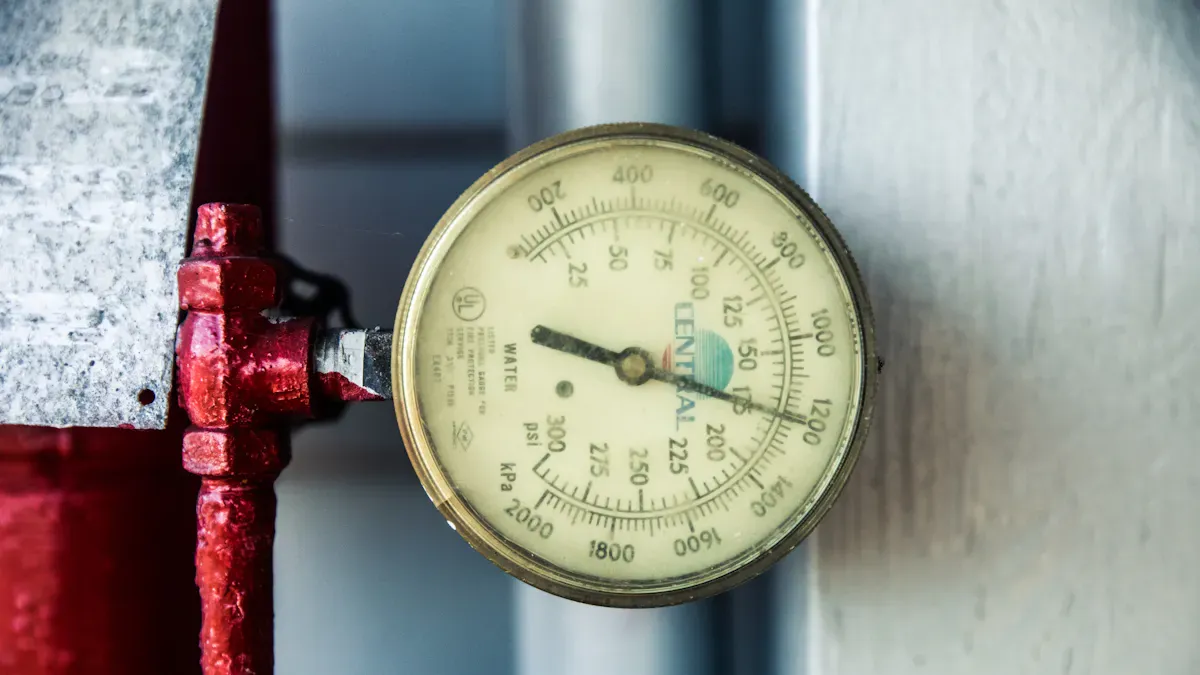
Moisture Meter Use
Accurate moisture measurement is essential for maintaining quality in a pet bottle washing line. Operators rely on specialized instruments to ensure PET flakes meet strict moisture specifications. The TK Capacitive Hygrometer stands out for its reliability and precision. This device offers a broad measurement range and high accuracy, making it suitable for routine checks on PET flakes.
| Feature | Details |
|---|---|
| Product | TK Capacitive Hygrometer |
| Measurement Range | 0-99.9% |
| Accuracy | ±0.5% |
- Suitable for measuring moisture content in PET flakes
- LCD display for easy reading
- High accuracy of ±0.5%
Advanced systems, such as those from MoistTech, provide non-contact, real-time moisture measurement. These solutions enable operators to make immediate adjustments, reducing the risk of off-spec material and improving process efficiency.
Tip: Regular calibration of moisture meters ensures consistent and reliable readings.
Setting Moisture Goals
Establishing clear moisture targets is critical for downstream processing. Industry guidelines recommend that PET flakes reach less than 0.3% moisture before extrusion. This threshold prevents hydrolytic degradation, which can compromise product integrity. For food-grade applications, the moisture content should not exceed 0.70%. Operators must set these targets based on the intended use of the flakes and monitor them closely throughout the process.
- PET flakes must be dried to less than 0.3% moisture before extrusion.
- Moisture content should be ≤0.70% for food-grade applications.
Data Tracking
Consistent data tracking supports continuous improvement in moisture control. Operators should log moisture readings at each stage of the pet bottle washing line. This practice helps identify trends, detect deviations, and implement corrective actions promptly. Digital tracking systems can simplify recordkeeping and provide valuable insights for process optimization.
Maintaining detailed moisture logs enables teams to troubleshoot issues and verify compliance with industry standards.
Process Improvements for Operators
Staff Training
Effective moisture control begins with well-trained staff. Operators must understand the importance of each stage in the PET bottle washing line. Training programs should cover equipment operation, moisture measurement, and safety protocols. Supervisors can use hands-on demonstrations to reinforce best practices. Staff who recognize the impact of moisture on product quality make fewer mistakes and respond quickly to process changes. Regular refresher courses help maintain high standards and adapt to new technologies.
Tip: Schedule quarterly training sessions to keep operators updated on the latest moisture control techniques.
Routine Checks
Routine checks ensure that the washing line operates efficiently and maintains optimal moisture levels. Operators should follow a checklist that includes cleaning, lubrication, and inspection tasks.
- Routine cleaning of conveyors, washing stations, and sorting systems prevents buildup and maintains efficiency.
- Proper lubrication of motors and rollers reduces friction and wear, supporting smooth operation.
- Wear and tear inspection identifies cracks or corrosion early, preventing unexpected malfunctions.
These checks help maintain consistent moisture removal and reduce downtime. Operators who follow a structured maintenance schedule can quickly spot issues before they affect production.
Troubleshooting
Troubleshooting moisture control issues requires a systematic approach. Operators should treat drying and moisture control as a quality gate, ensuring product integrity at every stage.
- Start with mechanical dewatering to remove surface moisture.
- Follow up with thermal drying or crystallization, depending on the product and process requirements.
- Verify moisture levels continuously to maintain consistency.
The table below highlights how systematic troubleshooting improves moisture control in PET flake processing:
| Troubleshooting Step | Impact on Moisture Control |
|---|---|
| Implement validated drying protocols | Enhances moisture removal efficiency |
| Continuous moisture verification | Ensures consistent moisture levels are maintained |
| Establish clear acceptance criteria | Provides benchmarks for acceptable moisture content |
| Optimize vacuum degassing | Critical for effective moisture and gas removal |
Operators who use these steps can resolve moisture issues quickly and maintain high-quality output. Consistent troubleshooting supports reliable production and reduces the risk of defects.
Effective moisture control in PET bottle washing lines relies on precise targets, robust drying methods, and continuous monitoring. The table below highlights essential aspects for consistent results:
| Key Aspect | Details |
|---|---|
| Moisture Target | <1% for flakes |
| Drying Method | High-speed centrifugal dryers |
| Thermal Drying Temp | 130–160 °C |
| Monitoring | Online final flake moisture checks |
A practical checklist ensures process stability:
| Checklist Item | Description |
|---|---|
| Moisture Measurement Points | Define and monitor at each critical stage |
| Target Moisture Range | Set and verify before extrusion and packaging |
Start with small improvements and track outcomes. Consistent moisture control enhances product quality, reduces downtime, and supports reliable downstream processing.
FAQ
What is the ideal moisture content for PET flakes after drying?
The industry standard for PET flakes is less than 1% moisture. For extrusion, the target is below 0.3%. Meeting these levels ensures high-quality output and prevents defects in downstream processing.
How often should operators check flake moisture?
Operators should check moisture at every critical stage—after dewatering, before and after thermal drying, and before packaging. Frequent checks help maintain process stability and product quality.
Can high moisture content damage PET processing equipment?
Yes. High moisture can cause clumping and blockages in conveyors and dryers. It may also lead to hydrolysis during extrusion, which reduces equipment lifespan and increases maintenance needs.
Which tools are best for measuring PET flake moisture?
Moisture meters like the TK Capacitive Hygrometer or MoistTech sensors provide accurate, real-time readings. These instruments support both spot checks and continuous monitoring for reliable moisture control.