
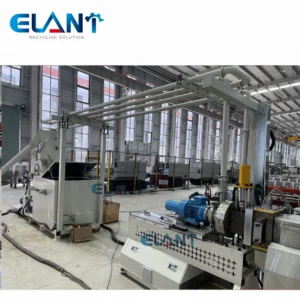
Up to 30% of recycled pellets produced on under-dried film recycling lines fail downstream melt-flow specs — not because the source plastic was bad, but because moisture entered the process at a step that’s easy to control. This guide walks through the root causes, the detection checkpoints, and the system fixes our team at Elant has validated across plastic recycling customers in the United States.
Quick takeaways
- Moisture is the single most common source of recycled pellet defects — voids, discoloration, and inconsistent size all trace back to water in the material before or during extrusion.
- Pre-drying to ≤0.05% moisture content is the first intervention, not the last.
- Screen changer fouling from contaminated recycled materials doubles maintenance downtime if feeding systems aren’t matched to wet-input loads.
- Film recycling demands more aggressive drying equipment than rigid plastic recycling because film surface-area-to-mass ratio is roughly 8–12× higher.
- Pellets produced with stable moisture control sell at a 15–25% premium over off-spec material on the U.S. recycled resin spot market.
- Expected investment: auditing your current line takes one shift; retrofitting a pre-dryer takes 1–3 days depending on extruder size.
Before you start
What you need to know first:
- Basic familiarity with your pelletizing line layout (extruder, screen changer, die face or water-ring cutter)
- Access to a moisture analyzer (loss-on-drying or Karl Fischer) — budget units start around $400 at U.S. lab supply vendors
- Your pellet size specification and current rejection rate (get this from your QC log before reading further)
What you’ll need on hand:
- Moisture analyzer or access to a third-party lab in your region
- Pellet samples from three points: pre-drying hopper, post-extruder die, and final bagged output
- Maintenance log from your screen changer for the last 90 days
- Dryer temperature and residence-time settings from your current setup
Step 1: Measure Moisture at Three Points in Your Line
Why this matters: Quality problems usually arise due to undetected water entering at multiple stages. Testing only the final pellet tells you there’s a problem — it doesn’t tell you where it entered. A single moisture reading at the hopper exit will locate the root cause in under an hour.
Take a 100-gram grab sample from (1) the material as it enters the drying hopper, (2) after the hopper discharge before the extruder throat, and (3) from the cooled pellet stream before bagging. Run each through your loss-on-drying analyzer at 105°C for 30 minutes.
Interpret the results:
- Input moisture above 1.0%: your incoming recycled plastic is arriving wet — likely from outdoor storage, rain exposure, or washing lines without sufficient spin-dry time.
- Post-hopper moisture above 0.10%: your dryer dwell time or temperature is under-spec. Most polyolefin recycling lines target 80–90°C for 2–4 hours; film recycling often requires a dedicated dehumidifying hopper rather than a simple hot-air dryer.
- Final pellet moisture above 0.05%: water is re-entering at the water-ring cutter or underwater pelletizer. Check your process water temperature and centrifugal dryer speed.
Common mistake: Teams measure moisture once during initial commissioning and assume nothing changes. In practice, seasonal humidity swings in U.S. warehouse environments shift incoming material moisture by 0.3–0.8% between summer and winter. Set a weekly measurement cadence, not an annual one.
💡 Pro tip: Keep a simple quality problem report format — date, sample point, moisture %, ambient humidity, and operator name. After 8 weeks you’ll see exactly which source materials and which seasons drive your worst pellet batches.
Step 2: Diagnose What the Defective Pellets Are Telling You
Why this matters: Each defect type is a specific diagnostic signal. Treating all quality issues as a generic “contamination problem” leads to fixes aimed at the wrong variable.
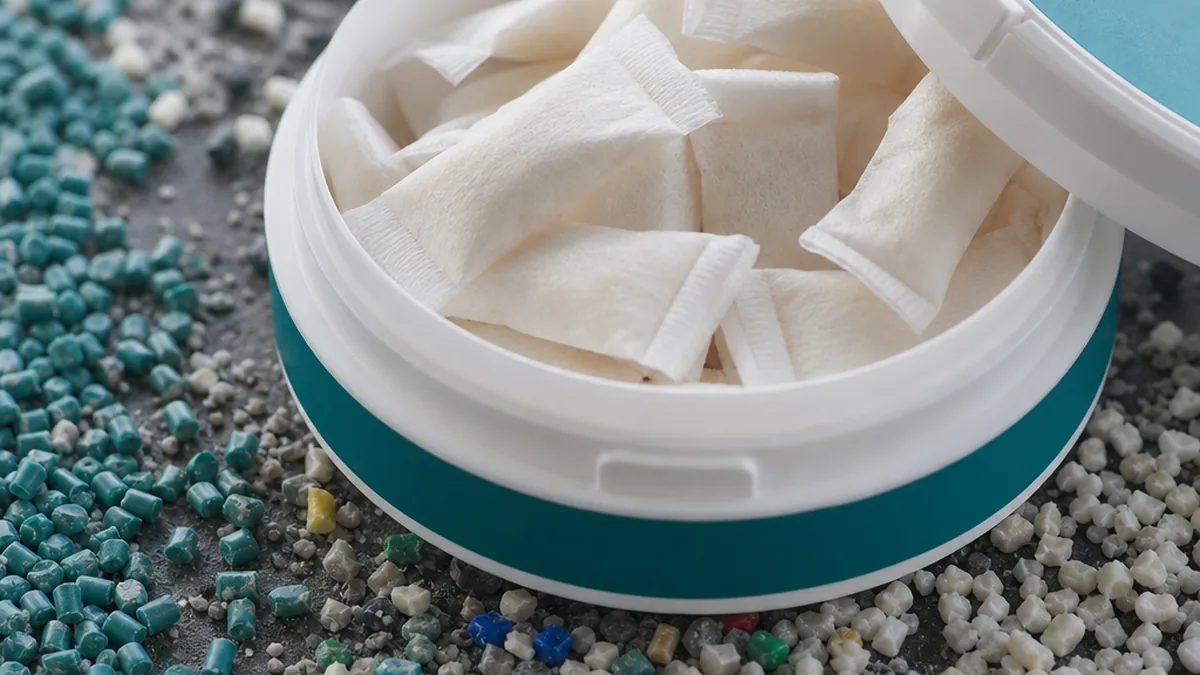
Read your pellets like a quality problem report:
- Bubbles or voids inside the pellet — moisture flashed to steam inside the extruder barrel. Barrel temperature is above the moisture flash point before water has been driven off. Fix: lower barrel zone 1–2 temperature by 10°C and increase hopper drying time.
- Brown or black discoloration — two possible causes: (a) moisture-induced hydrolytic degradation at the screw, or (b) contamination from non-target plastics in the feedstock. Run a quick burn test — hydrolytic degradation smells acrid; contamination from PVC produces a sharp chlorine odor.
- Elongated or tailed pellets (angel hair) — melt temperature too high relative to cutter speed, or the die face is partially blocked. Check your die plate for carbon deposits from previous runs.
- Undersized or irregular pellet size — throughput rate dropped while cutter speed held constant. Common cause: inconsistent feeding from a bridged hopper or fluctuating bulk density in fluffy film recycling material.
⚠️ Warning: Discolored pellets from moisture degradation don’t just hurt appearance. Hydrolytic chain scission in PET or nylon reduces intrinsic viscosity — once that happens, no downstream drying recovers the lost molecular weight. The material’s market value drops permanently.
Common mistake: Sorting out visibly defective pellets by hand and calling that quality control. Pellets with internal voids or invisible molecular degradation pass visual inspection. You need melt flow index (MFI) testing on every new source batch, not just visual grading.
Step 3: Fix the Drying System to Match Your Feedstock
Why this matters: Film recycling is the hardest category to dry correctly. A grocery bag film or agricultural mulch film has an enormous surface area relative to its mass — water clings to every micron of crinkled surface. A standard hot-air dryer that handles rigid plastic regrind adequately will leave film at 3–5× the acceptable moisture level.
📝 Note: Our engineering team at Elant regularly sees U.S. recyclers running film through hot-air hoppers sized for pellets. The residence time needed to dry film to 0.05% moisture at 85°C is roughly 3–4 hours — most under-sized hoppers provide 45–60 minutes. The math doesn’t close.
Corrective steps by feedstock type:
- Rigid regrind (bottles, crates, HDPE sheet): Hot-air hopper dryer at 80–90°C, 2-hour minimum dwell, sized at 1.5× your hourly throughput rate.
- Film and flexible packaging: Dehumidifying dryer (desiccant rotor type) rated to deliver air at ≤–20°C dew point. Film surface dries fast but reabsorbs ambient moisture instantly — you need low dew-point air, not just hot air.
- Mixed post-consumer bales: Assume worst-case moisture of 8–15% wet weight after wash. Add a mechanical pre-dryer (centrifugal or squeeze-roll type) before the thermal drying stage. Attempting to thermal-dry material above 5% moisture wastes energy and overloads the hopper.
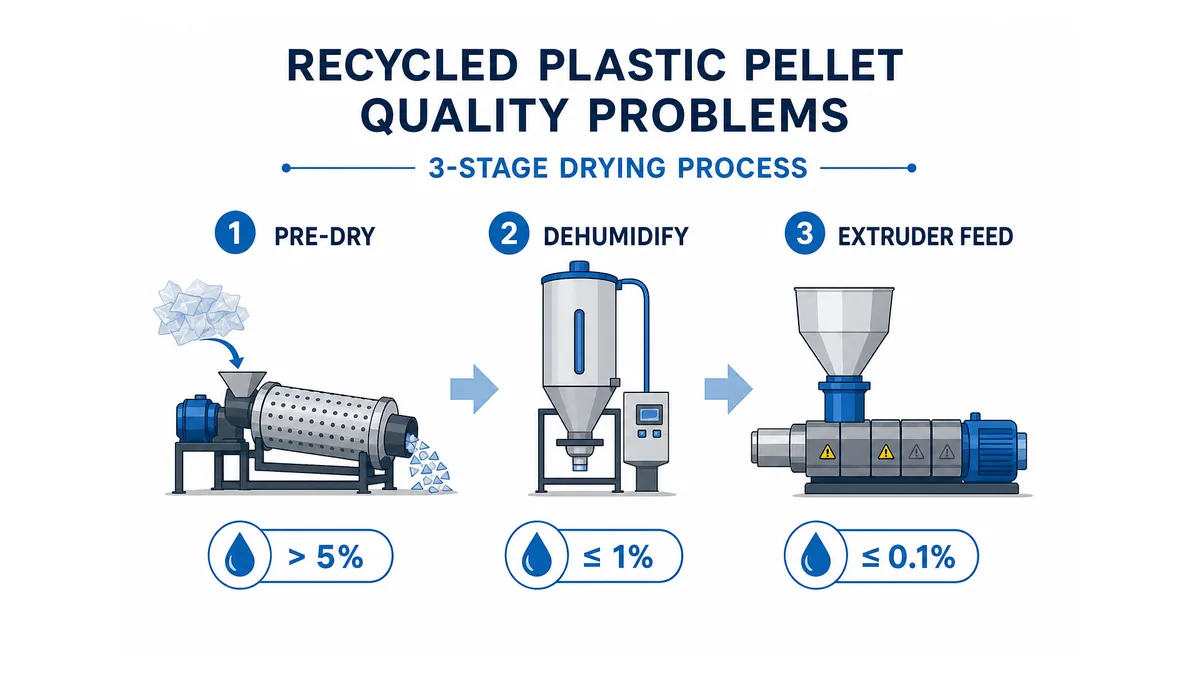
Common mistake: Buying a larger extruder to compensate for throughput losses caused by inconsistent feeding from wet material. The extruder is not the bottleneck — the dryer is. We’ve watched customers at U.S. facilities spec a 150mm twin-screw when the actual fix was a $12,000 desiccant dryer retrofit.
Step 4: Protect Your Screen Changer and Reduce Downtime
Why this matters: Moisture in recycled plastic doesn’t only hurt pellet quality — it accelerates screen changer fouling. Water-containing melt creates micro-foaming at the screen surface, trapping degraded polymer and contamination faster than dry melt does. Customers running wet film recycling typically report screen changes every 4–6 hours; after fixing moisture at the source, that interval extends to 18–24 hours on the same line.
Checklist before upgrading your screen changer:
- [ ] Confirm moisture is below 0.10% post-dryer before assuming the screen changer is undersized
- [ ] Check your melt pressure curve — a slow rise over 30–60 minutes indicates gradual fouling from contamination; a rapid spike within 10 minutes suggests gel particles from heat-degraded material (a moisture signature)
- [ ] If running post-consumer film, use a continuous or hydraulic double-piston screen changer rather than a manual slide-plate type — the ability to change screens under pressure without stopping the extruder is worth the capital cost at scale
How High-Quality vs. Low-Quality Recycled Pellets Are Valued Differently
The U.S. recycled resin market prices pellet quality directly. As of mid-2026, natural-color HDPE recycled pellets meeting prime-grade MFI specs trade at $0.55–0.75/lb on spot markets, while off-spec mixed-color or high-moisture lots sell at $0.18–0.30/lb. That $0.30–0.45/lb gap is entirely attributable to process control — primarily moisture management and contamination screening.

| Item | Value |
|---|---|
| Prime-color-consistent | 0.7 |
| Off-spec-discolored | 0.28 |
| Mixed-contaminated | 0.19 |
| Grade | Moisture at extrusion | MFI consistency | Typical price ($/lb, mid-2026) |
|---|---|---|---|
| Prime (stable production) | ≤ 0.05% | ±5% of target | $0.55–0.75 |
| Standard | 0.05–0.15% | ±15% of target | $0.35–0.50 |
| Off-spec | > 0.15% | > ±20% of target | $0.18–0.30 |
Buyers for blown film and injection molding applications require certificates of conformance showing MFI and moisture data. Without that documentation, even visually clean pellets sell at the off-spec price. Building a quality problem report system — batch number, source material, moisture readings, MFI result — takes 20 minutes to set up and creates the paper trail that unlocks prime pricing.
Common Questions About Recycled Plastic Pellets
Disadvantages of recycled plastic in pellet form
Recycled plastic pellets carry three consistent disadvantages versus virgin material: (1) variable melt flow index due to mixed resin sources, (2) residual colorants that limit applications requiring natural or white-base colors, and (3) reduced impact strength in polyolefins that have undergone multiple heat cycles. Each of these is manageable through sorting, additive dosing, and MFI-matched blending — but they explain why quality problems in plastic recycling are structural, not random.
Are plastic pellets microplastics?
Plastic pellets in the industrial sense — the 3–5mm cylindrical or lenticular shapes produced by a pelletizing line — are classified as “nurdles” or pre-production pellets, not microplastics. Microplastics are defined by NOAA as particles ≤5mm[1] that result from fragmentation of larger plastic items. Pellets that break during transport or handling can shed sub-5mm fragments that then qualify as microplastic contamination, which is why the Operation Clean Sweep program[2] requires containment protocols at U.S. pellet-handling facilities.
Why pyrolysis sees limited commercial adoption
Pyrolysis — converting plastic waste to fuel or feedstock through thermal decomposition — faces economics that make it uncompetitive with mechanical recycling for clean, sorted thermoplastic streams. A 2024 analysis by the American Chemistry Council[3] put pyrolysis processing costs at $300–600 per ton versus $80–150 per ton for mechanical pelletizing of sorted streams. The technology makes sense for contaminated mixed plastics that can’t be mechanically recycled — it’s not a replacement for a well-run pelletizing line.
Key Facts at a Glance
| Parameter | Target / Threshold |
|---|---|
| Acceptable moisture at extruder throat | ≤ 0.05% (polyolefins), ≤ 0.02% (PET, nylon) |
| Film recycling drying dew point | ≤ –20°C (desiccant rotor dryer) |
| Screen change interval (dry feed) | 18–24 hrs typical |
| Screen change interval (wet feed) | 4–6 hrs typical |
| Prime-grade HDPE pellet price premium over off-spec | $0.30–0.45/lb (mid-2026 U.S. spot) |
| MFI variation in prime-grade recycled pellets | ≤ ±5% of target value |
| Mechanical pre-dryer threshold | Required when input moisture > 5% wet weight |
Troubleshooting
Problem: Pellets show surface bubbles consistently on one zone of the die face, not all holes. Cause: Uneven melt temperature across the die — one heating zone is underperforming. Fix: Map die face temperature with an infrared thermometer. Replace the failing cartridge heater and recalibrate zone PID before the next run.
Problem: MFI readings are within spec, but blown film made from the pellets shows gels and fish-eyes. Cause: Gel particles from cross-linked or high-MW contamination passing the screen — screen mesh is too coarse for the application. Fix: Step down from 80-mesh to 120-mesh or add a dual-stage filtration screen changer. This is common in post-consumer film recycling where agricultural film contaminates the stream.
Problem: Pellet size drifts larger over a shift without any process change. Cause: Water-ring cutter blade wear — blades dull progressively, increasing cut lag. Fix: Establish a blade replacement schedule based on throughput tonnage, not calendar time. Most U.S. suppliers recommend blade inspection every 80–100 tons.
What to Do Next
If your moisture readings are in spec but quality issues persist, the next audit point is contamination sorting upstream of the extruder — a plastic recycling contamination detection guide will walk you through optical sorter and density separation options.
For teams speccing new equipment, our engineering team at Elant can size a complete plastic pelletizing line system selection to your feedstock type and throughput target — we’ve delivered systems to U.S. recyclers processing everything from 200 lb/hr agricultural film to 2,000 lb/hr post-consumer bottle flake.
FAQ
What are the disadvantages of recycled plastic?
Recycled plastic often carries inconsistent melt-flow index, contamination from mixed resin streams, residual moisture, and color variation — all of which create recycled plastic pellet quality problems during extrusion or injection molding. Mechanical properties like tensile strength and impact resistance degrade with each reprocessing cycle. For processors buying recycled pellets in the United States, lot-to-lot variability is the most costly issue because it forces frequent line adjustments, increases scrap rates, and can shut down a run entirely if the material falls outside spec.
Are plastic pellets microplastics?
Plastic pellets themselves are not classified as microplastics — microplastics are particles under 5 millimeters that result from plastic degradation or fragmentation. Virgin and recycled pellets typically range from 2 to 5 millimeters and are an intentional industrial feedstock. However, pellet spills and dust generated during cutting or conveying can break down into microplastic-sized fragments. The EPA and state environmental regulators increasingly scrutinize pellet loss during handling, making spill-containment protocols a compliance concern for U.S. recycling and compounding facilities.
Sources
[1] What are microplastics? — oceanservice.noaa.gov
[2] Operation Clean Sweep: Home — opcleansweep.org
[3] Advanced Recycling Policy and Recycling Technologies — americanchemistry.com