
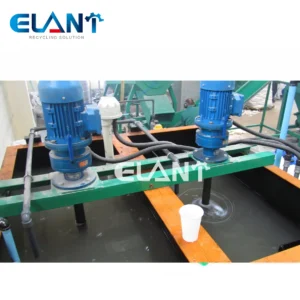
A plastic recycling line runs 16 hours a day, and by shift-end the collection pit holds a gray-brown slurry — dense with polyethylene fines, adhesive residue, and ink particles. The operator faces a choice: pay to haul it as industrial waste, or install a treatment process that converts that sludge into a press cake you can legally landfill or, in some cases, apply to land. The second option costs more upfront but cuts long-term disposal spend by 40–70% in our customers’ documented experience.
Quick takeaways
- Washing wastewater from plastic recycling carries 3,000–15,000 mg/L total suspended solids — roughly 30× higher than municipal sewage sludge influent.
- The core treatment sequence is: screening → coagulation/flocculation → sedimentation or dissolved-air flotation → dewatering → sludge disposal or land application.
- Skipping coagulation causes filter blinding within days; it is the single most common mistake on first-time builds.
- Treated clarified water can be recycled back to the wash trough, cutting fresh-water consumption by 70–85%.
- A properly dewatered sludge cake (≥60% solids content) typically qualifies as non-hazardous solid waste, enabling lower-cost disposal routes.
Before you start
What you need to know first:
- Your plastic stream type (PE film, PET bottles, mixed rigid): each generates different organic matter loads and sludge production rates.
- Local discharge limits — in the United States, check your state’s NPDES permit requirements and, if you’re near a pretreatment zone, the local POTW’s industrial pretreatment standards.
- Flow rate: measure the wash-line water throughput in gallons per minute (GPM). Undersizing any tank by 20% doubles the suspended solids that pass through to the next stage.
Tools and equipment you’ll need:
| Equipment | Typical spec for a 2-ton/hr wash line |
|---|---|
| Drum screen / vibrating screen | 0.5–1.0 mm aperture |
| Dosing pump (coagulant) | 0–10 L/hr adjustable |
| Flocculation tank | 3-stage paddle mixer, 15–30 min HRT |
| DAF unit or lamella clarifier | surface loading ≤6 m³/m²·hr |
| Belt filter press or screw press | feed solids 1–3%, cake target ≥60% |
| Sludge storage hopper | 1-day holding capacity minimum |
Step 1: Screen Out Gross Solids
Why this matters: Plastic film flakes, bottle caps, and label fragments are abrasive. They foul pumps, clog filter media, and consume coagulant that should be working on the colloidal particles you actually need to remove. Removing them first protects every downstream component.
Run the raw washing wastewater through a vibrating drum screen with 0.5–1.0 mm openings before it reaches any tank. Collected screenings — typically 1–3% by weight of the plastic feed — go to a drip-dry container and then to the solid-waste stream. Do not return them to the wash trough; they carry concentrated organic matter that will spike your wastewater treatment BOD load.
Check screen blinding every four hours during startup. On PET bottle lines with heavy label paper, you may need to run two screens in series.
⚠️ Warning: PE film fragments smaller than 0.5 mm pass through any practical screen. These are the colloidal solids that coagulation must handle — do not assume screening alone produces discharge-quality water.
Common mistake: Operators set screen aperture at 2.0 mm to avoid blinding, then wonder why the clarifier is overloaded with solids. Tighten to 0.75 mm and manage blinding with a motorized brush; it is cheaper than replacing a fouled DAF unit.
Step 2: Add Coagulant and Flocculate
Why this matters: The sub-0.5 mm plastic fines and ink particles in washing wastewater carry a negative surface charge — they repel each other and stay in suspension indefinitely. Coagulation neutralizes that charge; flocculation then builds the neutralized particles into settleable floc. Without both steps, your clarifier removes maybe 30% of the suspended solids instead of 90%+.
Coagulant selection and dosing:
- Aluminum sulfate (alum): 50–150 mg/L, low cost, widely available, best for pH 6.5–7.5.
- Ferric chloride: 30–80 mg/L, effective at wider pH range (5.0–9.0), but increases sludge production by ~15% compared to alum.
- Polyaluminum chloride (PAC): 20–60 mg/L, produces denser floc and is our team’s preferred choice for high-organic-matter PE film wash lines — we’ve seen it cut dewatering time by 20% versus alum in back-to-back trials.
After coagulant injection, pass the water through a 3-stage flocculation tank with decreasing agitation: fast mix (G ≈ 300 s⁻¹, 1–2 min) → medium mix (G ≈ 60 s⁻¹, 10 min) → slow mix (G ≈ 20 s⁻¹, 10–15 min). This progressive slowdown builds floc without shearing it apart.
Add an anionic polyacrylamide flocculant (0.5–2 mg/L) in the slow-mix stage to increase floc size and improve settling velocity.
📝 Note: Jar tests take 30 minutes and tell you the optimal coagulant dose for your specific wastewater on any given day. Run one at the start of each shift when you’re processing a new plastic feedstock. Guessing doses wastes chemical and produces undersized floc that passes through the clarifier.
Common mistake: Adding flocculant and coagulant at the same point in the process. They work sequentially, not simultaneously. Coagulant first, then flocculant — mixing them together deactivates both.
Step 3: Separate Sludge from Clarified Water
Why this matters: This is the solids/liquid split — the stage that defines the quality of both your reuse water and your sludge cake feed. Choosing the wrong separator for your flow rate or solids load is the most expensive retrofit mistake a plastic recycling plant can make.
Two proven options for plastic washing wastewater:
Lamella (inclined plate) clarifier — best for lines with moderate solids (3,000–8,000 mg/L TSS). The inclined plates shorten the settling distance so the unit footprint is 80% smaller than a conventional settling tank at the same hydraulic loading. Underflow sludge concentration typically reaches 1–3% solids — good feed for a belt press.
Dissolved-air flotation (DAF) — preferred for high-solids loads (8,000–15,000 mg/L TSS) and for lines that process PP or HDPE, where plastic fines have lower density and won’t settle efficiently. Pressurized water releases micro-bubbles that attach to floc and float it to the surface. DAF achieves 90–95% TSS removal and produces a sludge float at 3–6% solids, which reduces dewatering load.
In our facility engineering experience, PE film wash lines almost always need DAF because the fine film fragments have a specific gravity close to 1.0 — flotation processes outperform settling for this fraction every time.
The clarified effluent from either unit should reach ≤50 mg/L TSS before reuse or discharge. Test with a turbidity meter at the clarifier outlet; target ≤20 NTU for water reuse in the wash trough.
Common mistake: Using a plain settling tank without inclined plates or flotation. Hydraulic retention time requirements are 4–6× longer, the tank footprint is impractical, and sludge production accumulates faster than the underflow pump can clear it.
Step 4: Dewater the Sludge
Why this matters: Raw clarifier underflow at 1–5% solids is mostly water — hauling it as liquid waste costs 10–15× more per ton than hauling a pressed cake at 60–75% solids. Dewatering is where disposal cost is made or broken.
Condition the sludge before pressing. Add cationic polyacrylamide (c-PAM) at 3–8 kg per tonne of dry solids in an inline mixer immediately before the press feed pump. This step — sludge conditioning — is separate from the flocculation in Step 2. Skipping it increases cake moisture content by 8–12 percentage points and cuts filter throughput in half.
Press selection:
- Screw press: low maintenance, continuous operation, suitable for solids content up to 20% in feed slurry. Cake dryness reaches 50–65% solids. Best choice for operations running 24/7 with minimal operator attention.
- Belt filter press: higher throughput per unit width, cake dryness 55–75% solids, but requires daily belt washing and tensioning. Our team recommends belt presses for lines producing >500 kg/hr of dry sludge.
The pressed filtrate (the water expelled during dewatering) contains elevated suspended solids (500–2,000 mg/L) and should be returned to the flocculation tank inlet — not discharged directly.
💡 Pro tip: Weigh your sludge cake at the press discharge daily for the first two weeks. This gives you a sludge production number (kg dry solids per tonne of plastic processed) that feeds directly into disposal contract negotiations and environmental compliance reports.
Common mistake: Feeding the screw press at too-high a flowrate chasing throughput. Overwet cake at 40% solids doubles transport cost and may disqualify the material from landfill acceptance. Run the press at 80% of rated capacity and get the dryness right.
Step 5: Choose a Sludge Disposal or Reuse Route
Why this matters: Sludge from plastic washing wastewater is not the same as sewage sludge — it contains plastic micro-fines, ink, adhesive residue, and process chemicals, which limit your disposal options compared to municipal wastewater treatment plants. Choosing the wrong route creates regulatory liability.
Disposal pathways available in the United States:
| Route | Requirement | Typical cost (2025 estimate) |
|---|---|---|
| Non-hazardous solid waste landfill | TCLP test passes; solids ≥50% | $40–90/ton |
| Industrial co-processing (cement kiln) | Calorific value ≥1,500 kcal/kg; heavy metals within limits | $60–120/ton |
| Land application | Only if organic matter fraction dominates and metals pass Part 503 biosolids standards — rare for plastic wash sludge | Varies by state |
| On-site thermal treatment | Combustible plastics fraction; air permits required | High capex; viable at >5 ton/day sludge |
Land application under EPA Part 503 biosolids rules[1] is theoretically available but seldom applicable to plastic wash sludge because the plastic-derived organic matter fraction does not confer the agronomic benefit that justifies the permitting effort. In 15+ years of system installations, we have seen exactly two customers pursue this route — both had PP-only lines with exceptionally clean feedstock.
Verify your state’s specific requirements. Washington State’s wastewater treatment[2] permit requirements, for example, layer additional numeric effluent limits on top of federal NPDES standards.
Common mistake: Assuming the sludge is automatically classified as hazardous because it comes from an industrial process. Run the TCLP test first — most plastic wash sludge passes, which opens the lower-cost non-hazardous landfill route.
Step 6: Close the Water Loop for Reuse
Why this matters: Treating and discharging water is a cost. Treating and reusing it converts that cost into a water-supply credit. A well-run plastic recycling water treatment system can run on as little as 15–30% fresh-water makeup, with the rest being recirculated clarified water.
After the clarifier, send the treated effluent to a polishing filter (multimedia or disc filter, 20-micron target) before returning it to the wash trough inlet. Monitor conductivity daily — as dissolved solids accumulate in the recirculation loop, conductivity rises and wash quality drops. A bleed-and-feed approach (discharge 10–20% of the loop volume daily and replace with fresh water) keeps conductivity stable.

| Item | Value |
|---|---|
| Open loop | 18.0 |
| 50% recirculation | 9.0 |
| 80% recirculation | 3.6 |
| Full closed-loop | 1.8 |
| System type | Fresh water use (m³/ton plastic) |
|---|---|
| Open loop (no recirculation) | 18 |
| 50% recirculation | 9 |
| 80% recirculation | 3.6 |
| Full closed-loop (~90% recirculation) | 1.8 |
📝 Note: Washing machine waste water for plants is a frequently asked question in residential contexts, but industrial plastic washing wastewater is not suitable for agricultural reuse without advanced treatment — the residual surfactants and plastic-derived organics damage root systems.
Troubleshooting
Problem 1: Clarified water is cloudy (TSS >100 mg/L) despite correct coagulant dose – Cause: pH is outside the effective range for your coagulant (likely <6.0 or >8.5 with alum). – Fix: Measure pH at the coagulant injection point. Adjust with sodium hydroxide (raise) or sulfuric acid (lower) to hit 6.5–7.5. Re-run a jar test at corrected pH.
Problem 2: Sludge cake is too wet (≤45% solids) off the belt press – Cause: Insufficient cationic PAM conditioning, or press belt tension too low. – Fix: Increase c-PAM dose in 0.5 kg/tonne increments up to 10 kg/tonne dry solids. If dryness still fails, increase belt tension by one increment and check belt wash nozzle pressure (must be ≥4 bar).
Problem 3: DAF float won’t skim — sludge layer breaks apart – Cause: Flocculant dose too high; over-flocculated sludge is fragile and shears under the skimmer blade. – Fix: Reduce polyacrylamide dose by 30% and slow the skimmer blade speed. Target a firm, coherent float layer, not a loose foam.
What to Do Next
Once the treatment process is running stably, the two highest-value next steps are:
- Commission a industrial wastewater audit checklist at the 90-day mark — flow balance, sludge production per ton of plastic, and water reuse rate. The numbers from the first three months set your compliance baseline and feed into permit reporting.
- Benchmark your sludge production rate against your plastic feedstock input. Our team tracks this as kg dry sludge per tonne of plastic processed. For PE film, expect 8–15 kg/tonne; for PET bottles, 4–8 kg/tonne; for mixed rigids, 10–20 kg/tonne. If your number is higher than the upper bound, something upstream (feedstock contamination, over-dosing) is adding cost. For details on selecting the right washing line equipment to reduce contamination at source, see plastic washing line equipment selection guide.
For operations in states with active environmental oversight — including those looking at washington wastewater solutions[3] or working toward washington wastewater certification[4] for their treatment operators — building these documentation habits from day one saves significant compliance headaches at permit renewal.
FAQ
What about Quick takeaways?
Sludge treatment in plastic washing wastewater follows four core steps: screen gross solids, add coagulant and flocculant to settle fine particles, mechanically dewater the settled sludge, and test the press cake before disposal or reuse. Skipping coagulation leaves colloidal plastics and ink particles suspended, which overloads downstream equipment and pushes effluent above EPA discharge limits. A properly run system typically reduces sludge volume by 70 to 85 percent and cuts hauling costs significantly.
What about Before you start?
Before installing or operating a sludge treatment system, pull your facility’s NPDES permit and confirm the effluent limits for TSS, BOD, and pH that apply to your discharge point. Have a certified lab run a baseline characterization of your wash water — solids concentration, particle size distribution, and contaminant profile vary widely by plastic type. That data determines chemical dosing rates and equipment sizing. Budget for a RCRA waste determination on the press cake so you know whether it qualifies as non-hazardous solid waste under federal rules.
What about Step 1: Screen Out Gross Solids?
Route raw wash water through a vibrating screen or rotary drum screen with 0.5 to 2 mm openings to remove label fragments, film strips, and oversized plastic fines before they reach settling or filtration equipment. Removing gross solids at this stage protects pumps, reduces chemical demand in the coagulation step, and lowers overall sludge volume. Captured screenings are typically conveyed directly to a roll-off container for disposal. Clean the screen deck regularly — blinding cuts flow rate and forces solids downstream.
Sources
[1] A Plain English Guide to the EPA Part 503 Biosolids Rule. — epa.gov
[2] Water quality permits guidance – Washington State … — ecology.wa.gov
[3] Water quality permits – Washington State Department of Ecology — ecology.wa.gov
[4] Frequently Asked Questions – CivicPlus.CMS.FAQ — oakharbor.gov