

Effective control of blade wear in plastic crusher blades is critical for managing particle size and ensuring consistent output quality in recycling operations where contamination poses a significant risk. Frequent issues such as friction, improper installation, feed impurities, and poor maintenance contribute to rapid wear and inconsistent results. The following table summarizes the primary causes and their impacts:
| Cause of Blade Wear | Explanation |
|---|---|
| Friction | Friction between blade and material increases wear; regular lubrication can halve this. |
| Improper Installation | Incorrect setup accelerates premature blade wear. |
| Feed Impurities | Contaminants like sand or metal can reduce blade life by up to 60%. |
| Poor Maintenance | Inadequate care raises wear, while scheduled maintenance reduces it by 30%. |
Monitoring blade condition, particle size distribution, and strict adherence to operational protocols are essential for reliable recycling outcomes.
Key Takeaways
- Regular maintenance and lubrication reduce blade wear and improve recycling efficiency.
- Visual inspections help detect early signs of blade wear, preventing downtime.
- Monitoring particle size ensures consistent quality and reduces contamination risk.
- Choosing the right blade material and design extends blade life and reduces costs.
- Real-time tracking tools help operators quickly adjust settings to maintain quality.
Early Detection of Blade Wear

Visual Inspection Methods
Routine visual inspections help identify early signs of wear in plastic crusher blades. Operators should examine blades for physical damage, surface changes, and irregularities. The following table outlines the most reliable visual indicators:
| Visual Indicator | Description |
|---|---|
| Chips, cracks | Physical damage on the blade surface |
| Rounded corners | Loss of sharpness and cutting efficiency |
| Dark spots, burn marks | Evidence of overheating or excessive wear |
| Nicks, small cracks | Imperfections that impact performance |
| Rust spots, color changes | Signs of corrosion or material degradation |
| Uneven wear | Suggests misalignment or improper use |
| Inconsistent plastic size after shredding | Indicates blade inefficiency and wear |
Operators should document findings during each inspection. Early detection prevents unexpected downtime and maintains consistent output quality.
Performance Monitoring
Performance monitoring provides actionable data for blade maintenance. Key metrics include:
- Chips and cracks may cause catastrophic blade failure.
- Rounded edges reduce cutting efficiency and signal significant wear.
- Surface discoloration points to metal fatigue.
- Lower throughput and frequent blockages suggest worn blades.
- Increased noise and vibration indicate imbalance from uneven wear.
Blade sharpening is recommended when edge wear reaches 10% of the original thickness. Overly worn blades increase energy consumption by up to 30%. Keeping blades sharp ensures optimal performance and reduces the risk of material jams.
Spotting Particle Size Changes
Monitoring particle size distribution is essential for quality control in recycling operations. If more than 20% of the output regrind exceeds the designated screen size, the blade gap may not function properly. This condition allows material to bypass the cutting edges, resulting in larger particle sizes and reduced regrind quality. Consistent particle size signals effective blade maintenance and proper operation of plastic crusher blades.
Monitoring Particle Size in Plastic Crusher Blades
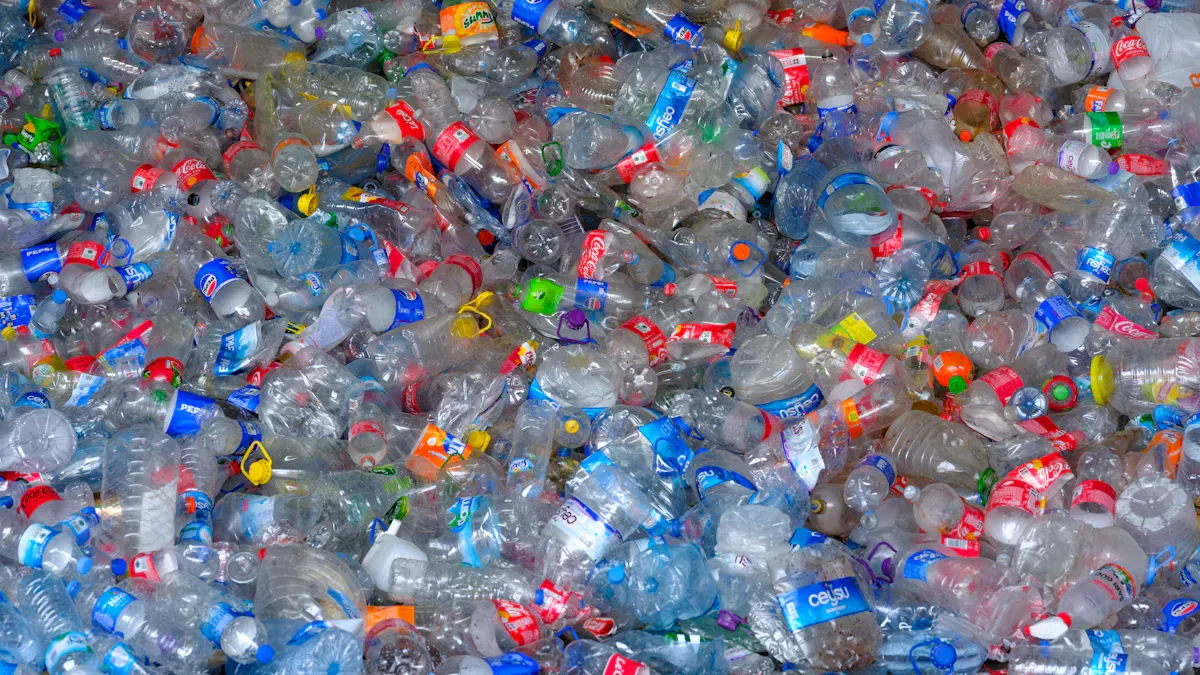
Consistent particle size distribution is a cornerstone of high-quality recycling. Monitoring the output from plastic crusher blades ensures that the regrind meets strict quality standards and reduces the risk of contamination. Operators who track particle size can quickly identify process deviations and maintain compliance with industry regulations.
Real-Time Tracking Tools
Modern recycling facilities use a range of real-time tracking tools to monitor particle size. These tools provide immediate feedback and help operators make quick adjustments. Common options include:
- Mechanical sieving systems: These systems use standardized sieve sets to separate particles by size. Operators can collect representative samples and analyze them on-site.
- Laser diffraction analyzers: These advanced devices offer precise measurements of particle size distribution. They use laser technology to characterize the size of each particle in real time.
- Automated quality control software: This software collects data from sensors and integrates it with production parameters. Operators receive alerts when particle size drifts outside acceptable limits.
Tip: Integrating real-time tracking tools with production controls allows for immediate corrective action, reducing the risk of producing off-spec material.
Quality Check Procedures
Quality check procedures ensure that the output from plastic crusher blades remains within target specifications. These procedures include:
- Routine sampling: Operators collect samples at regular intervals to represent the entire batch.
- Standardized sieve analysis: Using documented procedures, operators separate and weigh different particle size fractions. This ensures repeatability and reliability.
- Contamination testing: Samples undergo tests for impurities, such as metal or rubber, that could compromise product quality.
- Physical and chemical property evaluation: Additional tests verify that the regrind meets required performance characteristics.
A systematic approach to quality checks provides objective assessments of product quality. It also helps operators identify areas for process improvement and maintain regulatory compliance.
Operational Rules for Particle Size
Establishing clear operational rules is essential for controlling the output from plastic crusher blades. One critical rule is to prevent more than 20% of the regrind from exceeding the target particle size. This rule protects downstream processes and ensures consistent product quality.
| Operational Rule | Purpose | Action Required |
|---|---|---|
| Max 20% oversize regrind | Maintains uniform particle size distribution | Adjust blade gap or replace blades |
| Immediate corrective action on deviation | Prevents quality failures and contamination risk | Pause production, inspect equipment |
| Document all deviations | Supports traceability and continuous improvement | Record in quality log |
Operators should monitor particle size data continuously. When the percentage of oversize particles approaches the 20% threshold, immediate action is necessary. This may involve adjusting the blade gap, sharpening or replacing worn blades, or reviewing feedstock quality.
Note: Consistent monitoring and strict adherence to operational rules help maintain high recycling standards and reduce the risk of costly quality failures.
Minimizing Blade Wear
Maintenance Schedules
Routine maintenance is essential for extending the lifespan of plastic crusher blades. Operators should follow systematic processes that include daily cleaning, regular lubrication, and early damage detection. These practices decrease residue buildup, reduce friction, and lower maintenance costs. Coated blades, such as those with TiN or DLC coatings, perform significantly longer and experience slower wear rates.
| Maintenance Routine | Effectiveness |
|---|---|
| Daily Cleaning | Decreases plastic residue buildup by over 40% |
| Regular Lubrication | Reduces friction factor by up to 50% |
| Early Damage Detection | Reduces maintenance costs by nearly 25% |
| Coated Blades | Perform up to 60% longer |
| TiN Coating | Last up to 50% longer |
| DLC Coating | Extends blade life by 40% to 60% |
| Nitriding | Experiences up to 30% slower wear rates |
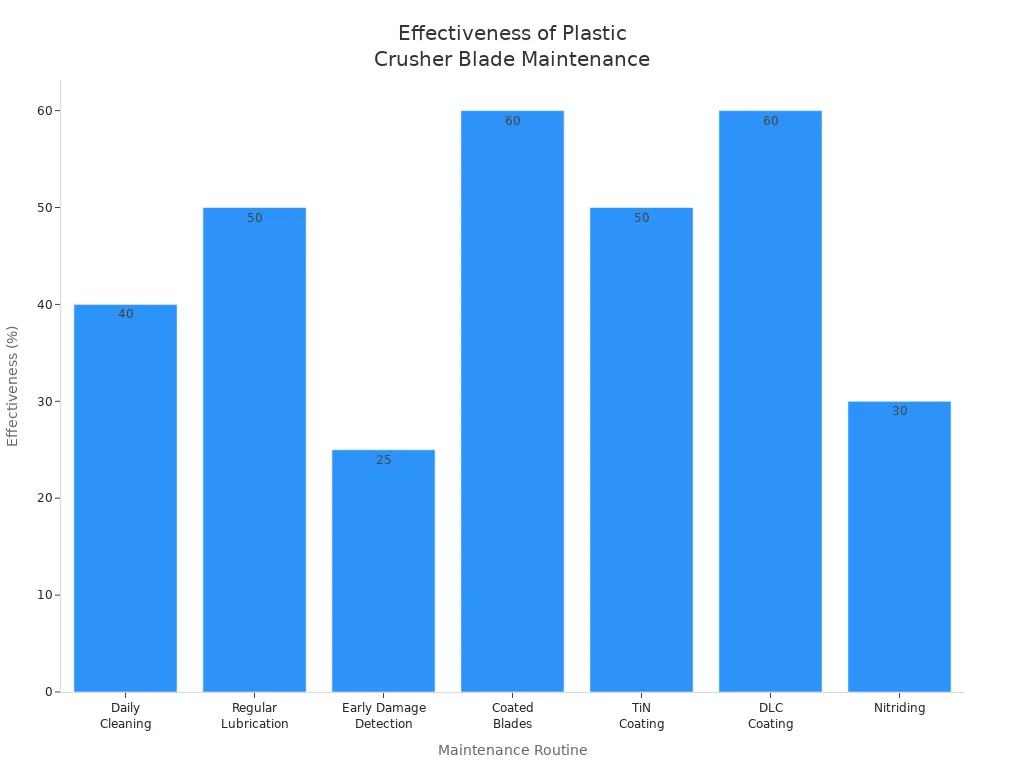
Routine inspections, sharpening, and lubrication help maintain optimal performance and minimize mechanical failures. Dull blades increase energy consumption and risk overheating materials. Professional sharpening and regular checks ensure blades remain effective.
Blade Gap Adjustment
Blade gap directly impacts both wear and particle size. The optimal gap ranges from 0.3 to 0.8 mm, depending on the material processed. Harder plastics require a tighter gap, while flexible materials need a wider gap. Operators should use feeler gauges for accurate measurement and re-check clearance after blade changes or sharpening. Misaligned components can reduce blade lifespan by up to 40%. Proper gap adjustment prevents oversized particles and reduces unnecessary strain.
Feeding Speed & Impurity Removal
Feeding speed influences particle size distribution and blade wear. Higher rotor speeds produce more fines, while lower speeds yield larger, uniform particles. Matching feed rate to rotor speed ensures consistent cutting and predictable results. Overloading the feed causes inconsistent cutting depths and accelerates blade degradation.
Impurity removal is critical for reducing wear. Operators should select blade types based on material characteristics and remove contaminants before processing. For example, V-type anti-winding blades suit soft materials, while claw-type shear blades handle high-impact plastics. Removing impurities like sand or metal prevents premature blade failure and maintains quality.
Tip: Systematic maintenance, precise blade gap adjustment, and controlled feeding speed are key to minimizing blade wear and achieving consistent recycling outcomes.
Blade Materials & Design Choices
Selecting Wear-Resistant Materials
Choosing the right material for blades is essential for reducing wear and minimizing contamination in recycling. Operators should select materials that balance hardness, toughness, and resistance to impurities. The table below compares common blade materials used in recycling:
| Material | Wear Resistance | Contamination Risk | Notes |
|---|---|---|---|
| 9CrSi | Moderate | Low | Good balance of hardness and toughness, suitable for less clean feedstock. |
| SKD11 | High | Moderate | Excellent edge retention and wear resistance for clean, demanding plastics. |
| D2 | High | Moderate | Strong edge retention and stable performance in clean environments. |
| DC53 | High | Low | High wear resistance with better toughness, ideal for stable feedstock. |
Operators working with variable or contaminated feedstock often choose 9CrSi or DC53 for their low contamination risk. For clean, high-volume operations, SKD11 and D2 offer superior edge retention and wear resistance.
Tip: Regularly review blade material performance to match changing feedstock conditions and recycling goals.
Optimizing Blade Design
Blade design plays a major role in reducing wear and improving efficiency. Features such as durability, shredding performance, and resistance to abrasion extend blade life and lower costs. The following table highlights effective design features:
| Feature | Description |
|---|---|
| Exceptional Durability | Made from high-strength, wear-resistant materials for longer service life in heavy-duty use. |
| Efficient Shredding Performance | Provides consistent cutting precision, minimizing downtime during shredding tasks. |
| Resistance to Wear and Tear | Designed to withstand abrasive materials, leading to a longer lifespan compared to standard blades. |
| Long-lasting and Cost-Effective | High wear resistance reduces the need for frequent replacements, enhancing cost-effectiveness. |
Selecting the right blade geometry and edge profile also helps maintain consistent particle size and reduces the risk of jamming.
Predictive Prototyping Workflows
Digital replica-based predictive prototyping has become a valuable tool for blade lifecycle prediction. Engineers use digital models to simulate wear patterns and test new designs before production. This approach allows teams to:
- Forecast blade lifespan under different operating conditions.
- Identify weak points in blade geometry.
- Optimize material selection for specific recycling streams.
By integrating predictive prototyping into maintenance planning, operators can schedule timely replacements and reduce unexpected downtime. This proactive strategy ensures plastic crusher blades deliver reliable performance and consistent recycling outcomes.
Blade Maintenance & Quality Control Integration
Linking Blade Condition to Quality Checks
Blade condition directly impacts the quality of recycled plastic. Operators must link blade inspections with quality control checks. When blades show signs of wear, such as dull edges or chips, the risk of producing off-spec material increases. Quality teams should review blade condition reports alongside particle size data. This practice helps identify trends and prevents contamination before it affects the final product.
Tip: Always document blade condition during each quality check. This record supports traceability and continuous improvement.
Preventive Replacement Intervals
Establishing preventive replacement intervals ensures consistent performance and reduces unplanned downtime. Replacement frequency depends on several factors:
- Hard plastics cause blades to wear faster than soft plastics.
- High-volume shredding operations require more frequent blade changes.
- Blade material influences lifespan. High-speed steel (HSS) blades typically last 3–6 months. Carbide blades can last 6–12 months with proper maintenance.
- Tracking actual wear patterns allows operators to adjust replacement schedules for optimal efficiency.
A proactive approach to blade replacement maintains cutting efficiency and safeguards product quality.
Maintenance Data Review
Maintenance data review plays a key role in optimizing blade replacement schedules. Regular inspections help detect early signs of wear and tear. Operators should monitor critical components, especially blades, for any changes in performance. Timely blade replacements based on inspection findings minimize downtime and improve machine reliability.
- Review maintenance logs to spot recurring issues.
- Use inspection data to refine preventive maintenance plans.
- Schedule blade changes before performance drops, not after failures occur.
Integrating maintenance data with quality control systems creates a feedback loop. This process supports better decision-making and drives continuous improvement in recycling operations.
Controlling blade wear and maintaining consistent particle size in contamination-sensitive recycling demands a strategic approach. Operators should select machinery with hardened steel components and specialized coatings, implement industrial shredders with sizing screens, and follow harmonized operational rules to ensure safety and quality. Regular maintenance and targeted staff training reduce downtime and improve efficiency. Investing in premium blades and proper training yields significant cost savings:
| Aspect | Benefit |
|---|---|
| Blade Material | Enhanced efficiency, reduced wear |
| Operational Efficiency | Extended blade life, minimized downtime |
| Investment in Quality | Long-term savings, increased productivity |
Adopting these practices supports reliable recycling outcomes and lowers the risk of quality failures.
FAQ
How often should plastic crusher blades be inspected?
Operators should inspect blades daily for visible wear and damage. Weekly checks using performance metrics help identify issues early. Consistent inspection schedules prevent unexpected failures and maintain recycling quality.
What is the ideal blade gap for most plastics?
The optimal blade gap ranges from 0.3 to 0.8 mm. Hard plastics require tighter gaps. Flexible materials need wider gaps. Use feeler gauges for precise measurement.
Which blade material offers the best wear resistance?
DC53 and SKD11 provide high wear resistance and durability. These materials suit demanding recycling environments. Operators should match blade material to feedstock type for best results.
How can real-time particle size monitoring improve recycling outcomes?
Real-time monitoring tools detect deviations quickly. Operators can adjust settings before quality issues arise. This approach reduces contamination risk and ensures consistent product quality.
What maintenance routine extends blade life most effectively?
Daily cleaning, regular lubrication, and early damage detection maximize blade lifespan. Coated blades, such as TiN or DLC, perform longer and resist wear. Scheduled maintenance reduces downtime and improves efficiency.