
Choosing between a single-stage and two-stage line is where most PE/PP film recycling projects lose money before a single kilogram is processed. Add a second extruder you don’t need and you pay for extra energy and parts forever. Skip one you do need and your pellets come out gassy and streaked.
The Cutter Compactor Pelletizing Machine for PE/PP Film: Single-Stage vs Two-Stage Configurations question isn’t about which is “better” in the abstract. It’s about matching the machine to your film’s contamination level, print load, and required throughput. If you’re still scoping the upstream side of a plastic recycling line, this feedstock preparation guide covers the feeding and densifying steps that decide how well either configuration runs.
Here’s the short version. A single-stage line — cutter compactor feeding one extruder — is the leaner choice for clean, low-print PE/PP film. A two-stage line adds a second extruder and a second filtration point. That earns its keep on printed, mixed, or more contaminated film, where degassing removes volatiles and a repeat filtration pass matter.
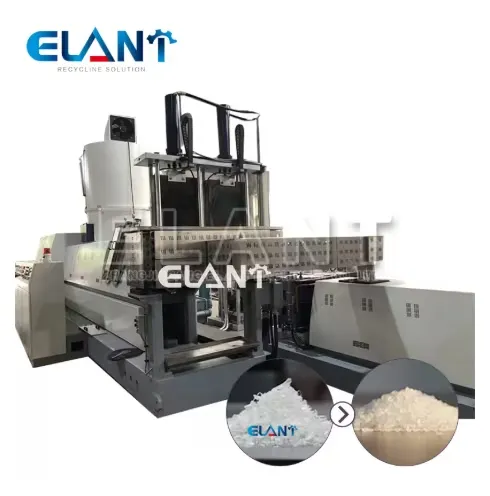
Below we compare the two configurations of the cutter compactor pelletizing machine by layout, machine-level differences, feedstock fit, and output — so you can match the line to your material rather than a brochure.
Key facts at a glance
- Single-stage: cutter compactor feeds one extruder; one filtration point; smaller footprint; best for clean PE/PP film with low print content.
- Two-stage: primary extruder plus secondary extruder; two filtration and degassing opportunities; larger footprint; best for printed, mixed, or contaminated film.
- Output at similar screw sizes: two-stage lines typically deliver more usable, uniform pellets on heavily printed film because volatiles and contaminants get a second pass.
- Line complexity: single-stage has fewer components to align and maintain; two-stage adds a melt transfer and a second extruder to synchronize.
- Feedstock rule of thumb: cleaner, drier film leans single-stage; dirtier, higher-moisture, higher-ink film leans two-stage.
- One platform, many materials: the same cutting and pelletizing process reprocesses PE film, PP woven bag, LDPE and HDPE — with screw and screen choices tuned per feedstock.
Single-Stage and Two-Stage Cutter Compactor Line Layouts
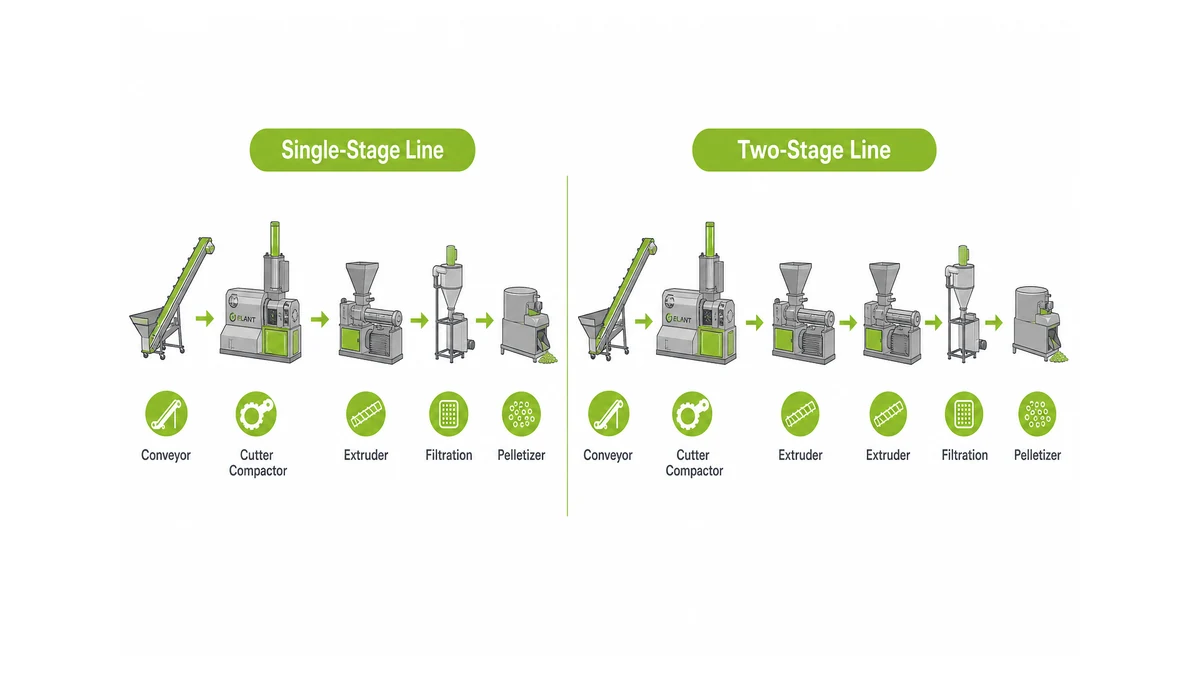
Both configurations start the same way. A belt conveyor feeds film waste into the cutter compactor, where rotating blades cut, friction-heat, and densify the light film so it feeds an extruder at a stable rate. The split happens after that.
Single-Stage Cutter Compactor and Extruder Configuration
In a single-stage setup, the cutter compactor discharges directly into one extruder. That extruder melts the material, pushes it through a single filtration point, and feeds the pelletizing head. One melt, one filter, one cut.
The appeal is directness. Fewer transfer points mean fewer places for the process to drift. For clean post-industrial PE/PP film that carries little ink and low moisture, a single melt pass produces uniform pellets without a second extruder doing redundant work.
Two-Stage Primary and Secondary Extruder Configuration
The two-stage configuration inserts a second extruder in series. The primary extruder melts and pumps the material through a first filtration point, then hands the melt to a secondary extruder that filters again and provides extra degassing capacity before pelletizing.
That second extruder does two jobs. It vents volatiles — inks, residual moisture, low-molecular gases — that a single pass leaves behind, and it gives contamination a second filter to catch. On printed woven bag material or mixed film, that repeat processing is the difference between clean pellets and gassy, streaked ones.
Here’s a caveat most sales pages skip. That second heat history is not free for every polymer. Clean, well-sorted PE grades that need no extra devolatilization can lose molecular weight from a second melt pass — repeated extrusion degrades polyethylene rather than improving it. More filtration is not automatically safer; on genuinely clean film it can nudge quality the wrong way.
Filtration and Pellet Cutting Positions
Where the filter sits changes with the configuration. Single-stage puts one screen changer between the extruder and the pelletizing head. Two-stage places filtration after each extruder, so the melt is screened twice before it reaches the cutter.
Pellet-cutting position stays broadly similar — the pelletizing head sits at the end of the melt path either way. The material simply arrives there having passed through one filtration point or two.
Single-Stage vs Two-Stage Equipment Differences
Strip away the brochure language and three machine-level differences drive the whole decision.
Number of extrusion stages
This is the headline difference. Single-stage runs one extrusion pass; two-stage runs two, in series. The second extruder is not a bigger version of the first — it exists to re-melt, re-filter, and vent an already-molten stream.
More stages mean more control over what leaves in the pellet. They also add a second extrusion drive and higher installed motor power, so the second extruder should earn its place with the feedstock.
Filtration arrangement
A single filtration point handles clean material well. Two filtration points let the system catch contamination the first screen missed and keep melt pressure more stable when the film load carries paper labels, sand, or mixed polymers. A practical progression pairs a coarser first screen with a finer downstream one, in the continuous or backflush screen changer range typically run for post-consumer film.
🔍 Worth checking: Ask the factory how the filtration is arranged in each stage, and what screen mesh they run for your specific film. A two-stage line with two coarse screens is not the same as one with a coarse-then-fine progression.
Machine footprint and line complexity
A single-stage line is shorter and simpler. Fewer motors, one extruder to align, one filtration point to service. For a plant tight on floor space or maintenance headcount, that simplicity has real value.
The two-stage line is longer and adds a melt transfer between extruders plus a second drive to synchronize. More capability, more parts to keep in step. That trade — capability versus complexity — is the honest core of the comparison.
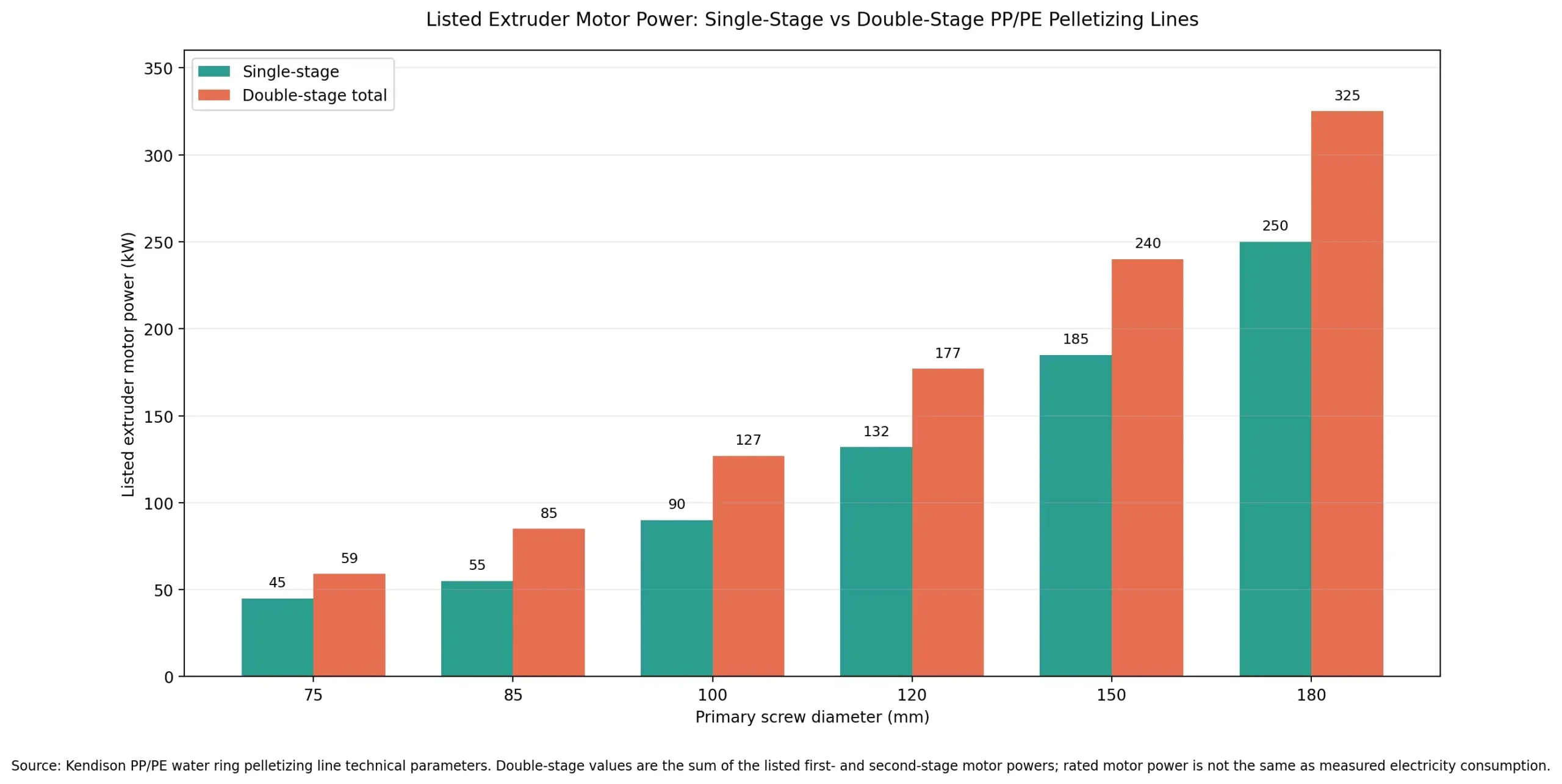
Figure: Listed extruder motor power for comparable single-stage and double-stage PP/PE pelletizing line models. Double-stage totals combine the listed first- and second-stage motor powers. Source: Kendison technical parameters.
Matching the Configuration to PE/PP Film Feedstock
Feedstock condition decides more than any brochure spec. The same cutting and pelletizing process reprocesses very different materials, and the configuration should follow the dirtiest, wettest, most printed film you plan to run — not the cleanest.
Clean Post-Industrial PE/PP Film
Clean edge trim and off-spec film from your own production is the ideal single-stage feedstock. Low ink, low moisture, known polymer. One melt pass and one filtration point produce uniform pellets, and a second extruder would mostly add cost and heat history for little quality gain.
Printed and Mixed PE/PP Film
Heavily printed film and PP woven bag material change the math. Inks and residues release volatiles during melting that a single degassing pass struggles to clear. Here the two-stage setup pulls ahead: the secondary extruder vents those volatiles and filters a second time, giving cleaner, less gassy pellets.
More Variable or Contaminated Film Feedstock
Post-consumer film with variable moisture, paper labels, or occasional foreign material is the hardest case. Because film-grade recycled polyethylene tolerates only limited contamination before pellet quality falls off, spikes overwhelm a single filter and single degassing zone. Two filtration points and a second vent keep pellet quality steadier when the feedstock wanders.
✅ Do this: Size the configuration to your worst realistic feedstock, not your average. A line that runs clean film beautifully but chokes on the dirty batch you accept twice a month is undersized for your actual operation.
Output and Capacity Matching
Output isn’t just screw diameter. It’s how well the cutter compactor, the extruder, and the filtration keep pace with each other on your material.
Cutter Compactor and Extruder Capacity Matching
The cutter compactor must densify film fast enough to keep the extruder fed at a steady rate, and the extruder must digest that feed without starving or surging. When these are matched, the line runs stable. When the compactor over-feeds a small extruder, or a large extruder starves on light film, throughput and quality both drop.
Output Differences Between the Two Configurations
At the same screw size and clean feedstock, a single-stage line can post strong throughput because nothing is doing double work. On printed or contaminated film the picture flips. A single-stage line has to slow down or accept gassier pellets. The two-stage line holds rate because the second extruder absorbs the degassing and filtration load.
Exact throughput depends on screw sizing, screen mesh, and how heavily printed the film actually is. Two lines with identical screw diameters can post very different usable output on the same printed feedstock.
Line Sizing at Similar Throughput
To hit the same tonnage on difficult film, a single-stage line often needs a larger extruder or a slower run rate to compensate for the single degassing pass. A two-stage line reaches the target throughput at more moderate individual screw sizes because the work is split. Compare lines at your real target output on your real material — not at a headline number on ideal feedstock.
Choosing Between Single-Stage and Two-Stage Configurations
Match the line to three things at once: film condition, required output, and how much floor space and maintenance capacity you have.
When a Single-Stage Line Is More Suitable
Choose single-stage when your film is predominantly clean post-industrial PE/PP with low print content and controlled moisture, your throughput target is comfortable for one extruder, and you value a smaller footprint with fewer parts to maintain. For in-house scrap recycling this is usually the right call — the two-stage pelletizing line only starts to pay back once contamination enters the picture.
When a Two-Stage Line Is More Suitable
Choose two-stage when you run heavily printed film, PP woven bag material, or post-consumer film with variable contamination and moisture. The second filtration and degassing stage protects pellet quality and holds throughput where a single-stage line would have to slow down. If your feedstock varies batch to batch, the second extruder buys you consistency.
Configuration points to confirm before purchase
Before you commit, pin down these points with the factory:
| Question to confirm | Single-stage | Two-stage |
|---|---|---|
| Number of extrusion stages | One | Two (primary + secondary) |
| Filtration points | One | Two |
| Degassing capacity | Single pass | Two passes |
| Best-fit film | Clean, low-print PE/PP | Printed, mixed, contaminated |
| Relative footprint | Smaller | Larger |
| Parts to synchronize | Fewer | Second extruder + transfer |
Use this to self-diagnose:
| If your film is… | Lean toward… |
|---|---|
| Clean post-industrial edge trim | Single-stage |
| Printed film / PP woven bag | Two-stage |
| Post-consumer, variable moisture and contamination | Two-stage |
| Mixed, but you want the smallest footprint | Single-stage with a larger extruder — verify pellet quality on your worst batch first |
Send your actual film samples and target tonnage to the factory. Ask them to spec the configuration against that material — not against the cleanest film you could theoretically run. The cutter compactor pelletizing machine only performs as well as the feedstock you actually feed it, so the honest comparison happens on your dirtiest realistic batch, not a demo reel.
Have a project or a spec sheet in hand? Talk to elantmachine.com — real engineers answer.
FAQ
Does a cutter compactor pelletizing line eliminate the need for pre-cutting PE/PP film?
For many loose PE/PP film streams, yes. The cutter compactor can cut, densify, and continuously feed lightweight film into the extruder, so a separate pre-cutting step may not be necessary. Complete film rolls, loose scraps, edge trims, and washed film flakes can also be handled with different feeding arrangements. Very bulky, unusually tough, or difficult waste may still require upstream size reduction depending on the material condition.
Does a cutter compactor replace a plastic film washing line?
No. A cutter compactor prepares low-bulk-density material for stable extrusion by cutting, compacting, and feeding it into the extruder. It does not remove dirt, labels, sand, oils, or other contaminants in the way a washing line does. Post-consumer film that requires cleaning should normally be washed and sufficiently prepared before pelletizing.
Can film rolls be fed directly into a cutter compactor pelletizing machine?
Yes, depending on the machine’s feeding arrangement. Loose film scrap is commonly introduced by conveyor, while complete film rolls can be fed with a nip-roll or similar controlled feeding system. This allows one cutter-compactor line to handle different forms of flexible production scrap without requiring every material to arrive in the same physical form.
Can pellets from a cutter compactor line be reused for blown film production?
They can be, provided the recycled pellet quality meets the requirements of the downstream product. Manufacturer applications show cutter-compactor systems producing pellets for blown film, pipe extrusion, injection molding, and other reprocessing routes. The achievable reuse level still depends on the original feedstock, contamination, filtration, degradation, and the quality requirements of the finished product.
Sources
[1] Degassing Processes in Twin Screw Compounders and… — coperion.com
[2] The effect of extensive mechanical recycling on… — sciencedirect.com
[3] pillar screen changer, double Column Filter… – Batte melt pump — battemachinery.com
[4] Sustainable solutions – PolyExpert — polyexpert.com