
How a Plastic Crusher Machine Works
A plastic crusher, also called a plastic granulator, reduces plastic waste through high-speed cutting. Material enters a hopper and falls into the crushing chamber. Rotating knives mounted on the rotor pass close to stationary bed knives, producing a scissor-like cutting action. Pieces small enough to pass through the perforated screen leave the chamber; oversized pieces remain inside for further cutting.
Typical workflow:
Feed → Crushing → Screening → Plastic Flakes
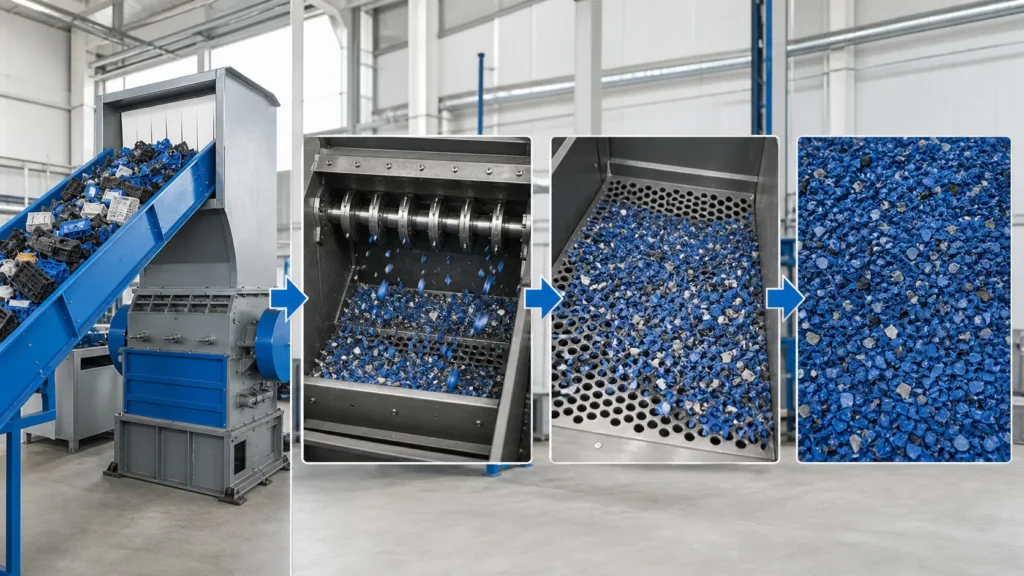
- Feed: Bottles, pipes, molded parts or film enter through the hopper or conveyor.
- Crushing: Rotor knives and fixed knives cut the material repeatedly.
- Screening: A replaceable screen controls the maximum discharge size.
- Discharge: Uniform flakes are collected or pneumatically conveyed to washing, drying or pelletizing equipment.
Stable feeding is essential. Large pipe, compacted film or bulky parts may require pre-cutting or a plastic shredder machine before the crusher.
Key Factors That Affect Crusher Performance
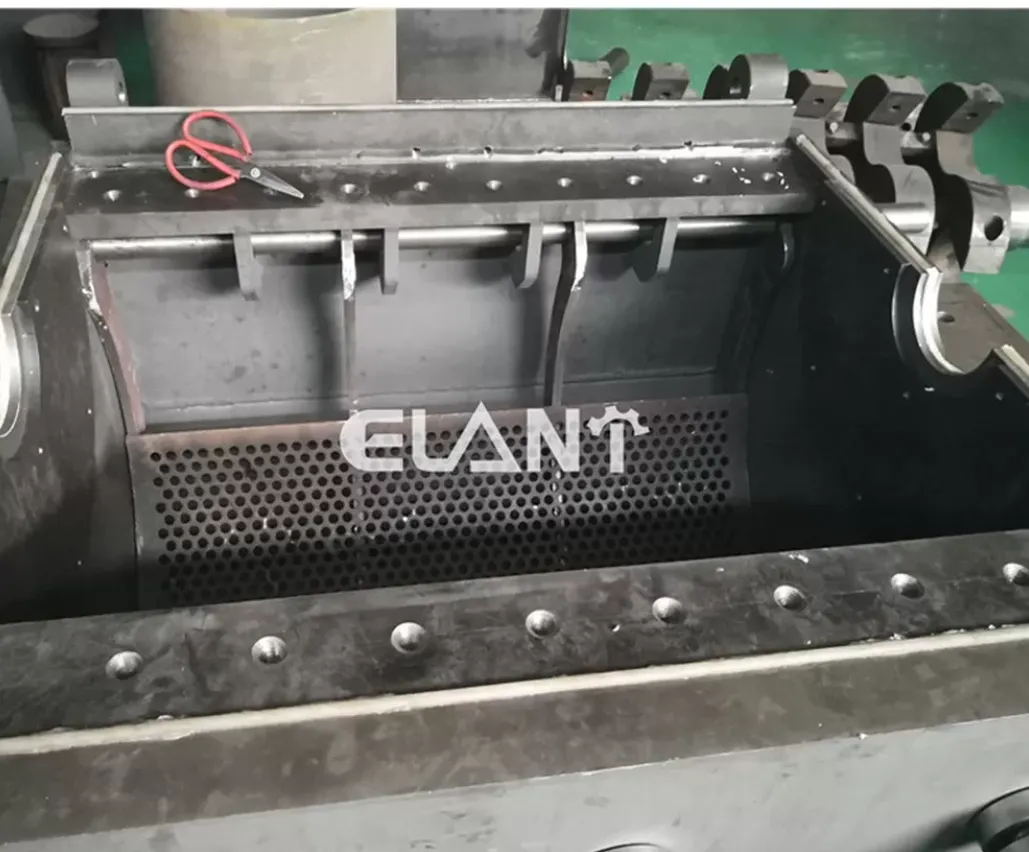
Blade Material
The knives must combine hardness, toughness and wear resistance. Common tool steels include D2/SKD11 for general recycling and tougher alloy steels for impact-heavy applications. Abrasive fillers, fiberglass and contamination accelerate wear. The best blade is therefore not simply the hardest one; it must suit the feed material and allow practical sharpening.
Motor Power
Motor size should match rotor diameter, chamber width, knife geometry and expected load. An undersized motor may stall during peak feeding, while an oversized motor adds capital cost and can waste energy when the crusher runs underloaded. Ask the supplier for rated capacity based on your actual material rather than a generic motor-to-output ratio.
Screen Size
Smaller holes produce smaller flakes but keep material in the chamber longer. This normally lowers throughput, increases heat and raises power consumed per kilogram. Larger holes increase output but may not meet the requirements of downstream washing or extrusion. Common recycling applications often use screens in an approximate 8–16 mm range, but the correct size depends on the next processing stage.
Rotor Speed
Higher speed can improve cutting frequency and throughput for suitable rigid plastics, but it also creates more heat, noise, dust and knife wear. Flexible film and heat-sensitive materials may need controlled speed and specialized rotor geometry to prevent wrapping or melting.
Maintenance
Knife clearance, blade sharpness, bearing lubrication, screen condition and belt tension directly affect performance. A crusher with accessible screens, split bearing housings and easy knife adjustment reduces service time. Install a magnetic separator or metal detector upstream when metal contamination is possible.
Guarding and safe isolation must be included in the maintenance plan. The OSHA machine-guarding guidance explains why moving parts and processes capable of causing injury must be safeguarded. Always follow the machine manual and applicable local safety regulations.
Energy Consumption
Evaluate energy in kWh per ton of usable flakes, not motor rating alone. Sharp knives, steady feeding, an appropriate screen and a correctly loaded motor generally reduce specific energy use. No-load running and repeated regrinding of unsuitable feed waste power.
How to Choose the Right Plastic Crusher Machine
1. Identify the Material Type
Tell the manufacturer the resin, product form and contamination level. Rigid PET bottles need a different feed opening and cutting setup from low-density film. Reinforced ABS, thick pipe and hollow containers also create different impact loads.
2. Define the Required Capacity
Capacity should be expressed in kg/h for the actual input. Bulk density strongly affects output: 500 kg of compact rigid scrap is much easier to feed consistently than 500 kg of loose film. Include peak flow, operating hours and planned expansion, but avoid buying a machine that will remain mostly empty.
3. Measure the Feed Size
Record the maximum length, width, wall thickness and weight of individual pieces. The hopper and chamber must accept the largest normal item safely. Long pipe, heavy lumps or baled waste may require a shredder-crusher system rather than direct crushing.
4. Specify the Output Size
Work backward from the downstream process. Washing systems need flakes that release labels and contamination efficiently; pelletizing extruders need consistent feed that bridges less and melts evenly. Choose the screen only after defining this requirement.
5. Check the Moisture Condition
A dry crusher suits clean industrial scrap. A wet crusher introduces water during cutting to help cool blades, suppress dust and begin cleaning contaminated material. It requires corrosion-resistant contact parts, controlled drainage and integration with the water-treatment system. Always state whether the feed is dry, damp, washed or heavily contaminated.
Choosing the Right Crusher for Different Plastic Materials
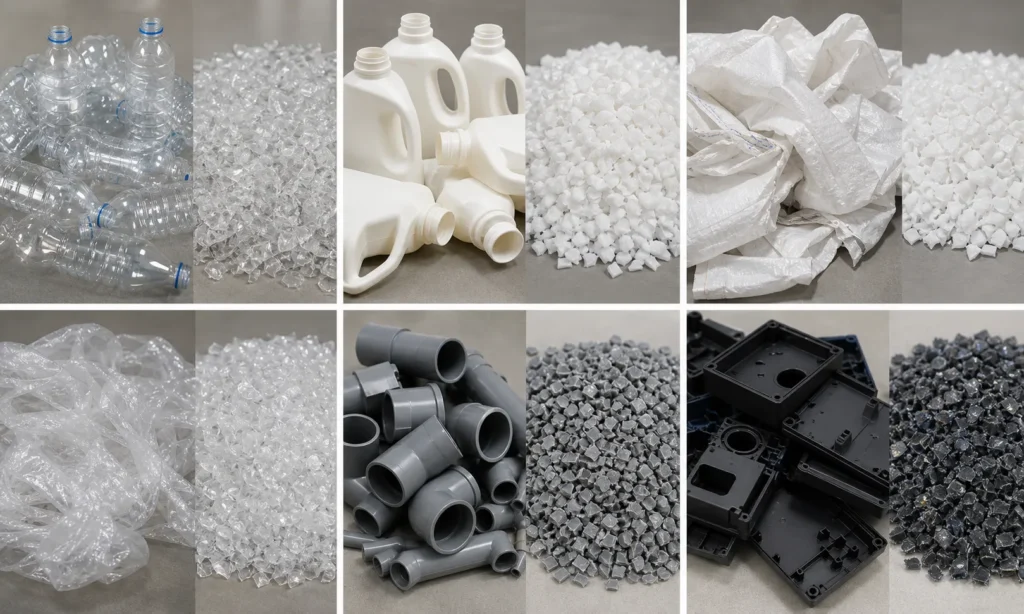
Material identification should happen before machine selection and processing. For a recognized reference, see ASTM D7611/D7611M for plastic Resin Identification Codes. A resin code identifies the resin; it does not by itself guarantee that an item is recyclable in a particular collection system.
| Material | Main Challenge | Recommended Configuration | Important Note |
|---|---|---|---|
| PET bottles | Hollow shape, labels and residual liquid | Bottle crusher with wide feed opening, wear-resistant knives and optional wet crushing | Match flake size to label separation and washing requirements. |
| HDPE containers | Thick corners, handles and bulky hollow parts | Heavy-duty rigid-plastic crusher with strong rotor and high-torque motor | Pre-shred large drums or very thick containers. |
| PP woven bags | Fibers wrap around the rotor | Film/raffia crusher with anti-wrapping rotor, angled knives and controlled feeding | Open and loosen compacted bags before feeding. |
| PE films | Low bulk density, stretching and heat buildup | Special film crusher with forced feeding, scissor-cut rotor and larger screen area | Wet crushing can cool and pre-wash dirty agricultural film. |
| PVC pipes | Long, thick and impact-heavy feed | Pipe crusher with long feed trough, robust chamber and tough alloy knives | Large-diameter or thick-wall pipe often needs pre-shredding. |
| ABS plastics | Rigid, impact-resistant parts; possible fillers | Rigid-plastic crusher with wear-resistant knives and suitable dust collection | Confirm whether the scrap contains glass fiber, metal inserts or flame retardants. |
These recommendations are starting points, not universal specifications. Final motor power, rotor size, knife grade and screen aperture should be confirmed through sample evaluation or a material test.
PET Bottles
PET bottle recycling benefits from uniform flakes and reliable removal of liquid, labels and caps. A dedicated bottle crusher provides controlled feeding and can be integrated into a plastic washing line. Wet crushing may reduce dust and improve initial cleaning, but the water circuit must be designed for contamination.
HDPE Containers
Detergent bottles, buckets and drums are rigid but bulky. Select a large feed opening, durable rotor and enough torque for thick sections. A small bottle can usually be crushed directly; a blue drum or large hollow body may need pre-shredding to stabilize feed.
PP Woven Bags
Woven sacks and raffia can wrap around shafts and create uneven loads. The crusher should use knife geometry designed for clean shearing, plus controlled feeding that prevents a large bundle from entering at once.
PE Films
LDPE and LLDPE film are light, elastic and difficult to pull into a conventional rigid-plastic crusher. A film-specific rotor, forced feeder and sufficient screen area improve throughput. For dirty post-consumer or agricultural film, crushing is commonly integrated with washing and dewatering.
PVC Pipes
PVC pipe is rigid and can fracture under impact. Long profiles require a safe horizontal feed arrangement, while thick pieces need a robust chamber and suitable knife toughness. Control dust and heat, and keep PVC separated from other polymers to protect downstream material quality.
ABS Plastics
ABS housings and injection-molded scrap can usually be processed by a rigid-plastic granulator. Filled ABS is more abrasive, so disclose glass fiber or mineral content before blade selection. Remove screws, metal inserts and electronic parts before crushing.
Common Mistakes When Buying a Plastic Crusher Machine
Choosing on Price Alone
A low purchase price can be offset by frequent blade replacement, downtime, poor flake consistency and high electricity use. Compare chamber construction, knife steel, bearing protection, electrical components, safety controls, spare-part availability and after-sales support.
Selecting the Wrong Capacity
Catalog capacity is meaningful only when the test material resembles yours. Ask what resin, form, screen size and feeding method were used to calculate output. Size the crusher so it works steadily with upstream and downstream machines.
Ignoring Blades and Screens
Blades determine how efficiently the material is cut, while the screen controls residence time and flake size. Confirm knife material, number of rotations before sharpening, adjustment method, screen aperture and the time required to replace wear parts.
Ignoring Long-Term Maintenance
Before ordering, review daily inspection points, lubrication intervals, knife-changing procedure and local availability of screens, bearings and belts. Safe chamber access and rotor-locking provisions are as important as rated output.
Why Choose Elant Plastic Crusher Machines
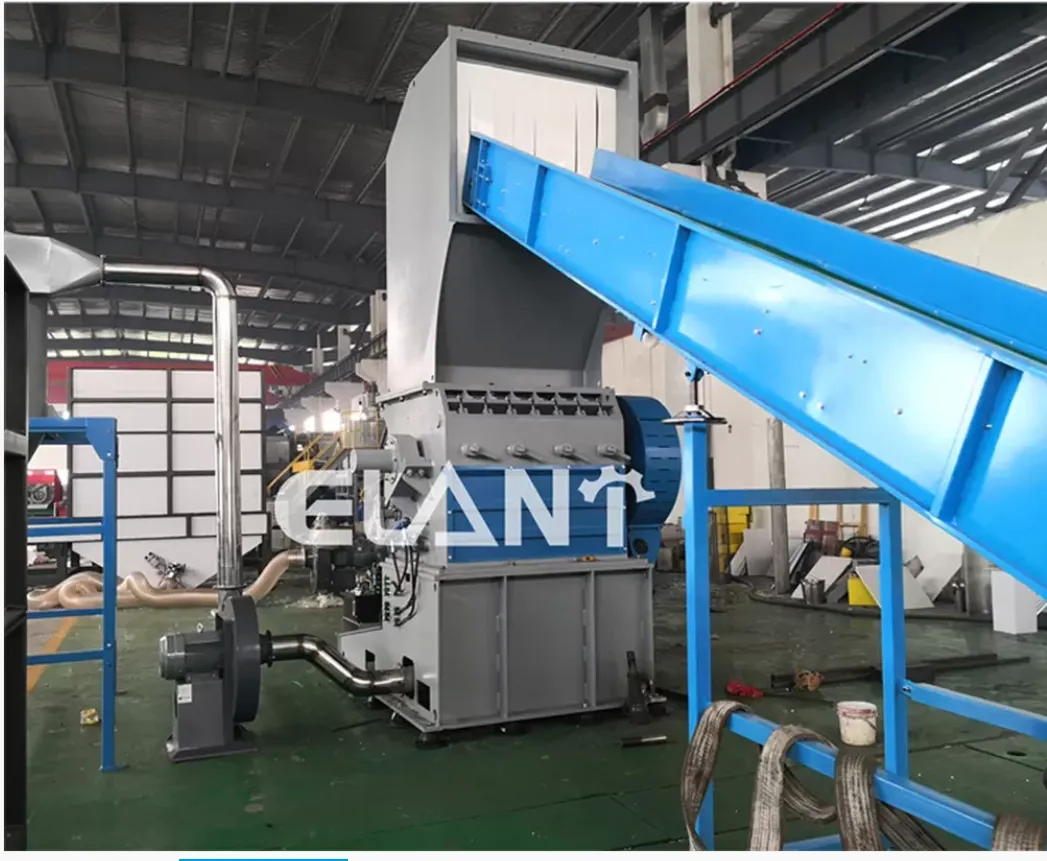
Elant supplies size-reduction equipment for plastic films, bottles, blue drums, small hollow products, injection-molded parts, blow-molded parts, profiles and sheets. The crusher can operate as a standalone machine or as part of a complete recycling system.
- Configurations matched to rigid plastics, bottles, film, raffia, pipe and other feed forms
- Replaceable blades and screens for different output requirements
- Options for integration with conveyors, washing, drying and pelletizing equipment
- Complete solutions for recyclers, plastic processors and waste-management operations
Explore the Elant Plastic Crusher Machine range. Compare a Plastic Shredder Machine for coarse size reduction, learn how a Plastic Washing Line removes contamination, or review the Plastic Pelletizing Machine range for converting prepared flakes into reusable pellets. Elant also supplies a combined shredder-crusher unit for bulky waste requiring two-stage reduction.
At the wider system level, the U.S. Department of Energy’s recycling and reuse systems program highlights how recycling technology and reverse supply chains can reduce landfill waste and lifetime energy costs. Send Elant your material photos, resin type, maximum feed dimensions, moisture level, target flake size and required kg/h capacity to receive a matched configuration.
Frequently Asked Questions
How do I choose the right plastic crusher machine?
Start with the resin and product form, then define real capacity, maximum feed dimensions, required output size and moisture condition. Use these details to select the rotor, knife material, motor, feed opening and screen. A sample test is recommended for difficult or mixed feed.
Can one crusher process all plastics?
No single configuration performs equally well on every plastic. A general rigid-plastic crusher may handle several clean, pre-sorted resins, but film, thick pipe, reinforced plastics and bulky lumps often need specialized feeding, rotors or pre-shredding. Incompatible polymers should also remain separated for recycling quality.
What is the difference between a crusher and a shredder?
A shredder usually runs at lower speed and higher torque to reduce bulky, thick or baled material into coarse pieces. A crusher or granulator normally runs faster and uses fixed and rotating knives plus a screen to make smaller, more uniform flakes. Large waste may pass through a shredder first and a crusher second.
What blade material is best?
The best blade material depends on impact, abrasion and contamination. D2/SKD11-type tool steel is common for many plastics, while tougher or more wear-resistant alloys may suit pipe, reinforced resin or abrasive feed. Heat treatment, knife geometry and correct clearance are just as important as the steel grade.
What screen size should I choose?
Choose the largest screen aperture that still meets the downstream process requirement. Smaller holes create finer flakes but usually reduce capacity and increase heat and energy consumption. Many recycling applications use roughly 8–16 mm flakes, but washing and extrusion requirements should determine the final choice.
Can a crusher process wet plastic?
Yes, if the machine is designed for wet crushing. Water can cool the cutting chamber, reduce dust and begin cleaning the flakes. The crusher must have suitable corrosion protection, seals, drainage and water-handling equipment. Do not introduce water into a dry-only crusher without manufacturer approval.