
Recyclers who skip a plastic film squeezer machine and feed wet film directly into a granulator lose 15–30% of output capacity to steam voids — producing brittle, porous pellets that fail density specs. That single upstream gap explains most of the quality complaints we hear from buyers evaluating plastic film recycling lines.Before diving into how the machine works, here’s a quick overview of its key specifications and applications.
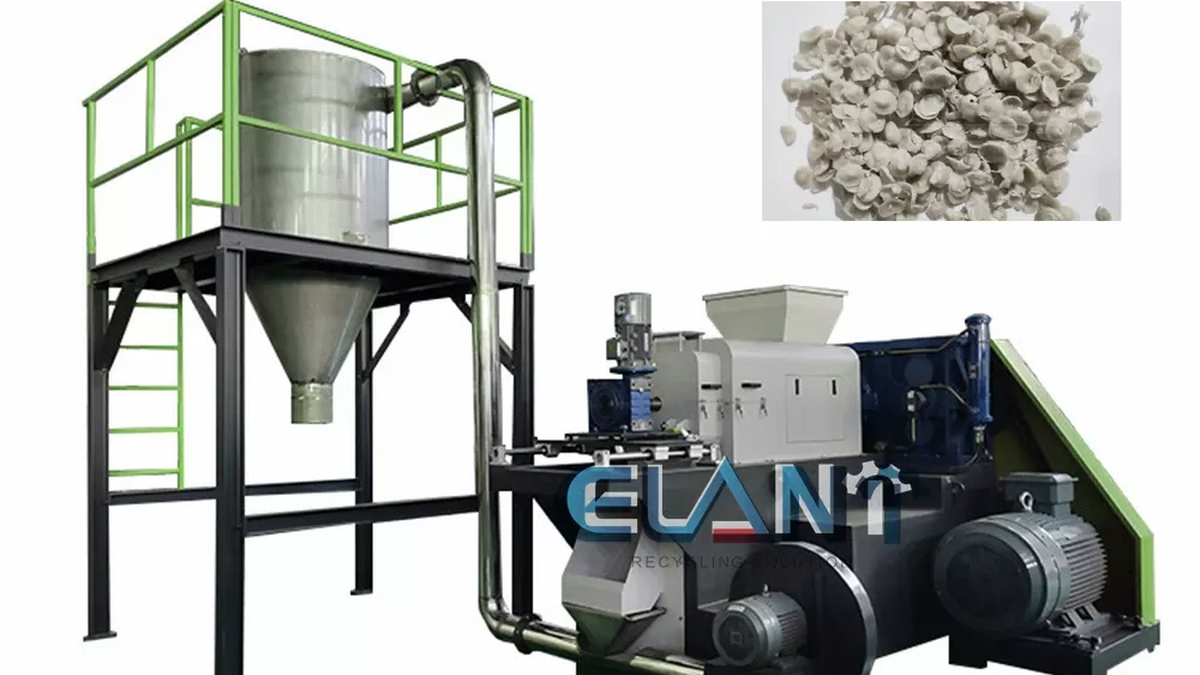
At a glance
- Function: mechanical squeezing + friction heat removes surface and absorbed moisture from washed plastic film before pelletizing
- Moisture removal target: reduces film moisture content from ~30–40% (post-wash) down to ≤3% at the die
- Primary materials handled: LDPE film, LLDPE stretch wrap, PP woven bags, agricultural film, shrink wrap
- Production capacity range: 200 kg/h to 2,000+ kg/h depending on screw diameter
- Typical placement in line: after washing line, before the granulating line extruder
- Key spec to confirm before purchase: L/D ratio of the squeeze screw (typically 6:1 to 10:1) and barrel heating system wattage
- Price range (US buyers): $8,000–$55,000 FOB depending on throughput and build quality (see cost section below)
Why moisture content is the actual quality lever
Every pellet quality problem in film recycling traces back to water. When washed plastic film enters a granulator still carrying 25–35% moisture, the water flashes to steam inside the extruder barrel. That steam creates micro-voids inside the melt strand, yielding pellets with reduced bulk density, inconsistent color, and compromised tensile strength. Downstream processors — blown film lines, injection molding, pipe extrusion — reject high-void pellets or discount them significantly.
A film squeezer machine solves this at the source. The squeezing machine uses mechanical compression through a tapered screw to physically press water out of the film mass before heat is ever applied. The friction generated in the squeeze dryer also begins to raise material temperature, so by the time film exits the squeezer and enters the extruder, you’re working with a warm, low-moisture feedstock rather than cold wet film. The result is a stable, consistent melt — which is the single biggest driver of pellet uniformity.
We’ve seen customers running film washing lines who assumed their extruder was undersized, only to find that adding a squeezer upstream increased their effective output by 40% without touching the extruder itself. Without a squeezer, those lines were losing 15–30% of effective output capacity to steam voids — the machine wasn’t the bottleneck; the wet feedstock was.
✅ Do this: Ask your film recycling line supplier for the moisture content spec AT the squeezer discharge — not just “after washing.” The post-squeezer number is what your extruder actually sees.
How the squeezing process works — and why the screw design is everything
The squeezing process in a plastic film squeezer machine has three distinct zones inside the barrel:
- Feed zone: loosely packed, washed film enters; the screw flights are wide and deep to accept high-bulk-density material
- Compression zone: flights taper, mechanical pressure builds, water is forced out through perforations in the barrel wall (drainage slots or screen basket, depending on design)
- Heating/drying zone: residual surface moisture evaporates via frictional heat; a supplemental heating system (band heaters or cartridge heaters) on the barrel assists if ambient conditions are cold
The L/D ratio of the squeeze screw determines how much compression travel the film experiences. A 6:1 ratio is adequate for clean post-industrial film; agricultural film with soil contamination and higher absorbed moisture content needs 8:1 to 10:1 to reach the same discharge moisture level. Buyers who order a squeezing machine on price alone and accept whatever L/D ratio the factory defaults to will find out about this mismatch when their pellet line starts producing.
The screw and barrel are typically made from 38CrMoAl nitrided steel for wear resistance — ask the factory for the material certification, not just the claimed hardness rating.
Application materials — what this machine actually handles
The plastic film squeezer is not a single-material machine. The same squeezing machine platform handles:
- LDPE film and LLDPE stretch wrap — the highest-volume application; clean post-consumer film from distribution centers and agricultural use
- PP woven bags — require slightly higher compression force due to woven structure retaining more water in the fabric interstices
- Agricultural film — often contaminated with soil and sand; abrasion-resistant barrel lining becomes mandatory, not optional
- Shrink wrap and multi-layer films — processable but check whether the line includes a pre-wash friction washer to separate laminate layers before squeezing
The machine cannot effectively process rigid plastics (bottles, sheets) — that’s a different process. Rigid plastic sheet recycling uses a plastic sheet press machine configured for flake drying, not film squeezing. Buyers who ask about a plastic sheet press machine for sale alongside a film squeezer are usually running both rigid and flexible streams; confirm with us which configurations can share common extruder capacity.
🔍 Worth checking: If you process agricultural film with soil loads above 5%, specify an abrasion-resistant barrel insert (typically bimetallic or ceramic-lined). Standard nitrided steel wears through in 6–12 months on dirty film. The upfront cost difference is $800–$2,000; the repair cost is $6,000–$10,000 plus downtime.
Features that separate production-grade machines from budget units
This is where the market thins out. Most spec sheets list similar numbers; the differences show up in materials and engineering details.
- Screw hardness verification: ask for the actual Rockwell hardness test report, not just “HRC 58” in the brochure. Surface hardness below HRC 56 wears through on film with any contamination load within 18 months.
- Barrel drainage design: perforated barrel with a drainage trough vs. screen basket — screen baskets clog faster with fine contamination and add 30–45 minutes of cleaning time per shift. Ask for the drainage configuration drawing before ordering.
- Feeding throat geometry: a wide, angled feed throat handles high-bulk-density baled film without bridging; narrow vertical throats require pre-shredding or manual feeding assistance and add labor cost.
- Torque protection: mechanical torque limiter or electronic overload relay to protect the gearbox when contaminated film or hard objects enter the screw. Machines without this protection see gearbox replacements at $3,000–$8,000 each.
- Heat insulation on barrel: polyimide (PI) wrap insulation on the heated zones reduces energy consumption by 12–18% on sustained runs; many budget machines skip it to reduce build cost.
Our customers who have gone back to evaluate what their previous squeezer lacked almost always land on one of two things: drainage design or torque protection. The torque incidents in particular are expensive and avoidable.
What customers typically pair with a film squeezer machine
Based on the inquiries we handle, buyers sourcing a plastic film squeezer machine almost always need at least two of the following in the same order:
- Film washing line (friction washer + float-sink tank) — the stage that makes squeezer performance possible; dirty film entering the squeezer clogs drainage slots and shortens screw life
- Single-screw or twin-screw extruder — the granulating line component that follows immediately; spec the two together to match throughput and melt temperature requirements
- Pellet cutter / strand pelletizer — final sizing after the extruder die; sometimes sold as part of the extruder package, sometimes separately
- Label remover or rinsing machine / filling machine stage — buyers processing post-consumer bottles with film labels attached need a label-separation stage before film enters the squeezing machine
Some buyers also ask about a plastic sheet press machine for the rigid stream running on a parallel line. We configure those separately — the process parameters for sheet flakes are different enough that sharing equipment with the film squeezer line creates more scheduling conflict than savings.
The honest trade-off: squeezer-only vs. integrated squeeze-extrude unit
Some manufacturers offer a combined squeeze-extrude machine — the squeezer screw transitions directly into the extruder barrel without a separate housing. The claimed benefit is floor space and capital cost. The actual trade-off:
Integrated unit advantages: lower initial price, smaller footprint, fewer connection points for leaks or feed bridging.
Integrated unit disadvantages: when the squeezer screw wears, the extruder is down too — the two failure modes are coupled. Maintenance access is more restricted. And you cannot optimize screw speeds independently; the squeezing and melting stages run at a fixed ratio. For recyclers running variable film contamination loads (as most post-consumer operations do), independent speed control is a meaningful operational advantage.
We recommend standalone squeezer + standalone extruder for any line running above 400 kg/h or handling mixed film streams with variable contamination. Below 300 kg/h on clean industrial film, the integrated unit makes economic sense.
How to evaluate a film squeezer supplier before wiring a deposit
Five things to verify before committing:
- Request a factory acceptance test (FAT) video at your specific throughput rate — not a generic run. The FAT should show moisture content at squeezer discharge measured with a moisture meter, not estimated.
- Ask for two customer references in the US or with US-import experience — customs classification for this equipment (HS code 8477.80) and compliance with OSHA guarding requirements are not universal; US-experienced suppliers handle this without prompting.
- Confirm spare parts availability on US soil — screw, barrel liner, and gearbox seal kits should be available domestically or have a defined lead time under 2 weeks. A $30,000 machine sitting idle for 6 weeks waiting for an overseas screw costs more than the machine.
- Check the electrical standard — NEMA vs. IEC components; if the factory builds to IEC standards, confirm local US electricians can service the panel and motor starters without importing proprietary components.
- Get the power consumption spec at rated throughput — not idle power. A 500 kg/h squeezer drawing 55 kW vs. 38 kW at the same output represents $9,000–$13,000/year in energy cost difference at US industrial rates.
The treats equipment reliability and output quality as the two most controllable variables in a recycling operation. That aligns exactly with what buyers tell us when they come back after a first machine purchase that underdelivered.
FAQ
What is the machine that destroys plastic?
A plastic film squeezer machine compresses and dewaters plastic film before pelletizing, but the term “destroys plastic” typically refers to a granulator or shredder that breaks plastic into small fragments. In a recycling line, shredders reduce bulky film into feedstock, squeezers remove moisture, and extruders melt the material into reusable pellets. None permanently destroy the plastic — they reform it into a higher-value output.
What machine is used to melt plastic?
An extruder is the primary machine used to melt plastic in a recycling line. It feeds compressed, dried film — output from the squeezer — through a heated barrel where a rotating screw melts and homogenizes the material before it exits through a die. The plastic film squeezer machine is a critical upstream step because excess moisture entering the extruder causes steam voids that degrade melt quality and final pellet density.
Sources
[1] 1910.212 – General requirements for all machines. — osha.gov
[2] Recycling Infrastructure and Market Opportunities Map — epa.gov
[3] Plastic Film Squeezer Machine — recyclingtoday.org
[4] Plastic PE Film PP Woven Bag Squeezing Drying Machine — retechmachine.com
[5] ASD Plastic Film and Bag Recycling Squeezer — aceretech.com
[6] Plastic Squeezer Machine For Wet Crushed PP Jumbo … — machinemg.com